Get Full Government Meeting Transcripts, Videos, & Alerts Forever!
Get email alerts on the Caltrans Projects topic
No spam. Unsubscribe anytime.
Caltrans updates: Eureka‑Arcata CAPE timeline extended pending outreach; SR‑255 corridor management plan released for comment
Summary
Caltrans district staff reported progress on the Eureka‑Arcadia Comprehensive Adaptation and Implementation Plan (CAPE), said they will request a two‑year extension to December 2027 for completion, and released a draft corridor management plan for State Route 255 with public comment and a Manila community meeting scheduled.
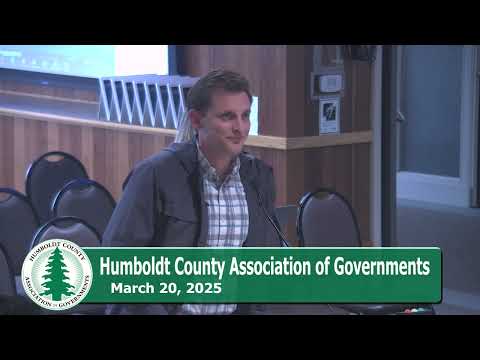
Caltrans District 1 staff told the HCOG board on March 20 that work on the Eureka‑Arcata Comprehensive Adaptation and Implementation Plan (CAPE) is underway and Caltrans will seek a two‑year extension from the California Coastal Commission to move the due date from December 2025 to December 2027 to allow additional local engagement and technical work.
Caltrans climate unit manager Lorna said the project team has expanded, begun site‑specific modeling with Cal Poly Humboldt, and has started early coordination with the county, cities and resource agencies; staff thanked HCOG for a letter of support for a Murray Field sea‑level‑rise feasibility study pending consideration by the Coastal Conservancy. Lorna told the board Caltrans plans more detailed local outreach in late summer and fall and intends to return with maps and a timeline once the extension and outreach schedule are finalized.
Separately, Caltrans released a public draft corridor management plan for State Route 255 (Samoa Boulevard) on March 14 and invited comments through May 23; a public meeting is scheduled April 24 at the Manila Community Center. Caltrans staff said the SR‑255 plan is a hybrid corridor management/concept document that looks beyond the state highway to multimodal and freight alternatives and coordinates with partner projects such as the Great Redwood Trail Agency alignments and local active‑transportation plans.
Caltrans also provided project updates including: ongoing SR‑36 emergency slide work and requests for supplemental emergency funding; progress at the Indianola interchange with a planned bridge‑deck pour in April and new alignment traffic before year‑end; the Pacific Coast Bike Route signage inventory initiative; and a district transit plan kickoff that will run two years and coordinate with HTA.
Why it matters: The CAPE and SR‑255 corridor plan shape adaptation, coastal protection and multimodal improvements for corridors that face sea‑level rise and multimodal safety concerns. The extension request reflects Caltrans’ stated intent to allow time for landowner outreach and additional technical studies required by the Coastal Commission.