Get Full Government Meeting Transcripts, Videos, & Alerts Forever!
Get email alerts on the County Budget topic
No spam. Unsubscribe anytime.
Barnstable County finance committee demands list of grant-funded positions, sets April 2 deadline for administration
Summary
Members of the Barnstable County Assembly of Delegates standing committee on finance pressed county administration for a complete inventory of grant-funded positions and contingency plans, raised concerns about mission creep and revenue assumptions, and set an information deadline of April 2 ahead of an April 16 assembly deadline.
The Barnstable County Assembly of Delegates' Standing Committee on Finance directed county administration to provide a complete list of grant-funded positions and plans for sustaining any that continue beyond grant terms, and set an April 2 deadline for that information as it prepares a budget recommendation for the full assembly by April 16.
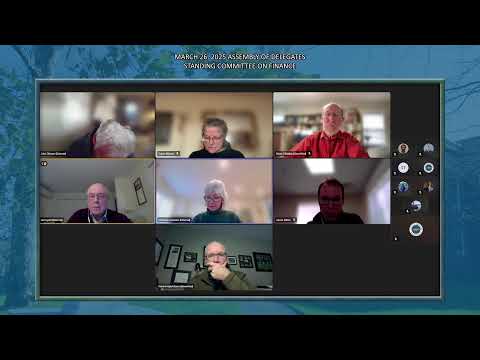
The committee’s action followed an extended discussion at a virtual finance committee meeting in which members debated how closely the finance committee should reexamine department budgets previously vetted by standing committees, how to treat positions initially funded by grants such as ARPA, and whether proposed new staff positions come with credible revenue projections.
The committee’s chair, Chair Oman, summarized the schedule the body agreed on and the near-term deadlines: members will submit written questions to the clerk, the administration should reply by April 2, and the finance committee will meet March 30 and April 7 with April 9 reserved if needed to meet the April 16 assembly deadline.
Why it matters: Committee members repeatedly warned that an unclear inventory of grant-funded positions can create long-term county obligations if grants expire and the county absorbs payroll and benefits. Several delegates used recent ARPA-funded hires and laboratory staffing as examples of positions that need clearer tracking and contingency plans.
Discussion highlights
- On how deep to probe budgets: Delegate O'Malley said the finance committee should generally not re-litigate line items for department budgets already vetted by standing committees, but should focus review where committees reported disagreement. "For department budgets that have been vetted by a standing committee, I don't see any reason why we should, as a finance committee, be going back to kind of line item or individual comp element items," O'Malley said.
- On the committee’s review role: Delegate Frizzell pushed back on deferring entirely to standing committees, saying the finance committee is a second pair of eyes and should follow up where questions remain. "I don't think our job is to just take whatever standing committees recommend to us and just simply say, no more questions asked," Frizzell said.
- On grant-funded positions and contingencies: Delegate Wyman Colombo asked, "What contingencies are put in place when we bring in grant funded positions?" Multiple delegates said the administration should identify every position funded by grants in the current and next fiscal years, show when grants expire, and state any county obligations (matching funds, OPEB, continued salary obligations) if grants are not renewed.
- On revenue projections and assumptions: Delegate Frizzell said he found the administration’s revised revenue projections reasonable, noting an illustrative $900,000 possibility for fiscal 2026 but warning that projections depend on economic conditions. Chair Oman observed that the administration adjusted health-cost estimates downward and argued for relying less on reserves if revised revenues hold.
- On new staff and revenue justification: Several delegates said any proposed new positions that are justified as revenue-generating should be accompanied by specific projections and a plan for covering full personnel costs (salary, fringe benefits, OPEB, vacations). Delegate O'Malley said positions tied to demonstrable revenue (the laboratory was discussed as an example) are more defensible; other members warned of "mission creep" and "salary creep" if positions are added without clear offsets.
- On other programs: Delegates noted particular concern about two proposed positions for the county dredge enterprise, where they said revenue projections were not provided and enterprise funds sometimes require general-fund subsidy.
Committee directions and next steps
- The finance committee asked members to submit specific questions through the clerk; the clerk will collate questions and forward them to administration.
- Administration was asked to provide a complete inventory of grant-funded positions (current fiscal year and next), the grant source for each position, grant expiration dates, any county matching or ongoing obligations, and revenue projections for positions described as revenue-generating. The committee set April 2 as the target date for receiving those answers.
- The committee scheduled follow-up meetings on March 30 and April 7 (with April 9 reserved) to review answers and prepare the finance committee’s recommendation to the full assembly, which has a submission deadline of April 16.
Vote and procedural actions
- The meeting adjournment was moved and seconded; a roll-call vote recorded five "yes" votes and the meeting was adjourned.
What the record shows and what remains unresolved
- Delegates said they received a spreadsheet from the clerk showing grant line items for the Cape Cod Commission but said it lacked position-level detail. Committee members repeatedly said that a full, position-level inventory and plain answers about future county obligations are essential before the finance committee finalizes recommendations.
- The committee did not adopt new budget cuts or changes at this meeting; members focused on information requests and schedule to enable follow-up review.
The finance committee’s next steps are administrative: collate member questions, send them to administration, receive answers by April 2, and reconvene to decide what to recommend to the full assembly by the April 16 deadline.