Get Full Government Meeting Transcripts, Videos, & Alerts Forever!
Get email alerts on the Paving Coordination topic
No spam. Unsubscribe anytime.
City and utilities describe annual paving coordination; council seeks tighter timing to avoid re‑cuts
Summary
Springfield DPW and Eversource officials described an annual 'long list' process for coordinating paving and utility work, but councilors said repeated instances of freshly paved streets later opened by utilities require improved scheduling and communication.
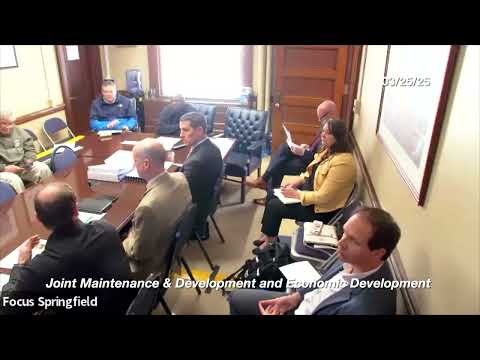
Springfield Department of Public Works Director Chris Signoli told the council joint committee on March 25 that the city coordinates annual paving plans with utilities but that practical limits mean some streets must be paved before all utility relocations are complete.
Signoli said the city compiles a long list each winter of proposed paving worth roughly $20 million in candidate streets and circulates it to utilities, including Eversource electric and gas, Comcast, and water and sewer. Utilities respond with their planned work so the city can sequence projects; in many cases the city delays paving while utilities complete relocations. He said the city averages $4–$5 million in final paving annually and enforces a three‑year moratorium on touching newly paved streets except for emergencies.
Councilors pushed for more predictable timelines and earlier notice on projects they said affect constituents. “If it's going to be 4, 5, 6 years out, we're not going to wait 4, 5, 6 years to pave a road,” Signoli said, adding the city will plan to keep work coordinated and will ask utilities to respond when the city issues its long list.
Eversource officials said they meet with municipal staffs annually to align long‑range plans and that emergencies can still force out‑of‑sequence work. Eversource also noted some internal constraints — for example, security concerns limit sharing of certain detailed internal databases with outside parties.
Why it matters: Councilors said better alignment of project lists and earlier briefings to committee members could reduce repeated repairs of freshly paved streets and ease constituent complaints about potholes and uneven restorations.
What officials described - City process: DPW circulates a winter long list of proposed paving (roughly $20 million in candidate streets); utilities comment and the city builds a final paving plan; the city will delay paving in areas where utility work is imminent. - Permits: Eversource must receive permits from the DPW before construction and then schedule with contractors; coordination meetings occur for MassDOT projects. - Reimbursement: For MassDOT projects that require utility relocations, utilities may receive partial reimbursement (Signoli said 50% was a typical figure) and must coordinate closely with MassDOT schedules.
No formal policy change or vote was taken; councilors asked DPW and Eversource to provide earlier project maps and schedules to the Maintenance and Development Committee ahead of council hearings.
Ending: Officials agreed to continue monthly/periodic coordination; councilors requested that future committee packets include street‑level engineered plans and clearer timelines for when utility crews will be in specific neighborhoods.