Get Full Government Meeting Transcripts, Videos, & Alerts Forever!
Get email alerts on the Elections topic
No spam. Unsubscribe anytime.
Washington County canvassers review Feb. 18 primary returns, note rejected absentee ballots and several machine problems
Summary
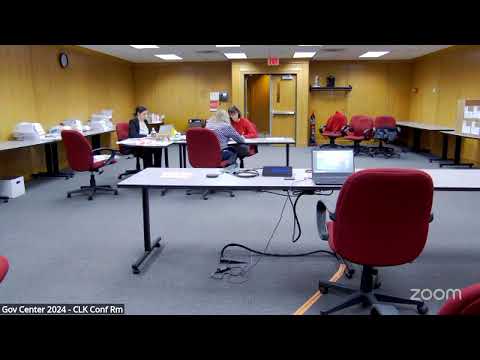
The Washington County Board of Canvassers met Monday, Feb. 24, to canvass returns from the Feb. 18, 2025, spring primary for the state superintendent of public instruction contest and to conduct a selected post-election audit.
The Washington County Board of Canvassers met Monday, Feb. 24, to canvass returns from the Feb. 18, 2025, spring primary for the state superintendent of public instruction contest and to conduct a selected post-election audit.
The canvassers reviewed precinct tapes and poll books countywide, recording precinct-level totals and noting procedural issues that county election staff said they will follow up on. The board found multiple rejected absentee ballots — typically for missing voter or witness signatures or incomplete witness addresses — a precinct that experienced ballot jamming requiring a technician, and one central-count bag that initially did not include a rejected-absentee envelope for District 4.
Why it matters: canvass proceedings confirm precinct-level counts and document handling problems that can require follow-up, corrections to election records, or additional audits. Washington County staff said documenting issues and having clerks review returns with canvass staff at drop-off reduced later work and helped surface errors promptly.
Key findings and actions - Rejected absentee ballots: Across multiple precincts canvassers recorded rejected absentee ballots for several recurring reasons: missing voter signature, missing witness signature, missing witness printed name or address, a deceased voter listed on an envelope, and duplicated envelopes. Canvass records singled out examples such as precincts reporting one to several rejected absentee envelopes; in one precinct three rejected absentee envelopes were documented with missing signatures or duplicated paperwork. - Machine problems: The Village of Kielaszka reported ballot jamming in the morning; staff contacted elections technical support (Command Central) and a technician replaced the machine. That precinct cast about 25 ballots before the replacement; canvass notes show the machine memory cards and the process for zeroing and reusing memory cards were discussed as part of follow-up with clerks. - Missing rejected-envelope: Canvass staff discovered a rejected-absentee envelope for District 4 mixed with certificate envelopes rather than in the central blue bag. The chair noted the item would be logged and staff would follow up to ensure the envelope is placed with the precinct’s paperwork for the official record. - Registered write-ins: Canvassers recorded a small number of registered write-ins in some precincts, including references to a statewide registered write-in (Doug Carlson) in certain books; most write-ins countywide were zero or a single-digit count at the precinct level. - Audit and procedure changes: The board resumed a pre-COVID practice of having clerks sit with canvass staff while returns are processed at drop-off so clerks can address errors immediately. The canvassers also selected at least one precinct (Village of Kiwasan was named during proceedings) for an audit of the single race on the ballot for the county-level audit cycle. - Recess and resumption: The board recessed midmeeting to resolve a missing envelope and other paperwork; it reconvened later the same morning and proceeded with the audit and remaining precinct reviews.
What the board documented in precinct records Canvass records attached to each precinct included: poll-book counts, inspector statements, results tapes (tape serial numbers were read aloud for the minutes), and lists of rejected absentee envelopes with the stated reason for rejection. Examples read into the record included precinct poll-book totals such as 365, 381, 395, 469 and others; precinct-level vote counts for the superintendent contest were read precinct by precinct (samples read aloud included Jeff Wright, Britney Kinser, and Jill Underly totals at various precincts). Canvassers did not report any precinct-level tape-signature discrepancies beyond isolated missing tape signatures that were corrected in the record.
Follow-up and next steps Canvass staff said they will: (1) attach and reseal any duplicate or misplaced envelopes into the correct precinct bags, (2) log and follow up with the Village of Germantown (District 4) to confirm where the rejected envelope was placed before finalizing minutes, (3) include notes about machine replacement and memory-card handling in the post-election file, and (4) complete the audit results for the selected precinct(s) and include those findings in the official canvass minutes.
No formal contested certification or court challenge was recorded during the meeting. The board documented precinct-level totals, marked incidents and rejections in the minutes, and completed the selected audit work during the session. The chair indicated staff would pursue any missing paperwork and update official records as needed.