Get Full Government Meeting Transcripts, Videos, & Alerts Forever!
Get email alerts on the Infrastructure Highway Shop topic
No spam. Unsubscribe anytime.
Marathon County staff outline options, timeline and funding strategy for new Wausau highway facility
Summary
County staff presented a multi‑year plan to replace the aging West Street highway shop in Wausau, citing safety and operational problems at the current site and preliminary funding options that could use a portion of highway reserves plus bonding.
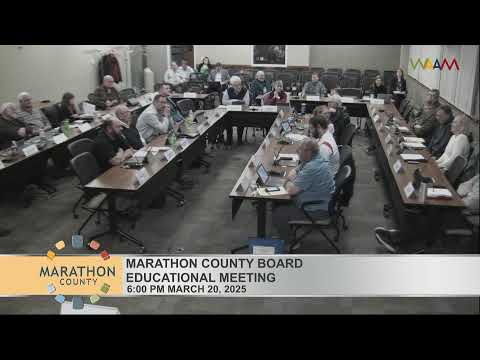
Marathon County officials presented options and a high‑level timetable Thursday for replacing the Wausau highway department’s main shop, arguing the current West Street complex is cramped, aging and creates safety and operational inefficiencies.
County administrators and highway staff told the county board’s educational meeting that the existing site is about 7.88 acres, was built in pieces over decades and constrains truck movements, employee and public parking, and parts storage. Jim (Highway Department staff) said the department’s studies estimate a standalone highway facility would need about 240,000 square feet; a consolidated site that added other county operations had previously been modeled at about 340,000 square feet.
Staff emphasized why the county has studied the issue for years and what comes next. “The time has come for the county board to make a definitive decision about the future of this vital facility,” Supervisor Fifrick said in introducing the presentation. Jim described traffic and sight‑line challenges on Seventeenth Street and West Street that complicate ingress and egress for plow trucks and other heavy equipment, and he outlined recurring maintenance and safety problems at the current complex.
Why it matters: highway operations affect winter road service, vehicle life and staff safety. County officials told supervisors the current layout forces staff to remove plows nightly, creates additional labor and wear on equipment, and leaves some large vehicles parked outdoors. Jim estimated the routine daily time lost hooking and unhooking plows costs the county “over $140,000 every year” in staff time and related expenses.
Funding and schedule: county staff presented a draft capital funding approach that would combine use of highway fund reserves and borrowing. Administrators noted an existing unassigned highway fund balance could allow a substantial up‑front contribution (staff referenced a working figure in the $26 million–$30 million range), and early concept estimates from local contractors put an initial building cost in a rough $40 million–$45 million neighborhood rather than earlier figures near $60 million. Sam (financial consultant) summarized bond‑structuring options, showing tradeoffs between 10‑, 20‑year and longer amortizations and potential mill rate impacts.
Next steps and board role: staff said they have identified potential parcels and expect to bring offers to purchase to the full board for consideration in April. Administrator Lance said acquiring land does not obligate the board to build; it is an early step that provides options. Staff outlined a multi‑phase schedule: site acquisition, schematic design/architectural services (roughly a year), and construction (roughly another year), but cautioned those timelines are subject to design and bidding.
Board members asked about alternatives, consolidation with other departments and project delivery methods. Several supervisors and staff favored using a construction manager at‑risk delivery model to contain costs; Troy (facilities) and others said the county used that approach successfully on recent projects. Supervisors also asked for a clearer cost comparison between renovating the West Street site and relocating, and staff said they will provide a detailed estimate of what it would cost to upgrade the current site and the traffic and site advantages of identified parcels when offers are brought forward.
What was not decided: the board received information but made no binding decision at the educational meeting. Staff repeatedly emphasized the board will vote at each discrete step and can take “off‑ramps” at multiple points if it chooses.
Ending: staff will email the full presentation to supervisors, supply additional costing detail and present potential land offers at the April county board meeting.