Get Full Government Meeting Transcripts, Videos, & Alerts Forever!
Get email alerts on the Development Fees topic
No spam. Unsubscribe anytime.
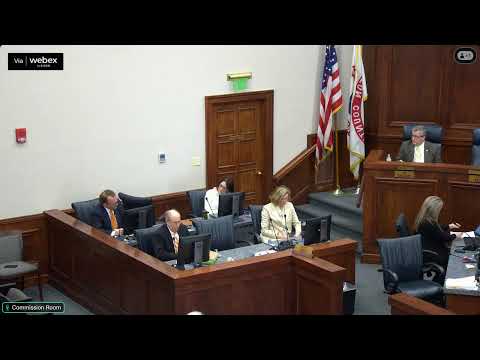
Hamilton County committee considers new development fees and narrower cul-de-sac pavement standard
Summary
Hamilton County committee members reviewed a proposal from Development Services to add a 19¢ per square foot assessment on new buildings to fund inspections and to allow 22-foot pavement widths on short cul-de-sacs.
Hamilton County committee members reviewed a proposed fee structure and related subdivision standard changes from the Department of Development Services intended to cover inspection costs for new development.
Nathan Janeway, Director of Development Services, told commissioners the proposal simplifies fees and introduces a 19¢ per square foot assessment on new buildings to defray inspection costs. Janeway said, “We believe that this will raise around $500,000 a year in revenue, which will help cover the costs of inspections.” He added that most inspections other than septic are currently covered by property tax revenue.
Janeway described three related items negotiated with local home builders: reducing pavement width from the current 26 feet to 22 feet for streets shorter than 1,000 feet (mainly short cul-de-sacs); offering developers the option to provide an engineered pavement section rather than the flat minimum of 8 inches of base rock and 2 inches of asphalt; and pursuing agreement with the wastewater authority (WWTA) to allow gravity sewers to be located outside the roadway.
Commissioner Graham said he supports narrowing in appropriate locations but asked about long-term needs, saying he did not want to be “penny wise and a dollar foolish” if roads later needed to be widened. County staff responded the narrower width applies only to cul-de-sacs under 1,000 feet and that through roads would continue to require 26-foot pavement; staff also said roadway dedication would not change immediately and expansion would remain possible later.
Home Builders representative Julian Bell thanked staff for negotiating with the industry and said builders recognize the need to pay for inspection services while being sensitive to impacts on home prices.
During public comment, Dwayne Pitts raised concerns about fire response on 22-foot-wide streets when vehicles are parked on both sides, noting that ladder trucks require space for outriggers and that reduced clearance can hamper operations. Pitts said the turntable and outrigger placement can be constrained by parked cars and asked commissioners to keep that in mind when considering narrower roadways.
The clerk read the resolution (Resolution 425-9) into the record; the transcript does not show a committee vote or final action on adoption of the fee schedule. Staff indicated the changes would likely reduce development costs in some cases and could lower long-term maintenance because there is “less road to pave.”