Get Full Government Meeting Transcripts, Videos, & Alerts Forever!
Get email alerts on the Pollinators topic
No spam. Unsubscribe anytime.
Hudson Valley Bee Habitat pitches 'Kingston Bee Line' and local pollinator parklets
Summary
Presenters from Hudson Valley Bee Habitat outlined a plan to install pollinator parklets, educational sculptures and community-maintained gardens along Kingston’s Green Line, described the existing Pollinator Sanctuary across from JFK Elementary and asked the Conservation Advisory Council for grants, maintenance partnerships and policy support.
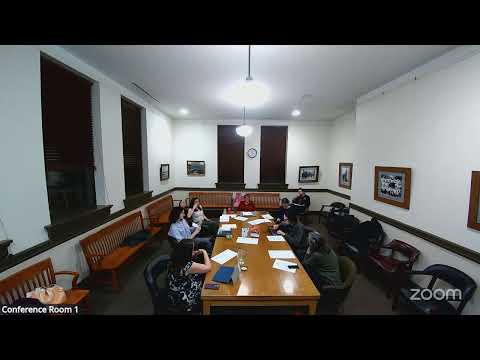
Emily, a presenter with Hudson Valley Bee Habitat, told the Kingston Conservation Advisory Council that the group uses public art and community engagement to promote pollinator conservation. "I'm Emily, and this is Alina. And, we are Kingston neighbors, and we're creatively inspiring the preservation of pollinators," she said, introducing the group's work and a short film excerpt on regional pollinator decline.
The presenters described the Kingston Bee Line: a proposed network of pollinator parklets, gardens and bee-habitat sculptures sited along the Kingston Green Line rail-trail. They said the Pollinator Sanctuary — an existing site across from JFK Elementary School in the Rondout neighborhood — was created with Kingston YMCA Farm Project youth, The Drawl, Kahn Landscape Design (Corrine Dutiel) and the Kingston Land Trust, which serves as fiscal sponsor and steward. The sanctuary was funded in part by a DEC Environmental Justice Zone Community Impact Grant; the presenters said the site was restored through sheet-mulching, native seeding and soil-building techniques.
Why it matters: the presenters framed pollinator losses as a local conservation and food-security issue and tied outreach to young people and place-based art. They argued that solitary native bees — not social honeybees — are the target for most public-site habitat because solitary bees nest in cavities and do not defend large hives. The group emphasized education: co‑design with teens, interpretive signage and opportunities for citizen science at each site.
Details presented and requests to the council: - The Pollinator Sanctuary currently hosts five instructional hives at the Thorn Preserve and a bee-habitat sculpture filled with hollow reeds; presenters said the site was expanded over several seasons and soil-building took roughly a year before planting. They estimated the sanctuary’s planted area as "about three lengths of this room" when answering a size question. - Funding and partners: presenters described a DEC Environmental Justice Zone grant for the sanctuary, Kingston Land Trust stewardship, and prior work applying to ArtPlace America (they said they sought a large grant but did not receive it). They recommended seeking grants from state programs, regional watershed funds that reimburse native-plant installations, and arts foundations. - Maintenance and volunteer model: the group asked the council to help form a pollinator conservation crew modeled on the city's prior youth crews (YMCA crew, Bark/Beautify and Restore-style crews) to run seasonal maintenance and citizen science. They said community-engagement days typically draw about 20 people for two to three hours and that much of annual upkeep is volunteer leaf cleanup, invasive vine removal, mulching and site tours. - Policy and incentives: presenters asked the council to pursue less-mow / leave‑the‑leaves maintenance policies, incentives or small reimbursements for homeowners to plant native pollinator gardens (they cited Maryland and other programs where residents received modest payments), and to encourage native-planting language in site-plan approvals and code guidance. They noted that New York State actions, including the Birds and Bees protection measures mentioned in their film, have restricted some neonicotinoids.
Council and public response: members and attendees asked about deer protection, watering needs, and long-term maintenance; presenters described hugelkultur/permaculture beds that reduced drought watering and deer-deterring tactics tested with youth volunteers. Council members suggested mapping and linking private pollinator gardens and community plots, and proposed the council and planning staff circulate the group's planting resources to applicants and residents.
Next steps noted: presenters said they are pursuing additional DEC and ecological restoration grants, building relationships with the Kingston Land Trust and local schools, and exploring Bee City USA certification for Kingston. They asked the council for letters of support for grant applications, help connecting to city-owned parcels and assistance developing a local maintenance plan for the Green Line sites.
Ending: the presenters closed by offering maps and resources and by inviting council volunteers to help at an upcoming Earth Fair and other events. The council agreed to revisit the item at the next meeting and to consider practical steps — a volunteer roster, a grants list and a small outreach packet — ahead of the city's May events.