Get Full Government Meeting Transcripts, Videos, & Alerts Forever!
Get email alerts on the Livewell Commission Review topic
No spam. Unsubscribe anytime.
Kingston LiveWell commission reviews focus teams, asks commissioners to deepen engagement
Summary
A recent meeting of the Kingston LiveWell Commission reviewed the work, membership and priorities of its focus teams and set short-term next steps for commissioner engagement and data support.
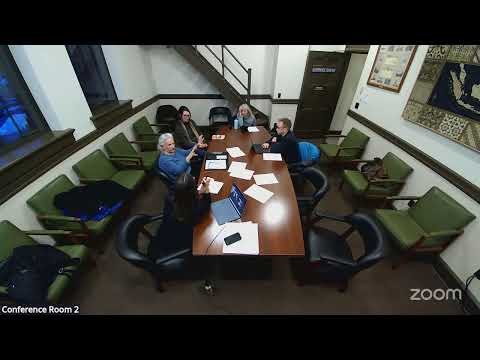
A recent meeting of the Kingston LiveWell Commission reviewed the work, membership and priorities of its focus teams and set short-term next steps for commissioner engagement and data support. Emily Flynn, director of LiveWell, led the session and said the packet of one‑page summaries is “the meat of today's meeting.”
The commission approved the minutes from its January meeting by voice vote after a motion by Anthony Fitzpatrick; a second was recorded as not specified and the chair declared the motion passed. "So moved," Fitzpatrick said when making the motion.
The meeting centered on a staff review of each focus team — AgeWell, EatWell, GrowWell, PlayWell, TravelWell and the currently dormant HealWell — and a broader discussion about what the commission as an umbrella body should do versus what each focus team should own. Flynn presented a one‑page “snapshot” for each team listing mission language, recent accomplishments, attendance and outstanding questions. Katrina Williams, deputy commissioner of the Ulster County Department of Mental Health, urged commissioners to “keep in mind as Emily moves forward, kind of where, what is piquing your interest.”
Why it matters: commissioners and staff said clearer, measurable annual goals and a modest operating budget are needed to recruit volunteers, justify grant requests and show impact. Flynn told the group the city department’s 2025 budget allocates $2,000 per focus team for the year; commissioners discussed using that seed funding while identifying larger, external funding sources for sustained work.
What commissioners said and asked - Commissioners repeatedly asked whether each focus team’s mission should be narrowed and tied to specific, time‑bound goals (SMART or “SMARTY,” an inclusion‑and‑equity variant mentioned in the meeting). - Several speakers emphasized volunteer recruitment and clearer tiers of engagement (for example, attendees-only, occasional contributors, or active project leads) so commissioners can pick roles that match their capacity and expertise. - Commissioners asked how LiveWell and focus teams should coordinate with the City of Kingston Common Council and with city departments such as Parks & Recreation and the Office for the Aging.
Focus teams — summaries from the meeting - AgeWell: Facilitated by the Office for the Aging, AgeWell’s stated theme for the year is transportation. Staff and commissioners agreed the focus team should help recruit drivers and support an existing county program rather than replicate it. Nettie (chair) and Marsha (past coordinator) were cited as primary organizers; AgeWell meets every other month (2025: third Tuesday at 2 p.m.). - EatWell: Described as working on food security and healthy eating, EatWell continues presentations and outreach (Kingston Eats, “Harvest of the Month” posters, Kingston Cooks). Commissioners raised whether EatWell’s ultimate goal is increased access, changed eating habits, or a broader food‑systems approach; staff noted EatWell will serve as the alternate‑month group for a year while the city develops a Food System Plan and a task force implements it. - GrowWell (urban agriculture): Grew from a grassroots COVID‑era effort; recent activities include an annual garden bike tour, youth farm‑stand work, and a pilot container/garden kit idea. Cindy is the current chair; attendance averages five per meeting with a rotating core of about 10 people. - PlayWell (parks and physical activity): Noted accomplishments include a “parks passport” program and a partnership to list activities on TrustUp. Commissioners asked how PlayWell should coordinate with the city Parks & Recreation department and whether PlayWell’s emphasis is behavior change (programs) or systems change (park access and maintenance). - TravelWell (transportation and active mobility): Projects include a Green Line wayfinding plan, pedestrian and bicycle counts (infrared counters and manual intersection counts), a Greenline steward program and a sidewalk improvement plan; staff noted small, project‑focused stakeholder groups and raised whether TravelWell should act as an advocacy umbrella or a city project lead. - HealWell: Currently dormant. Teresa Lynn Whitman had been the chair; commissioners discussed whether HealWell should be reactivated and whether it should serve health professionals, community members, or both.
Data, measurement and next steps Commissioners and staff agreed that the commission needs clearer impact measures and better access to health assessment data. Flynn said the commission previously conducted a health assessment and that county and regional community health needs assessments exist; she and other staff offered to convene data support (a colleague “Phil” was named as a possible technical resource) and to help map which county or regional indicators can be tied to focus‑team activities. Commissioners suggested an end‑of‑year review in about 10 months to decide whether individual focus teams should continue, change direction, or be made dormant.
Budget and staffing Flynn said LiveWell’s office has limited staffing and that the department provides modest discretionary funds; she repeated that in 2025 each focus team can expect $2,000 from the department budget. Commissioners discussed pursuing additional grants and other revenue sources and asked staff to draft a short funding prospectus and a simple budget template for any team that wants to seek outside funds.
Meeting cadence and participation Staff asked commissioners to consider attending at least one focus‑team meeting as a “field trip” to learn how the teams operate and where commissioners could contribute. Several commissioners recommended defining expectations for commissioners (for example, participation, liaison roles to the common council or city departments, communications duties) so volunteer roles are clearer and more consistent.
Ending note Flynn and the chair agreed to synthesize the meeting’s proposed “call to action,” circulate it to absent members and place a focused agenda item on the next meeting so commissioners can identify one project or role they will take on in the first quarter. “We’ll meet again next month,” Flynn said when closing the discussion.