Get Full Government Meeting Transcripts, Videos, & Alerts Forever!
Get email alerts on the Pike River Restoration topic
No spam. Unsubscribe anytime.
Kenosha County officials outline plan to restore South Branch of Pike River, seek funding
Summary
Kenosha County supervisors heard an informational presentation on the proposed South Branch Pike River restoration that county staff and partners said would restore wetlands, reduce sediment, and add a 1.5‑mile multi‑use trail while relying on a mix of federal, state, philanthropic and county funding.
Kenosha County supervisors heard an informational presentation on the proposed South Branch Pike River restoration that county staff and partners said would restore wetlands, reduce sediment, and add a 1.5‑mile multi‑use trail while relying on a mix of federal, state, philanthropic and county funding.
County Planning and Development Director Andy Buehler introduced the project and noted the Army Corps of Engineers completed a feasibility study and 60% design that established federal interest under the Corps’ Continuing Authorities Program (Section 206). Captain Tom Kinney of the U.S. Army Corps’ Chicago District said the Corps supports the county as a project partner and that the work falls within the Corps’ ecosystem restoration authority: “We’re excited to be here.”
The project area runs roughly between Highways K and S on the South Branch and targets a long‑ditched, agricultural reach of the stream. Project partners described outcomes the design would seek to achieve: restoring about 215 acres of floodplain, creating roughly 200 acres of wetlands in the corridor, meandering about 1.5 miles of straightened channel back into a natural planform, and reducing an estimated 1,000 tons of sediment entering the Pike River system. Presenters also proposed a 1.5‑mile multi‑use trail linking neighborhoods and regional trail networks.
Root‑Pike WIN representative Dave Giordano framed the restoration as a reversal of past agricultural modifications. “The opportunity you have in front of you will change the course of the Pike River South Branch,” Giordano told supervisors, noting decades of ditching and buried drain tile and citing studies and water‑quality testing behind the restoration case.
Josh Brown of the Wisconsin Department of Natural Resources described a DNR wetland mitigation grant secured for the project and said the DNR program looks favorably on restoring tile‑drained farmland. Brown said the DNR funding covers acquisition, restoration and both short‑ and some long‑term maintenance for roughly a 60‑acre portion of the site, reducing ongoing cost exposure for the county.
County staff presented the financing approach and schedule. Chris Walton, who summarized project costs, said the Army Corps previously authorized up to $10 million in federal participation based on the Corps’ feasibility work and that the current design and grants have reduced the county’s estimated additional obligation. “We’re estimating around $900,000” of direct county construction share under the current grant mix, Walton said, while noting contingencies and remaining uncertainties in final construction pricing. Walton also told supervisors the county would seek an initial resolution authorizing up to $2.5 million in additional county funding; the board already holds prior authority for $2.2 million passed in 2022.
Several supervisors pressed for specifics before any vote. Supervisor Decker asked whether the restoration would provide measurable flood‑mitigation for private properties downstream; staff replied that the project is a restoration project, not a Corps flood‑risk (Section 205) project, and that the 60% design did not show “significant flood reductions downstream,” though it may provide localized benefits in places. Supervisors also asked about operating and maintenance costs; staff said the DNR grant covers maintenance for the 60‑acre DNR parcel but that a comprehensive O&M plan and cost estimate would be produced after final design.
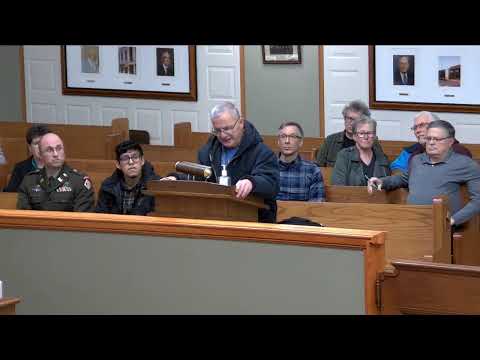
Public comment included two residents who supported the plan. Rod Grimes, who said he has lived beside the Pike Creek south branch for 56 years, told supervisors: “This project will definitely impact me… I support this project.” Alderman Rockle Lamaki of the Fifth District also urged support, saying the restoration would benefit residents and the city.
Presenters and partners outlined next steps: continued outreach, completion of design, review at the county’s Planning, Development & Extension Committee and finance committee in mid‑March, and a county board vote anticipated March 18. The meeting ended without a vote on the project; the only formal action recorded was a voice vote to adjourn.
If approved in coming weeks, the project team said work would proceed through final design, land transactions and phased construction with layered funding from the Army Corps (Section 206), the Wisconsin DNR wetland mitigation program, private grants (including the Brookwood Foundation and the Fund for Lake Michigan), Root‑Pike WIN fundraising and county bonding.