Get Full Government Meeting Transcripts, Videos, & Alerts Forever!
Get email alerts on the Pike River Restoration topic
No spam. Unsubscribe anytime.
Kenosha County board approves funding, land acquisition to advance Pike River South Branch restoration
Summary
After extensive public comment, the Kenosha County Board voted to authorize up to $2.5 million in general-obligation borrowing and to purchase properties needed to complete phase 1 of the Pike River South Branch restoration project.
Kenosha County supervisors on March 4 voted to move forward on the Pike River South Branch restoration project, approving an initial borrowing authorization of up to $2.5 million for waterway projects and authorizing acquisition of properties tied to the project.
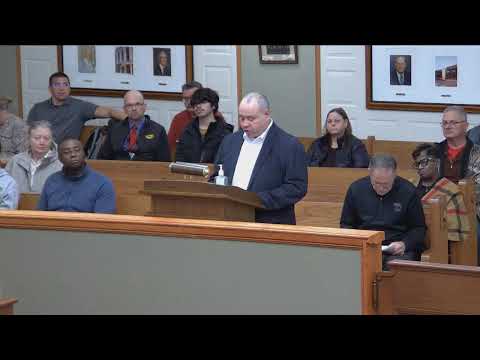
The measures came after roughly an hour of public comment from residents, local conservation leaders and university representatives who urged the board to approve the work to reduce erosion, improve water quality and restore habitat. "I encourage you to vote in favor of this resolution to support the final leg of the Pike River restoration project to protect Lake Michigan and finish the job that Mount Pleasant started," said Nancy Washburn, trustee of the Village of Mount Pleasant and an abutting property owner to the Pike River.
Supporters described ecological and community benefits. John Scalbeck, professor of geoscience at the University of Wisconsin–Parkside, said restoring the South Branch will reduce downstream impacts across the Great Lakes watershed. Phil Hirsch, vice chancellor for finance and administration at UW–Parkside, and TJ Levesque, executive director of Hawthorne Hollow Nature Sanctuary and Arboretum, said the project will provide research and educational opportunities and reduce stormwater impacts. Craig Helker, a fisheries biologist with the Wisconsin Department of Natural Resources, told supervisors the South Branch is listed under federal impaired waters rules for total phosphorus and that restoration projects like this help reduce pollutant loads.
The board moved Resolutions 87 and 88 to the start of the agenda because of the large public turnout related to the South Branch items. Resolution 87, described in committee as an initial resolution authorizing the issuance of up to $2,500,000 in general obligation bonds or notes for waterway projects, was moved by Supervisor Gence and seconded by Supervisor Nudo; it passed unanimously. Supervisor Gence told the board the total authorized borrowing for the project, including prior initial resolutions, would total $5,125,000, the stated cost of the project as presented to the board.
Resolution 88, approving a plat plan and authorizing acquisition of the northern and middle properties associated with that plat plan, was moved by Supervisor Brown and seconded by Supervisor Gence and also passed unanimously. Board members said the property acquisitions are necessary to secure access and construct the planned stormwater-infiltrating wetlands and channel stabilization elements included in phase 1 of the South Branch restoration.
Local residents and downstream stakeholders emphasized community and economic benefits, in addition to ecological gains. Greg Thompson, representing members of Kenosha Country Club, said erosion along the Pike River had reduced course land and impacted recreational use; the club submitted a letter urging timely implementation. Several speakers, including Dave and Anna Giordano, described visible suspended solids and stormwater impacts they have observed and urged supervisors to capitalize on federal, state and private funding partners identified in planning documents.
County staff and project backers highlighted multi-agency collaboration. Monty Osterman, who described his roles with county and national conservation organizations, praised the coordination among federal, state, nonprofit and local partners. Anna Giordano and other stakeholders thanked County Executive Samantha Kirkman and past county administrations and partners for helping assemble grants and design work that have made a new path forward possible.
The board did not vote on final construction contracts at the meeting; the actions taken authorize borrowing and property acquisition to allow the county and partners to complete design and move toward construction. Several speakers and supervisors noted the project has been discussed for years—citing planning documents dating to the early 2000s and continued coordination with the U.S. Army Corps of Engineers and state agencies.
The board’s unanimous votes clear the way for the county to accept grant funding and finalize land purchases needed to implement the initial phase of the South Branch restoration. Further project steps, including detailed engineering, final funding agreements and construction timelines, will be addressed in subsequent committee and county board items.