Get Full Government Meeting Transcripts, Videos, & Alerts Forever!
Get email alerts on the Hemp Regulation topic
No spam. Unsubscribe anytime.
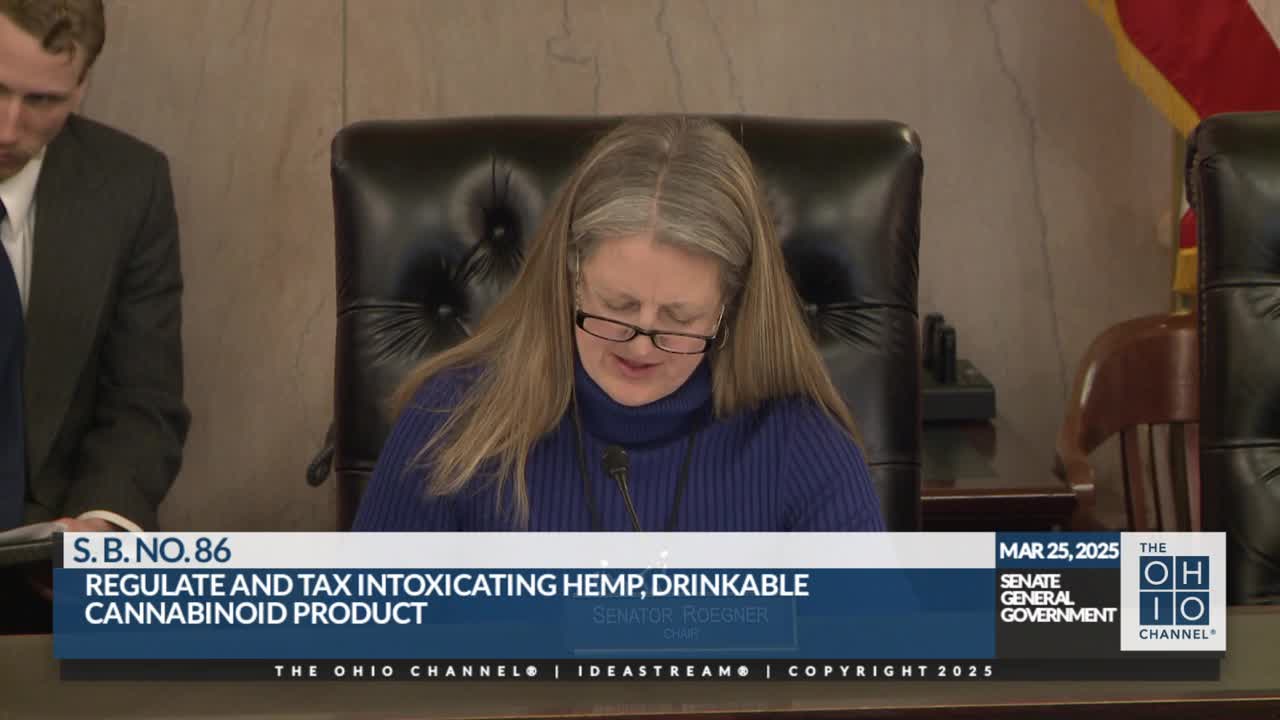
Heated testimony on Senate Bill 86: hemp businesses warn THC caps, dispensary carve-out would shutter small retailers
Summary
Senate Bill 86 drew extensive testimony from hemp retailers, manufacturers and medical professionals who warned that proposed per‑serving and per‑container delta‑9 THC limits and proposals to move products into marijuana dispensaries would close many small hemp stores and drive consumers to unregulated channels.
Senate Bill 86 — a bill that would limit intoxicating hemp products and, in some versions discussed at the March 18 hearing, move higher‑THC hemp products into the state’s marijuana dispensary system — drew lengthy, divided testimony from business owners, manufacturers, medical professionals and industry trade groups.
Proponents of strict limits were not prominently represented in the in‑person testimony at this hearing; most of the people who spoke in person urged the committee to avoid an outright ban or a wholesale transfer of hemp products into the dispensary system and instead favored a regulatory framework that distinguishes product types, requires testing, and protects youth access.
Small-business owners who sell full‑spectrum hemp testified that the bill’s proposed caps — which several witnesses cited as 0.5 milligrams of delta‑9 THC per serving and 2 milligrams per package — would eliminate the majority of their inventory and force many local retailers out of business. Robert McClure, owner of SunMed Your CBD Store in Centerville, said his top‑selling 3,000‑mg full‑spectrum tincture contains about 2.5 mg of THC per serving in a 30‑day supply and relies on a roughly 40:1 CBD:THC ratio that he said reduces psychotropic effects. “Most of our customers are not looking to get high; they are looking for relief,” McClure said.
Manufacturers and industry groups warned of economic harm and possible legal vulnerability. James Higdon of Cornbread Hemp, a Kentucky manufacturer that sells into Ohio, said moving most hemp products into dispensaries would block out‑of‑state manufacturers from Ohio retail and could invite dormant‑commerce‑clause litigation. Dr. JJ Coombs, a pharmaceutical scientist and CEO of several hemp companies, urged “sensible, targeted regulation” that protects consumers and legitimate businesses without fueling the illicit market.
Other witnesses, including Kristen Mullins of the Ohio Grocers Association, urged regulatory controls rather than a ban. Mullins said retailers have “rigid protocols” for age‑restricted sales and supported requirements such as age‑verification, child‑resistant packaging, labeling and testing. Several witnesses urged the committee to exempt topicals and some oils — and staff later confirmed to the room that oils and creams are carved out of the bill as drafted.
Some testifiers urged the committee to focus enforcement on synthetic or lab‑created cannabinoids and other bad actors rather than broadly restricting naturally derived hemp products. Don Wirtschafter, a lawyer with industry experience, argued many synthetic additives already violate existing law and that enforcement resources for the Department of Health and Agriculture are the proper remedy rather than new tolerance limits.
Manufacturers and processors also raised technical concerns about "work‑in‑progress" materials used during manufacturing that can temporarily exceed federal 0.3% THC thresholds during processing; witnesses said the bill should not criminalize or disrupt lawful manufacturing practices and asked for safe‑harbor language and clear definitions of "intoxicating."
Committee members asked several witnesses detailed questions about product formats, testing, consumer behavior and whether stricter limits would simply push consumers to unregulated online markets or to dispensaries. Senator Mora asked staff to clarify whether oils and creams were affected; House staff confirmed the bill as drafted did not regulate oils and topicals.
No final action or vote on SB 86 was taken at the hearing. Several witnesses said they expect a regulatory compromise and asked to work with legislators on an alternative that would preserve consumer access, public safety protections and a pathway for legitimate hemp licensees to operate in Ohio.