Get Full Government Meeting Transcripts, Videos, & Alerts Forever!
Get email alerts on the Municipal Finance topic
No spam. Unsubscribe anytime.
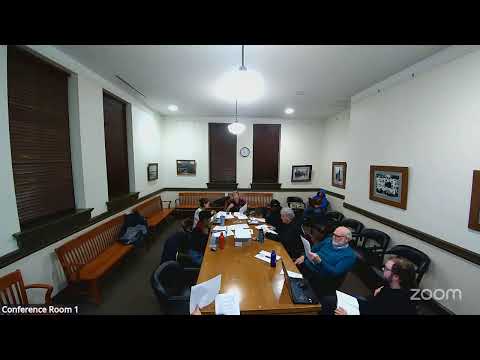
Kingston caucus reviews year-end 2024 budget transfers for multiple departments
Summary
At a Kingston Common Council caucus, members discussed four 2024 budget-transfer resolutions covering billing and safety, parks and recreation, fire, and the city clerk’s office; all transfers were presented as internal adjustments drawing on fund balance or internal accounts, with no formal votes recorded in the caucus.
At a Kingston Common Council caucus meeting, council participants reviewed four 2024 budget-transfer resolutions intended to balance departmental accounts ahead of final year-end closing.
Resolution 13 would authorize a $1,746.76 transfer for the billing and safety department as an internal balance adjustment. Resolution 14 would transfer $13,950 from fund balance to the parks and recreation department to cover an employee retirement payout. Resolution 15 would authorize a $492,552.89 transfer in the fire department to cover year-end overages tied in part to balancing costs associated with a new ambulance service. Resolution 16 would authorize a $70,000 transfer in the city clerk’s office, drawn from fund balance to cover expenses and judgments, including the city’s deductible.
The caucus facilitator described these as internal transfers with “0 financial impact” to the city budget overall because they move funds within the city’s accounting, not to increase overall spending. A participant identified as Don recommended taking the parks payout from fund balance because contingency was depleted at year end; another participant confirmed the city’s general fund balance remained “more than healthy.”
Council members and caucus participants voiced general agreement during the review; no formal roll-call votes or final approvals were recorded in the transcript of the caucus. The items are on the council agenda for formal consideration, where a recorded vote may occur.
The discussion focused on accounting mechanics rather than policy changes: whether to draw from contingency or fund balance, and ensuring the transfers align with the city’s disposition and budget policies. The caucus facilitator noted the transfers are meant to “balance accounts” and asked for consent; attendees responded in the affirmative but did not complete formal motions in caucus.
Next steps: these resolutions will appear on the council’s public agenda for formal action. The caucus record shows consensus to bring the items forward, but the transcript does not record final votes.