Get Full Government Meeting Transcripts, Videos, & Alerts Forever!
Get email alerts on the Land Conservation topic
No spam. Unsubscribe anytime.
Ice Age Trail Alliance briefs Chippewa County on route plans, land purchases and hunting rules
Summary
The Ice Age Trail Alliance presented an update to the Chippewa County Board and members of the public raised concerns about potential impacts on hunting rights and the local tax base. The Alliance described recent land purchases, its corridor planning approach and local partnership work.
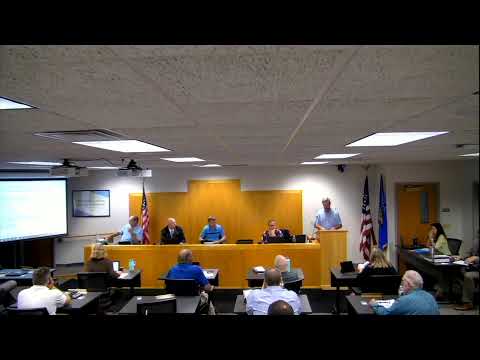
Kevin Thuzias, senior director of land conservation for the Ice Age Trail Alliance, briefed the Chippewa County Board of Supervisors on Nov. 30 on the nonprofit’s plans to route the Ice Age National Scenic Trail through parts of northern Chippewa County and nearby townships. Thuzias said the Alliance is working with private landowners and public partners, has acquired a 74-acre parcel called the Otter Lake Preserve with private funds, and is using a corridor planning approach rather than purchasing all land inside a broad outline.
The update came during the board’s reports section and followed public comment from Dean Gullickson, who urged the board to vote against any county support for a project he said would remove large tracts from the tax rolls and curtail hunting. Gullickson said he believes the planned corridor would “gobble up hundreds and maybe thousands of acres” and voiced concern that parks or federal ownership could restrict hunting and shrink town tax bases, harming services such as road plowing and schools.
Thuzias described the Trail as a long-term, parcel-by-parcel effort that follows glacial features and that the Alliance works “with willing sellers only.” He said about 700 miles of trail are currently on the ground statewide, with a projected 1,200 miles at completion; within Chippewa County the Alliance estimates 23.3 miles currently on the ground and roughly 35 miles still to establish. He said the Alliance and partners manage and help maintain roughly 10,000 acres along the trail and that the Alliance owns about 3,000 acres statewide.
On hunting, Thuzias said the Alliance allows hunting on “almost every property” it owns and that some properties and a few state parcels have buffers where hunting is restricted; he estimated about 90% of properties acquired allow hunting. He also said that when state funding is used, management requirements may include allowances for hunting and that the National Park Service and state Department of Natural Resources (DNR) are partners on planning and some stewardship funding.
Thuzias outlined the Otter Lake Preserve transaction: the Alliance obtained an option late in 2023 and closed on the roughly 74-acre parcel in December using private funds, applied for state stewardship grants, and expects to request county land-protection funding; trail construction and a parking area on County H could follow as soon as next year if funding and approvals proceed. He said the Alliance sometimes pays fees in lieu of taxes to townships or pays full taxes depending on how the property will be used and that whether a parcel is removed from the tax rolls varies by case.
Board members and county staff pressed for details. Supervisor Hannings asked whether the redlined area Thuzias showed would include all land inside the corridor; Thuzias confirmed the example parcel was 74 acres and that the corridor maps are planning tools, not purchase footprints. Supervisor Hennick and others asked for documentation to refute an earlier public comment that suggested a five-mile-wide contiguous purchase; Thuzias and participants said there is no precedent for five-mile-wide acquisitions and that the corridor plan contemplates much narrower, property-by-property acquisitions.
Thuzias said the Alliance seeks state stewardship and private funds and has used about $3 million in private funding over the last four years for acquisitions statewide. He said volunteers provide the majority of trail construction and maintenance, noting more than 100,000 volunteer hours last year. Thuzias also described partnership work with Cornell and other communities, including modest community fees in exchange for outreach support and promotional efforts.
Gullickson and other residents emphasized local fiscal concerns and asked that the county ensure public notice and opportunities to comment on future land transactions. Thuzias and board members said future transactions would be handled through the Alliance’s standard acquisition and grant processes, which include public comment periods when state or county funding and grant contracts are involved.
Ending: Thuzias said the Alliance would continue meeting with landowners and county staff and would return with additional details and any items that require board or committee action. Gullickson reiterated his opposition to broad corridor purchases without more local agreement.