Get Full Government Meeting Transcripts, Videos, & Alerts Forever!
Get email alerts on the Personnel topic
No spam. Unsubscribe anytime.
County HR director outlines staffing, turnover and reforms; board debates military-leave language
Summary
Human Resources Director Tony Hoefelder presented staffing data, turnover analysis and safety improvements; later the board approved HR policy revisions but voted to restore original military-leave language after legal questions and debate.
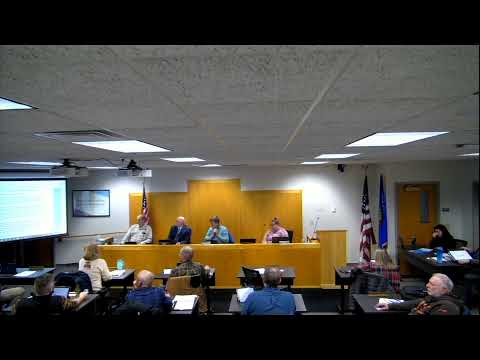
Chippewa County’s human resources director gave an overview of department functions, staffing counts, turnover trends and risk-management steps, and the county board later approved a slate of HR policy revisions after a contested discussion about military-leave language.
Tony Hoefelder, the county human resources director, told supervisors the county had 445 employees as of Sept. 30, 2024, including 378 full-time staff, and described HR functions from recruitment and onboarding to leave management and safety. He said the county’s labor budget is about 34% of the total budget and reviewed year-to-year turnover data and changes in recruitment workload. "We had 94 recruitments in 2022 and 98 in 2023," Hoefelder said, noting the frequency of reruns for hard-to-fill roles.
Hoefelder reviewed worker-compensation budgeting, a safety trainer contract and the HR team’s roles. He described attention to accurate turnover measurement and said most voluntary separations occur in the 0–5 year tenure bracket, concentrated in the first two years of employment.
Later in the meeting the board considered six new HR policies (second reading) and a larger set of manual revisions. Supervisors approved the policies and the manual revisions with one item—Section 9 on military leave—set aside for further consideration. After additional debate about federal law and benefit accruals for deployed service members, the board voted to restore the original military-leave language rather than adopt the revision proposed by staff. The motion to revert the change passed 15–4.
During the debate, supervisors and corporate counsel discussed the interplay of USERRA, ERISA and COBRA provisions and whether county policy could legally or prudently reduce benefits for employees called to military service. Corporate counsel told the board she believed the staff-recommended language complied with USERRA, but several supervisors asked for outside confirmation from federal or state military legal offices before changing the county’s existing benefit practice.
The board also approved a change to permit supervisors to receive compensation for up to 100 days of committee service in 2025 (a statutory procedural vote) and completed routine appointments and commission approvals during the session.