Lifetime Citizen Portal Access — AI Briefings, Alerts & Unlimited Follows
Sponsor testifies for bill to ban hydraulic fracturing beneath Ohio state parks
Loading...
Summary
Minority Leader Antonio introduced the PERSERV Act (Senate Bill 132) at a Senate Agriculture and Natural Resources Committee hearing, saying the bill would ban horizontal chemical extraction of oil or gas under Ohio state parks and public lands; committee members asked for sources and details but took no vote.
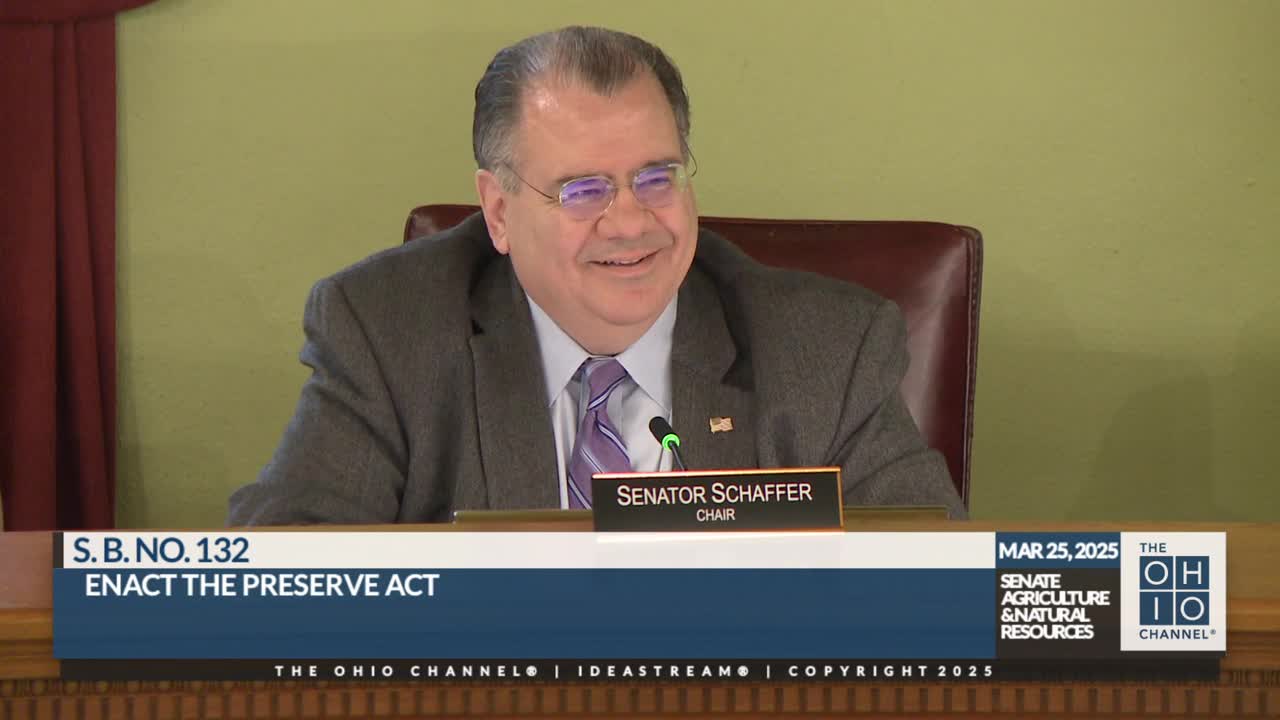
Minority Leader Antonio, sponsor of Senate Bill 132, told the Senate Agriculture and Natural Resources Committee that the PERSERV Act would “ban the horizontal chemical extraction process of oil or gas from underneath Ohio State parks and public lands.” The bill was presented during a committee hearing; no committee vote was taken.
The bill’s sponsor said recent accidents at hydraulic fracturing sites, including an explosion near Salt Fork State Park earlier this year, show risks to parks and nearby communities. Antonio told the committee that, according to advocacy group Save Ohio Parks and an analysis by FactTracker Alliance, Ohio has experienced about 1,400 incidents related to oil and gas operations over the past five years. “It’s not a matter of if, but a disaster of when will strike fracking operations near an Ohio State Park wildlife area or other public land,” he said in his testimony.
Antonio and his testimony linked those operational incidents to potential ecological and human-health harms, citing studies that associate exposure near oil-and-gas operations with cancer, gastrointestinal, developmental and neurological conditions and with increased school absences and hospital visits. He also argued that fracking sites are often sited near vulnerable institutions such as schools, nursing homes and hospitals and that reduced federal National Park Service staffing increases the need for state-level protections.
Committee members questioned the sponsor about sources and proximity of the cited explosion. Senator Allen asked which report supports the claim that fracking sites are located near schools, nursing homes and hospitals; Antonio referred the committee to a 2016 report on EnvironmentAmerica.org and said the FactTracker Alliance analysis was cited by Save Ohio Parks. Chair Schafer asked whether the explosion site was on private property and how close it was to the park “as the crow flies.” Antonio said he did not know the straight-line distance and that, to his understanding, the site was on private property.
Antonio acknowledged gaps in public information about specific chemicals and exposure thresholds, saying some chemical formulations are proprietary and that questions remain about how long contaminants persist in soil and water. He described the bill as intended to start a broader conversation about safeguarding parks and the public that uses them.
The committee recorded the sponsor’s testimony and a period of questions but did not vote on the bill during the hearing.