Get Full Government Meeting Transcripts, Videos, & Alerts Forever!
Get email alerts on the Veterans And Public Safety topic
No spam. Unsubscribe anytime.
Sponsors propose work-zone education, speed monitoring and enhanced penalties in House Bill 82
Summary
House Bill 82 would require driver education to include work-zone safety, allow private contractors to install speed-monitoring devices and permit enhanced penalties and mandatory safety courses after work-zone offenses; sponsors said the package aims to reduce worker injuries and fatalities on road projects.
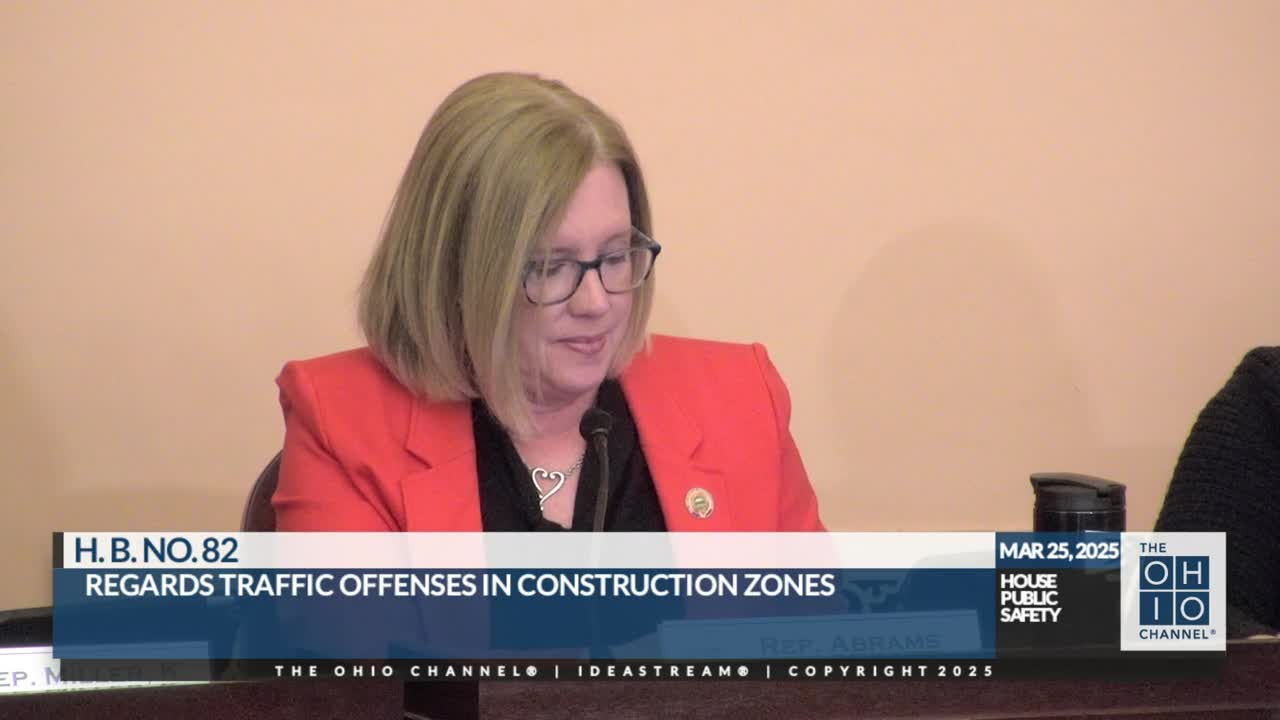
House Bill 82, presented to the House Public Safety Committee, would expand education and enforcement tools intended to reduce crashes and injuries in highway work zones. Sponsors described a mix of driver-education requirements, permissive use of contractor-installed speed monitors and video, mandatory safe-driving courses after work-zone offenses and escalated penalties for repeat or reckless violations.
"One of the things that they deserve more than anything else ... is to be able to go home," sponsor Gary Click said, describing work-zone fatalities and injuries and urging measures to protect road workers. Representative Mark Johnson, co‑sponsor, described provisions that would require driver’s education programs to teach about work-zone dangers, mandate completion of an approved safe-driving course after an offense in a work zone, and make it permissible for private contractors to install speed-monitoring devices and flashing lights to alert motorists.
Sponsors said the bill would not create automated-ticketing systems for camera footage; rather, footage would be available to law enforcement investigating reported violations. "These cameras are not ... enable[d] to issue automatic citations," a sponsor said, adding that footage could provide prima facie evidence for officers investigating incidents where workers were endangered. Sponsors also proposed a financial penalty (a $400 fine in the draft) if a motorist fails to complete the mandated safety course; sponsors said judges or judicial conferences had suggested changing how the fine is levied and dismissed in practice.
Committee members asked about overlaps with existing Ohio Revised Code provisions that already address obeying traffic-control devices and reckless operation. Representative Brent asked where funding for cameras would come from; sponsors said private contractors could include monitoring devices in bid specifications for applicable interstate or four-lane projects and emphasized the changes would be permissive and targeted to specified projects. Ranking Member Thomas suggested employing detailed, off-duty law-enforcement officers on projects as an alternative enforcement approach.
No vote was taken in the first hearing; sponsors said they would consider amendments on reporting, camera funding and the structure of fines and suspensions.
Ending: First hearing concluded; sponsors signaled willingness to consider amendments to clarify funding, reporting and penalty administration.