Get Full Government Meeting Transcripts, Videos, & Alerts Forever!
Get email alerts on the Veterans And Public Safety topic
No spam. Unsubscribe anytime.
Sponsors propose 14-foot 'halo' around emergency scenes in first hearing on House Bill 20
Summary
At a House Public Safety Committee hearing, sponsors of House Bill 20 said the measure would create a 14-foot buffer around active emergency scenes to keep bystanders from impeding first responders; committee members asked about overlap with existing obstruction laws and how the rule would be enforced.
House Bill 20, introduced at a House Public Safety Committee hearing, would create a 14-foot buffer — described by sponsors as a "halo" — around active emergency scenes and make knowingly crossing that buffer a misdemeanor-level offense. Sponsors said the measure is intended to give police, firefighters and emergency medical personnel uninterrupted space to treat victims and manage volatile scenes.
"Just give us 14 feet to do our jobs," Representative Phil Plummer said in sponsor testimony, adding that the bill would include warnings before any enforcement action. Representative Thomas Hall, a joint sponsor, said first responders often do not have time to set up caution tape and need a clear, readily understood distance to keep bystanders back. "We set the 14 feet," Hall said, noting other states have adopted similar measures (he cited Florida's 25-foot standard).
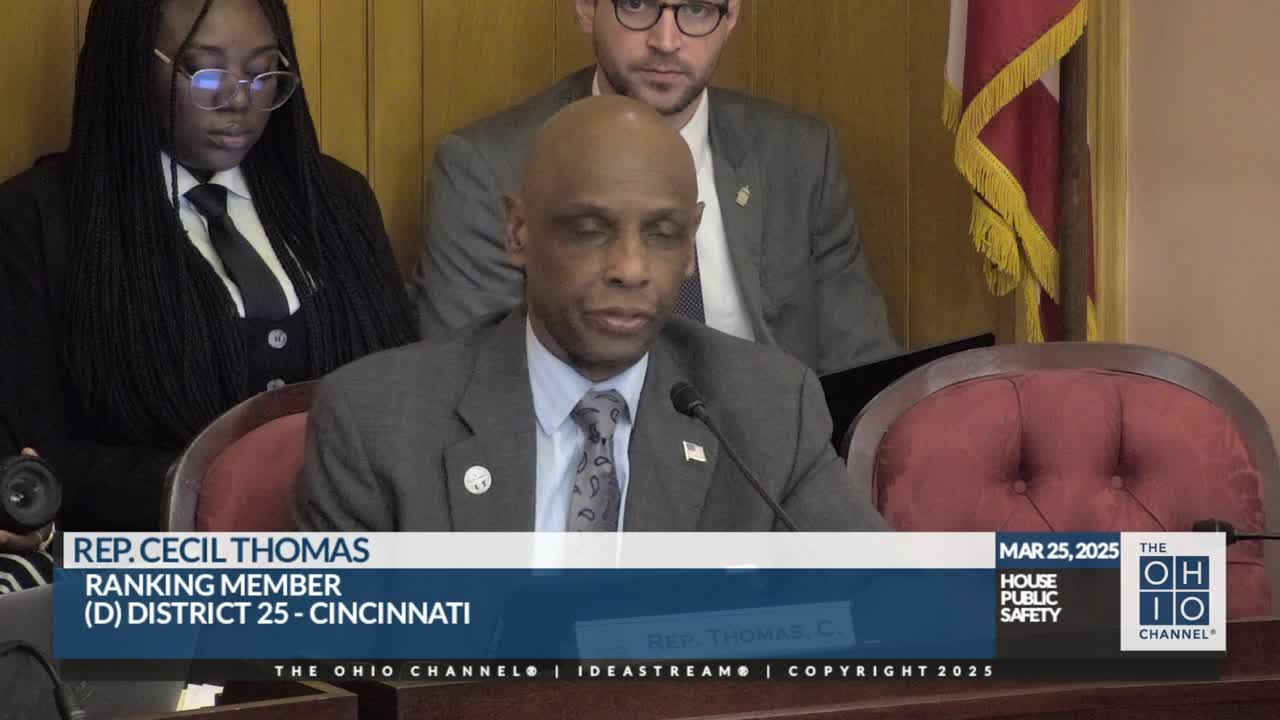
The committee's lawmakers pressed sponsors on operational details and possible legal overlap. Ranking Member Thomas and Representative Humphrey asked whether the new offense would duplicate existing obstruction-of-official-business statutes; Thomas noted officers already can arrest people who "insist on continuing" despite orders to step back. Representative Humphrey asked why the sponsors chose a higher-level misdemeanor (M1) and whether the offense should instead align with existing obstruction penalties.
Sponsors responded that the bill is intended both as an "educational piece" and as a clearer, narrower standard than the broader obstruction statutes. Plummer said the provision is "not absolute" and would allow for warnings and for compassionate exceptions — for example, relatives who rush a scene — but would target individuals who "won't back up" and interfere with lifesaving work.
Committee members also raised enforcement and due-process concerns. Representative Brent asked what constitutes "reasonable fear" justifying enforcement, and whether first responders other than police (for example, EMS personnel) would be able to effect arrests. Sponsors said practices would vary by department and that most enforcement would be immediate actions by officers on scene; reports would be documented in standard incident reports for later review. Representative Brewer and others warned the measure could unintentionally penalize bystanders who attempt to interfere in a legitimate rescue, citing the need for carve-outs and discretion. Several members suggested amendments — for example, requiring first responders to announce the rule or to clarify that the new offense should not be stacked with obstructing-official-business charges.
No vote was taken. The committee concluded the first hearing and sponsors said they would work with members on amendments addressing penalties, exceptions and enforcement procedures.
Ending: The committee held the bill's first hearing; sponsors said they will confer with prosecutors and committee members on narrowing statutory language and possible amendments before any further action.