Get Full Government Meeting Transcripts, Videos, & Alerts Forever!
Get email alerts on the First Responders topic
No spam. Unsubscribe anytime.
Committee hears bill to create 14-foot buffer around emergency scenes
Summary
Sponsors of House Bill 20 told the Ohio House Public Safety Committee the measure would give first responders a 14-foot “halo” around crash and emergency scenes; members questioned whether the change duplicates existing obstruction laws and asked about penalties and carve-outs for grieving relatives.
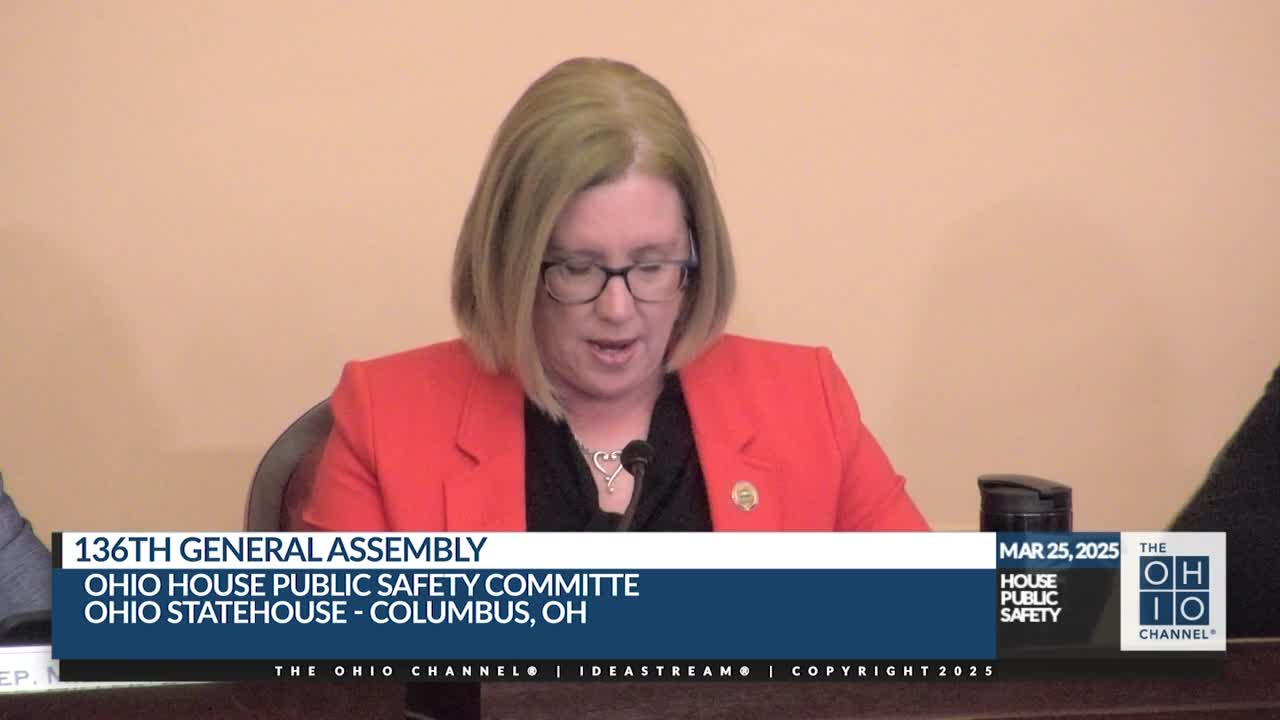
Representatives Thomas Hall and Phil Plummer introduced House Bill 20 at a hearing of the Ohio House Public Safety Committee, asking lawmakers to create a 14-foot buffer around emergency scenes so police, firefighters and EMS can perform lifesaving tasks without bystanders interfering.
"This bill is an opportunity for us to once again provide protections for those that day in and day out put their lives on the line," Representative Thomas Hall said in sponsor testimony, describing scenes in which quick, uninterrupted care can mean life or death.
The bill would give first responders an explicit space—referred to repeatedly in testimony as a 14-foot "halo"—and would include a warning requirement before arrest or charge, sponsors said. "Just give us 14 feet to do our jobs," Representative Phil Plummer said. "We'll work on the other issues."
Committee members pressed sponsors on several points. Representative Brent asked what the bill means by "reasonable fear" and how a citizen would file a complaint; sponsors answered that the proposal is intended for immediate on-scene enforcement with an initial warning followed by potential arrest if a person refuses to step back. Representative Humphrey and others asked why the bill creates a new misdemeanor rather than relying on existing obstruction statutes. Ranking Member Thomas said current law—obstructing official business—already gives officers a route to arrest individuals who impede emergency duties. Sponsors responded they were open to amendments, including lowering the initial offense from an M1 to an M2 and adding clearer language or procedure to avoid overreach.
Members also raised concerns about unintended consequences. Representative Brewer said protesters who attempt to intervene could be swept up by the new statute; Representative Brewer and others urged explicit carve-outs or prosecutorial discretion to avoid charging people who lawfully attempt to prevent perceived wrongdoing or who approach a loved one in distress. Representative Humphrey asked whether the new misdemeanor could be "stacked" with other charges; sponsors said they were open to drafting changes that limit duplicative charges.
Sponsors pointed to similar laws in other states—testimony referenced Florida’s 25-foot requirement—and described the bill as primarily educational: making an expected distance clear to the public and giving officers a specific standard to cite. Several members suggested amendments to require responders to verbally warn people of the rule or to define the space in square footage for clarity.
The committee did not vote on the bill; sponsors and members said they will continue to negotiate language and possible amendments.
The committee concluded the first hearing on House Bill 20 and moved on to other items on the agenda.