Get Full Government Meeting Transcripts, Videos, & Alerts Forever!
Get email alerts on the Foreign Ownership Property Protection topic
No spam. Unsubscribe anytime.
Sponsors introduce Ohio Property Protection Act to restrict land purchases by named foreign adversaries near critical infrastructure
Summary
House Bill 1 would bar property purchases by citizens of certain foreign adversaries within 25 miles of military bases and critical infrastructure, sponsors said; members raised concerns about definitions, grandfathering of existing owners, economic impacts and enforcement complexity.
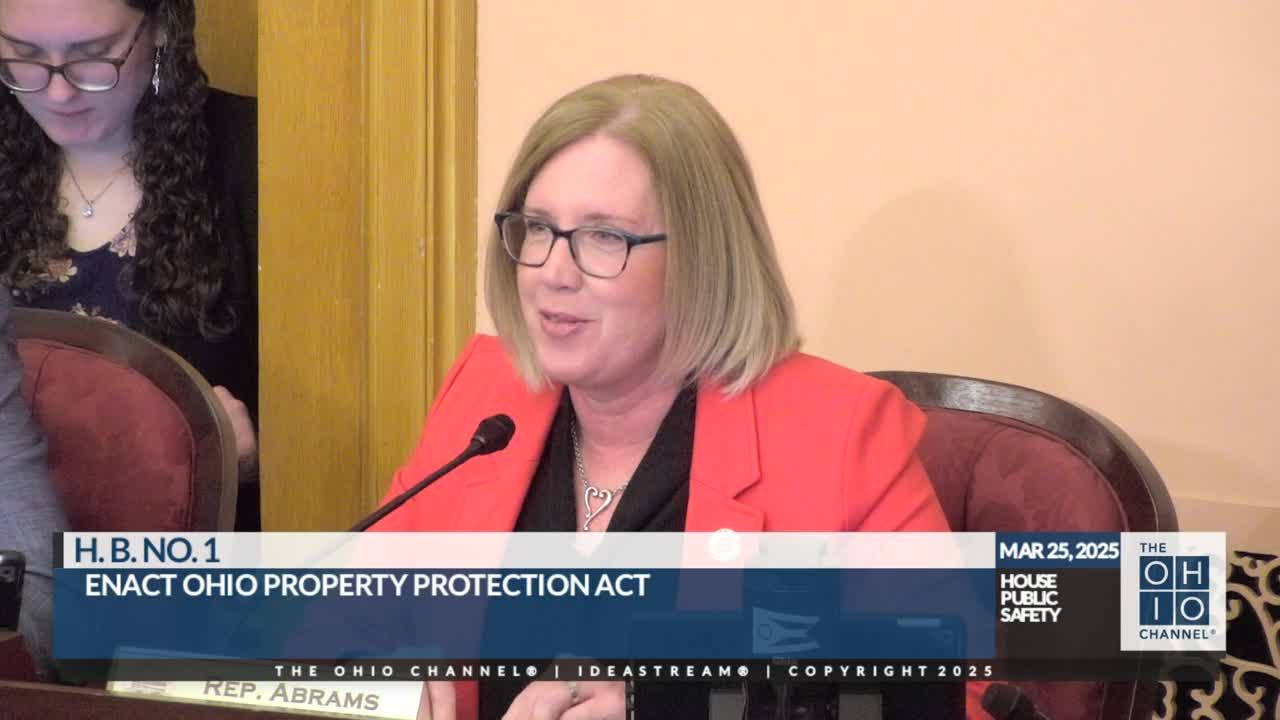
Representatives Angie King and Ray Klopfenstein testified on House Bill 1, titled the Ohio Property Protection Act, saying the measure would prohibit purchases of real property by citizens of designated foreign adversary countries within 25 miles of military installations and critical infrastructure.
Representative King framed the bill as a national‑security measure that would protect military installations, water and power facilities, refineries, communication nodes and transportation hubs from potential espionage or sabotage. She named countries the bill would target as foreign adversaries and said half of U.S. states have enacted restrictions on foreign ownership of farmland or tightened rules since 2023. Representative Klopfenstein said the conveyance form in the bill would require buyers to affirm they are not prohibited and would give local sheriffs authority to investigate and refer violations to county prosecutors.
Committee members raised several operational and civil‑liberties questions. Vice Chair Williams asked whether interested parties had raised concerns; sponsors said early discussions included Farm Bureau, the governor's office and economic development, and that deceptive ownership structures can create enforcement challenges. Representative Mullins asked about cybersecurity and investigative steps to detect problematic purchases in advance; sponsors said crafty buyers often use layered LLCs and that local tracking via conveyance forms is intended to help.
Members including Representative Willis and Representative Brewer asked about the bill's geographic reach and practical effects. Sponsors said the measure would not affect U.S. citizens or dual citizens and that existing owners from currently designated adversary countries would be grandfathered and not required to divest. Members asked about impacts on doctors, athletes or other legal residents who are nationals of listed countries; sponsors said the federal designation, citizenship status and existing visa paths would determine applicability.
No formal vote was taken; sponsors said the bill would require continued consultation with stakeholders on scope, the federal list of adversarial countries and enforcement mechanisms.
Ending
The committee held a first hearing and asked sponsors to refine definitions of critical infrastructure and the bill’s geographic scope, and to provide more detail on enforcement, grandfathering and economic impacts.