Get Full Government Meeting Transcripts, Videos, & Alerts Forever!
Get email alerts on the Veterans And Public Safety topic
No spam. Unsubscribe anytime.
Sponsors reintroduce Property Protection Act to bar certain foreign adversaries from buying land near sensitive sites
Summary
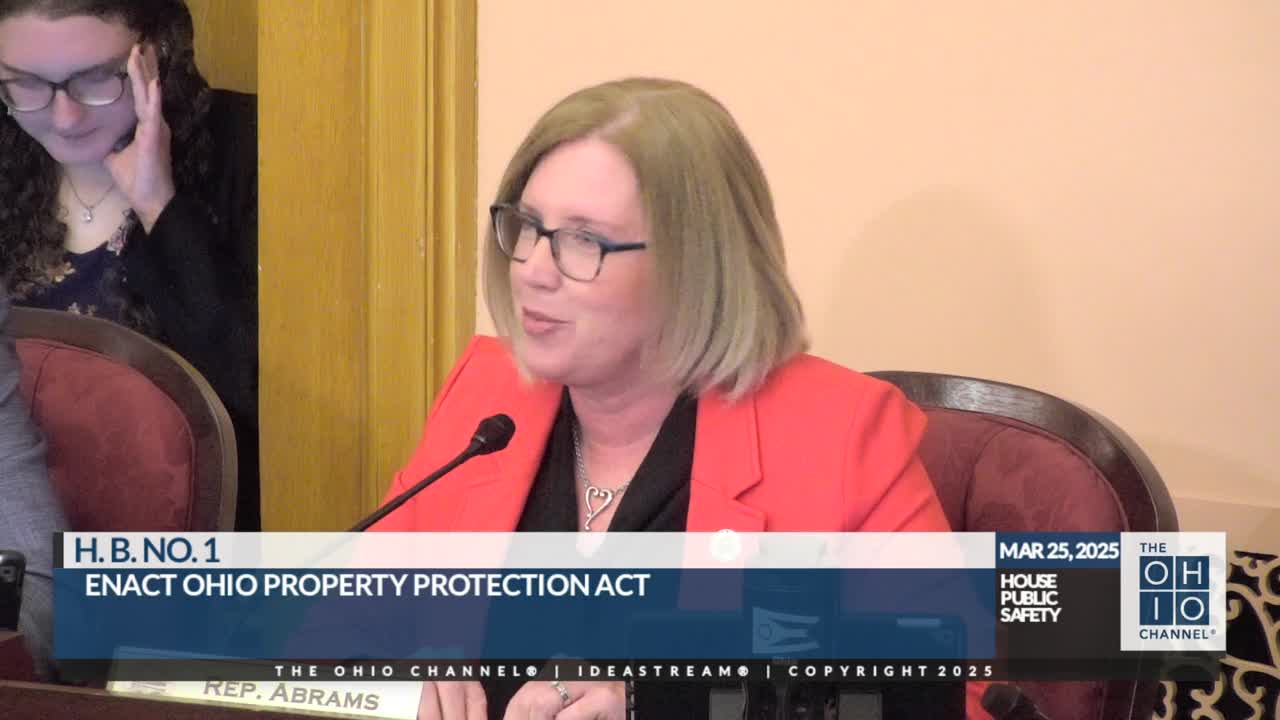
Representatives Angie King and Ray Klopfenstein presented House Bill 1, the Property Protection Act, proposing to bar purchasers tied to specified foreign adversaries from acquiring land within 25 miles of military bases or critical infrastructure.
Representatives Angie King and Ray Klopfenstein presented House Bill 1, the “Property Protection Act,” to the House Public Safety Committee and said the bill would prohibit people or entities tied to specified foreign adversary nations from purchasing land within 25 miles of military installations or listed critical infrastructure.
“This legislation will close gaps and prohibit adversarial nations from purchasing property within 25 miles of military bases or critical infrastructure,” Representative Ray Klopfenstein said in sponsor testimony, and Representative Angie King framed the bill as protecting military installations, energy, water, communications and transportation systems from potential intelligence or sabotage risks.
Why it matters: Sponsors said foreign-controlled land holdings near sensitive facilities pose national‑security risks and pointed to examples cited in testimony — including large land purchases in other states and public reporting about foreign investments — as reasons states have enacted similar restrictions. They proposed a conveyance form requiring buyers to affirm eligibility and suggested sheriffs could investigate suspected violations and refer cases to county prosecutors.
Discussion highlights - Definition and scope: The bill would apply to buyers tied to a federal list of foreign adversaries or entities; sponsors and members debated whether the 25‑mile buffer and broad definition of critical infrastructure could make much of the state effectively restricted and whether the radius should be narrowed (one legislator cited Indiana’s 10‑mile standard as a comparison). - Grandfathering and existing owners: Sponsors said existing owners on the adversary list would be grandfathered and not required to divest under the current draft. - Enforcement challenges: Sponsors acknowledged enforcement difficulties when ownership is layered through multiple LLCs and said the conveyance-attestation and county-level tracking (via the auditor’s records) would improve detection and give local law enforcement grounds to investigate. - Economic and diplomatic concerns: Members asked whether the measure would affect trade and relationships with major investors; sponsors said state guidance and careful drafting would try to balance economic interests and security.
Committee reaction and next steps: Members asked for further consultation with affected stakeholders including Farm Bureau and realtors; sponsors said early conversations had included Farm Bureau and the governor’s office and that further hearings would be needed to refine definitions and procedures.
Ending: Sponsors asked for support to pursue the bill with additional stakeholder input; the committee closed the first hearing.