Get Full Government Meeting Transcripts, Videos, & Alerts Forever!
Get email alerts on the Veterans And Public Safety topic
No spam. Unsubscribe anytime.
Ohio sponsors seek 14-foot “halo” around emergency scenes to protect responders
Summary
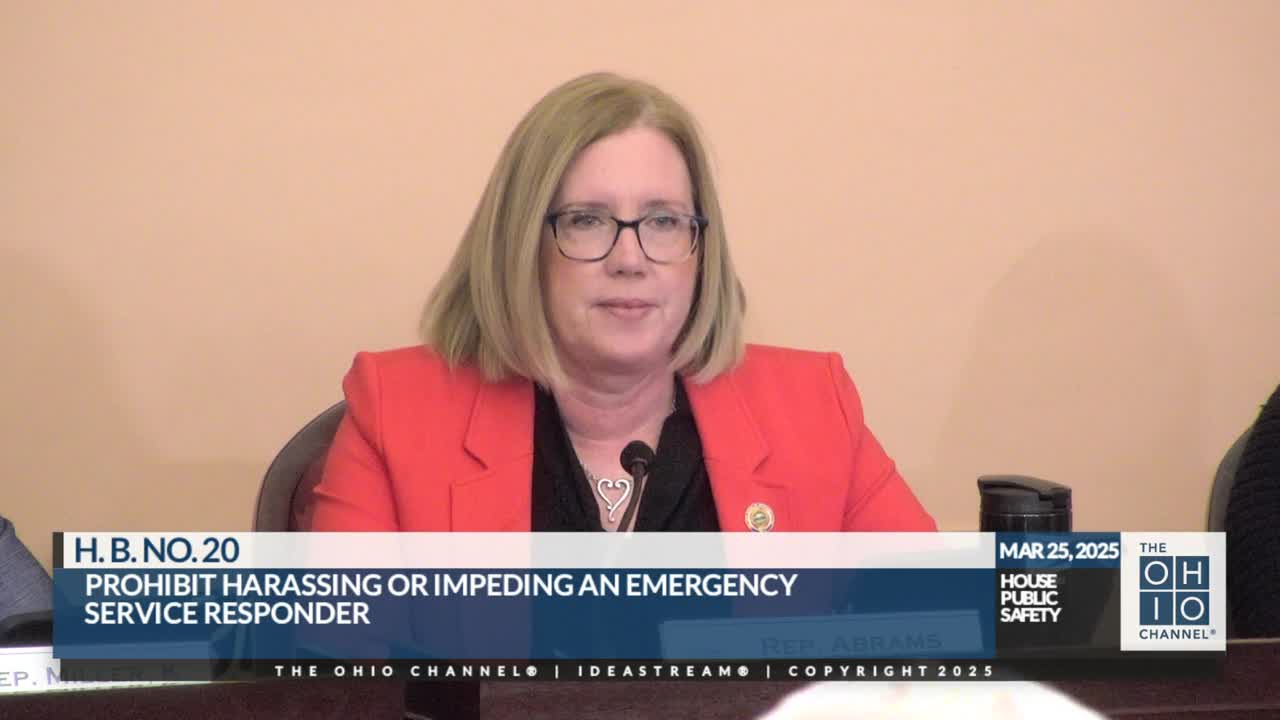
Representatives Thomas Hall and Phil Plummer told the Ohio House Public Safety Committee on March 12 that House Bill 20 would create a 14-foot “halo” or buffer around active emergency scenes and make interference with responders a misdemeanor.
Representatives Thomas Hall and Phil Plummer told the Ohio House Public Safety Committee on March 12 that House Bill 20 would create a 14-foot “halo” or buffer around active emergency scenes and make interference with responders a misdemeanor.
“We are not saying that people, bystanders cannot be helpful. We are not saying that people cannot record the event,” Representative Thomas Hall said in sponsor testimony. “This legislation is simply providing the first responders the ability and opportunity to do their jobs more effectively and remain focused on the incident at hand.”
Plummer, his joint sponsor, summarized the proposal in blunt terms: “Just give us 14 feet to do our jobs,” he said, adding that the bill would include a warning requirement before enforcement.
Why it matters: Sponsors said bystanders and “YouTubers” who crowd scenes can impede police, firefighters and EMS and that an explicit buffer would reduce risks to victims and workers. Committee members pressed sponsors on how the new offense would relate to existing obstructing-official-business law and on how prosecutors and officers would handle exceptions such as grieving relatives or people attempting to prevent obvious criminal acts.
Discussion highlights - Definition and scope: Sponsors described the proposal as a simple, immediate buffer for volatile scenes where responders sometimes lack time to set tape. Hall noted Florida has a similar law with a 25-foot zone and said the 14-foot figure is meant to be intuitive (“about from me to you”). - Enforcement and remedies: Plummer said the bill envisions warnings first and that failure to heed a warning could result in immediate arrest rather than a later complaint process. “This is more of an immediate situation,” he said. - Penalty severity: Sponsors proposed an M1 (first-degree misdemeanor) but said they were open to lowering it to an M2; several committee members suggested aligning penalties with existing obstruction statutes to avoid duplicative charges. - Exceptions and prosecutorial discretion: Representatives asked about carve-outs for grieving relatives and people intervening to prevent violence. Sponsors said officers retain discretion and prosecutors/courts would address extenuating circumstances; the bill’s sponsors expressed willingness to consider language to protect bona fide rescuers or immediate family members.
Committee reaction and next steps: Members generally expressed sympathy for the safety goals but raised concerns about (1) duplicating existing obstructing-official-business laws, (2) potential disparate enforcement, and (3) whether the public would know the new rule. Several members urged sponsors to consider amendments requiring a verbal notice at the scene or clarifying that the buffer is permissive guidance rather than an automatic criminalization of all close proximity. Sponsors said they will work with committee leadership and the Prosecutors Association to refine the language.
No formal action was taken; the testimony concluded and the committee indicated it would work with sponsors on amendments.
Ending: Sponsors asked the committee to consider the bill as an educational tool as well as an enforcement mechanism; committee leaders closed the hearing and invited further drafting and collaboration.