Get Full Government Meeting Transcripts, Videos, & Alerts Forever!
Get email alerts on the Police Operations Staffing Drones topic
No spam. Unsubscribe anytime.
Police outline summer safety plan and hiring pipeline; council presses for data on off‑duty cams, drone policy and river car removals
Summary
Cleveland police described a summer safety plan focused on hot-spot enforcement and traffic initiatives and provided recruitment and academy timelines. Councilors asked for clearer data on staffing, handling of off‑duty officers and the status of a drone policy under review by the federal monitor and the Cleveland Police Commission.
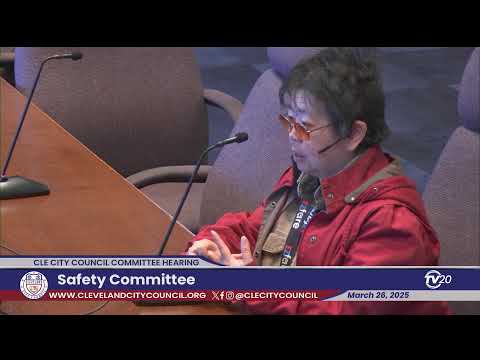
Chief Dorothy Todd and public safety staff briefed the committee on a summer safety plan and staffing pipeline at the Cleveland City Council committee meeting. The division said it will again deploy targeted "microgrid" enforcement in violent-crime hot spots, launch traffic initiatives that include partnership with the Ohio State Highway Patrol and coordinate with federal, state and local partners for violent-crime responses.
"A big part of our enforcement efforts will be traffic initiatives," Chief Todd said, adding the summer plan will include nuisance-property enforcement, graffiti cleanup and work with other city departments. Police staff said the plan was still being finalized and will be shared with council when complete.
On staffing, the division reported current totals and academy schedules. The chief said the department has approximately 1,201 personnel on the books, including 74 recruits, which leaves roughly 1,127 sworn members; 28 recruits will graduate in an April ceremony at the Public Safety Training Center, another class is slated to graduate Aug. 1, and a new academy class is scheduled to begin in late April. The division also announced a May multi-day hiring event and urged council members to share recruitment materials in their neighborhoods.
Council members also discussed the recently negotiated contract between the city and the Cleveland Police Patrolmen’s Association. Chair Polensek and staff explained state collective-bargaining law governs the process: once the administration negotiates and the union ratifies the agreement, council’s vote to accept is ministerial. Staff provided top‑pay figures for patrol officers as part of the briefing (top pay cited by staff: $86,918.83 in year one of the contract band, rising across the three-year agreement), which council members said they would promote during recruitment outreach.
On technology and oversight, the committee heard status updates on two issues that drew public and member questions. First, the drone policy proposed for division use remains under review: staff said the federal monitor returned the policy with edits and that it is now with the Cleveland Police Commission for further work. "We are scheduling dates for our next communication with them on that policy," staff told the committee. Second, council members asked about the use of body-worn cameras for officers working off-duty assignments. The chief confirmed off-duty officers are not required to wear department body cameras under the current collective-bargaining terms; a council member requested confirmation of response times to a recent incident at a downtown casino and asked staff to verify whether on-duty CPD units were dispatched and how long any response took.
Council directed several follow-ups: the division will supply academy graduation dates and hiring-event details by email; the administration will provide a timeline for removing abandoned vehicles from riverfront property and report back on coordination with property owners; and police will provide the committee with status updates on the drone policy and the federal monitor/CPC review. Members also pressed staff for transparency on staffing counts and on how off‑duty details and camera policy intersect with public‑safety and accountability goals.
Why it matters: Recruitment, staffing and deployment decisions shape daily public safety delivery and the department’s capacity for summer enforcement. Contract terms governing equipment (such as body cameras for off‑duty officers) and an approved drone policy affect oversight and how the department documents incidents and protects officers and the public.
What happens next: Staff will return to the committee with academy and hiring-event dates, clarification on off‑duty camera policy and a timeline for riverfront vehicle removals, and will continue coordinating the drone policy review with the Cleveland Police Commission and the federal monitor.