Get Full Government Meeting Transcripts, Videos, & Alerts Forever!
Get email alerts on the Streets Paving Contract topic
No spam. Unsubscribe anytime.
Pacifica approves street-repaving award to Pavement Coatings amid resident complaints over past work and cleanup
Summary
The City Council approved the consent calendar that included awarding a street-repaving contract to Pavement Coatings. Staff described inspection, liquidated-damage and warranty measures; residents pressed for stronger cleanup, timing and environmental safeguards.
Pacifica City Council approved the consent calendar March 24, which included the recommended award of the city’s street-repaving contract to Pavement Coatings, after council and staff answered multiple questions about quality control, cleanup and contractor selection.
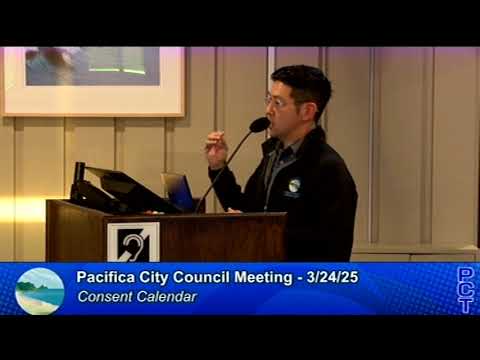
Deputy Director of Public Works and City Engineer Roland Yip told council that the city will assign roughly one to one-and-a-half full‑time inspection staff to monitor the project and require specified materials and compaction. The treatment planned this year is a rubber cape seal, a two‑layer surface treatment consisting of a chip seal followed by a slurry seal; where full asphalt replacement is needed crews will remove and replace approximately three inches of asphalt before applying the cape seal. Yip said hot mix must be placed above about 175 degrees and compaction will be verified in the field.
Yip described two liquidated‑damage provisions added since a prior project: a $1,000 per block per day penalty when crews post no‑parking signs but do not perform work, and a $500 penalty when contractors fail to hand‑deliver resident notices three days before work. He also said the city checks contractor forms for responsiveness and responsibility under the California Public Contracting Code and that prevailing wages are required and will be checked prior to payment.
Residents and public commenters urged extra safeguards. Suzanne Moore and other speakers noted repeated complaints about past work in Manor and other neighborhoods and suggested seeking additional bids. Kimberly Fanelli raised environmental concerns, saying aggregates coated in asphalt collected in gutters had the potential to reach storm drains and the ocean after previous projects. Several commenters recommended better timing and stronger guarantees on post‑paving cleanup; staff said the contractor provides street sweeping after slurry cures and that city sweepers may perform follow‑up rounds, but added additional cleanup specification would increase bid costs.
Councilmember questions focused on work quality, notification and rights when trees overhang the work area; Yip said contractors must follow the city’s tree ordinance, and pre‑construction meetings will cover trimming procedures. Yip also explained why one bidder was deemed non‑responsive: missing required references and subcontractor listings, and why Pavement Coatings’ submission — although it used a different subcontractor form — was judged responsive after review with the city attorney.
Action on the contract award was taken as part of the consent calendar vote. The consent calendar, as corrected, passed unanimously.
The repaving program is part of a multi‑year pavement maintenance plan staff said is intended to stretch limited funds; Yip said the cape seal treatment can extend surface life toward 15 years when applied to appropriate pavement‑condition sections, while full mill‑and‑overlay repaving is needed for heavily damaged streets. Residents asked staff to align the contract schedule with the city street‑sweeping contract and to consider targeted hand‑sweeping near storm drains; staff said they would review the sweep schedule overlap and can add specifications if council requests them.