Get Full Government Meeting Transcripts, Videos, & Alerts Forever!
Get email alerts on the Polst Registry topic
No spam. Unsubscribe anytime.
Experts urge Connecticut to prioritize electronic POLST registry, citing Oregon lessons
Summary
The Connecticut MOLST advisory group heard a detailed presentation from Dr. Abby Dodson on features, costs and pitfalls of statewide POLST registries, emphasizing electronic submission, mandatory provider reporting or opt-out rules, and the need for dedicated operations and outreach.
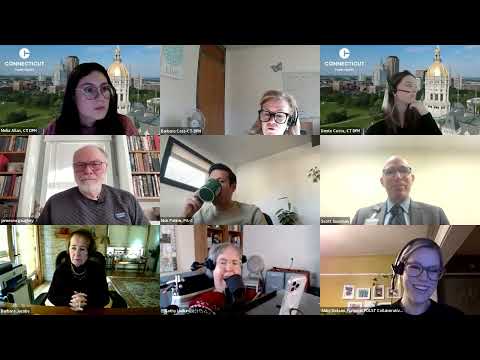
Dr. Abby Dodson, director of the Oregon POLST Registry and executive director of the National POLST Collaborative, urged Connecticut’s MOLST advisory group to plan for an electronic, operational registry and build funding, governance and provider outreach into any launch.
A registry should be more than a repository, Dodson said: it must distinguish valid from invalid forms, store discrete data for research and quality reporting, and provide reliable access for emergency and clinical users. “A registry can be a single source of truth,” Dodson said, adding that registries reduce the time clinicians spend reconciling multiple scanned forms and improve the quality of POLST data.
The presentation addressed why states should prefer electronic submissions ("ePulse") over paper, how to handle rural connectivity, and the staffing and budget implications of running a registry. Dodson described Oregon’s experience: the state’s registry processes many paper forms and retains a manual data-entry team; annual operating costs for Oregon’s model run about $550,000 a year, initial pilot costs were roughly $250,000 to $400,000, and paper submissions still comprise about 65–70% of forms in Oregon’s system.
Why it matters: A reliable registry helps clinicians act on patients’ current medical orders and supports quality improvement and research. Dodson said registry data enabled Oregon to identify a health system that was overusing POLST at routine Medicare welcome visits and to work with that system to reduce inappropriate “yes to CPR/full treatment” forms.
Key recommendations and operational points from Dodson’s presentation: - Prioritize discrete data (scribe data) in addition to storing PDFs so the registry can interoperate with EHRs, support quality reporting and enable research. - Favor electronic submissions where possible: one Oregon health system reduced rejected forms from about 20% to about 5% as its ePulse usage rose from about 20% to 80%. - Consider the submission policy carefully: mandatory provider submission of completed POLST forms to the registry, combined with an opt-out option for patients, produces a more complete registry than an opt-in model, Dodson said. - Account for geographic and technical constraints: Oregon operates a web portal, a POLST hotline through the statewide emergency communications center, and a mobile app to serve rural areas and EMS when direct EHR integration is not available. - Budget for data-entry staff, outreach and a data steward role; Dodson said Oregon keeps four staff dedicated to entering paper forms and to handling registry business-office functions (patient contacts, confirmation packets, and provider support). - Build community engagement and champion roles (including disability advocates, clinical champions and coalition committees) early to ensure adoption and to guard against rollout problems that can erode EMS and provider trust.
Oregon policy and scale: Dodson said Oregon’s registry is codified in state legislation that defines registry funding, ownership and operations, while the POLST form itself remains governed by the state coalition. She described national work on data standards (CDA and emerging FHIR implementations) and warned that full interoperability will take sustained technical and policy effort.
Questions, follow-up and next steps: The advisory group invited Dodson to return for a Q&A session; members agreed to schedule a 30-minute follow-up presentation on Feb. 4 at 9:30 a.m., and Dodson agreed to circulate the slides and the meeting recording beforehand. Staff were directed to distribute the materials and to place remaining agenda items on next month’s meeting.
Votes at a glance: The group recorded two brief formal voice votes. The December minutes were approved with one abstention (Kathy, who said she was not present for the prior meeting). A subsequent motion to move remaining agenda items to the next meeting passed by voice vote; no formal tally was recorded.
Ending: Members thanked Dr. Dodson for the presentation and asked staff to circulate slides and recordings ahead of the Feb. 4 follow-up session so the group could prepare specific questions about registry policy, EMS access and Connecticut-specific workflow options.