Get Full Government Meeting Transcripts, Videos, & Alerts Forever!
Get email alerts on the Teacher Pay Policy topic
No spam. Unsubscribe anytime.
Committee backs market-based pay enhancement for teachers, capping increase at 50% of county average pay
Summary
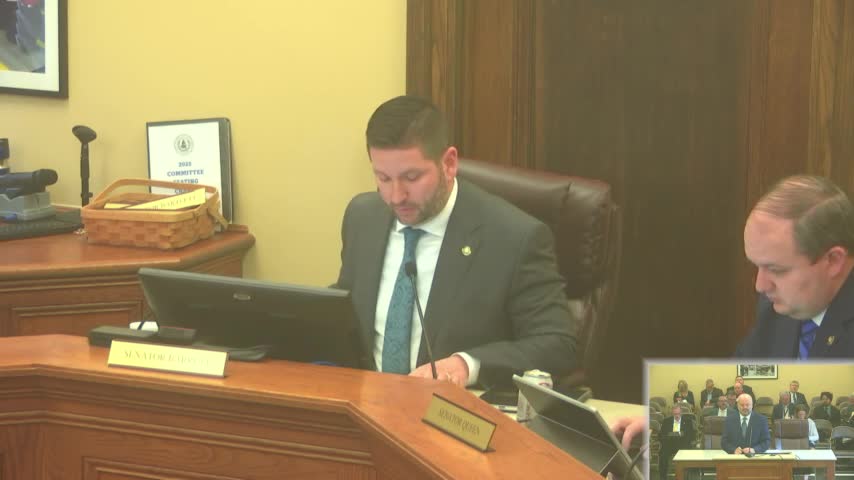
The Senate Finance Committee voted to report a committee substitute for Senate Bill 506 to the full Senate with a recommendation that it pass; the substitute sets a formula based on median home prices to determine a market pay enhancement for certified classroom teachers.
The Senate Finance Committee voted to report a committee substitute for Senate Bill 506 to the full Senate with the recommendation that it do pass. Committee counsel described the substitute as a market pay enhancement intended to help retain certified classroom teachers in West Virginia counties where housing costs create higher local market pressure.
Under the committee substitute for the committee substitute, the State Board of Education must calculate three median home-price figures for the immediately preceding calendar year: the West Virginia median, each regional median and each county median. Two multipliers will be calculated: one by subtracting the West Virginia median from the regional median and dividing that by the West Virginia median, and the second by subtracting the West Virginia median from the county median and dividing by the West Virginia median. The higher multiplier will be used to determine the market pay enhancement for a county.
The substitute requires the calculation to be done annually, with the first calculation to occur in December 2026 and the first pay enhancement to take effect July 1, 2027. The substitute includes a proviso capping the market pay enhancement at 50% of the average teacher base pay for the county and clarifies that the enhancement is in addition to any amount on the state minimum salary schedule. The bill requires reporting on market pay enhancements to the Joint Committee on Government and Finance and grants rulemaking authority to the State Board of Education.
Committee counsel said the Department of Education provided preliminary numbers showing Jefferson County could see the highest enhancement—"somewhere around $25,000"—while some counties would calculate to zero and therefore receive no enhancement in certain years. Counsel said about 25 counties would receive an enhancement under the current calculations but emphasized those figures could change when official calculations are done.
Senators asked multiple questions about duration and mechanics: counsel confirmed the substitute converts what had been described as a one-time payment into an ongoing salary enhancement, that the enhancement uses average teacher base pay as the cap benchmark, and that a county determines eligibility based on the county in which the teacher is employed, not the teacher's residence. Several senators noted the policy aim is to reduce teacher losses to neighboring states by partially offsetting housing-cost-driven wage gaps.
The vice chairman moved that the committee substitute be reported to the full Senate with the recommendation that it do pass. The chair called a voice vote; the chair declared "the ayes have it" and the motion was adopted. The committee record does not include a roll-call tally.
Background and fiscal notes: Counsel said the committee substitute was prepared with the Department of Education and that a revised fiscal note was not available at the committee hearing. Counsel noted the calculations reference median home-price data sourced through the National Association of Realtors and that the State Board will be required to perform annual calculations.
Next steps: The bill was reported to the full Senate; the State Board of Education rulemaking and the December 2026 calculation will determine precise county impacts and dollar amounts.