Get Full Government Meeting Transcripts, Videos, & Alerts Forever!
Get email alerts on the Workforce Housing topic
No spam. Unsubscribe anytime.
Lawmakers introduce option to let nonprofits partner with for‑profits on property-tax‑exempt workforce housing
Summary
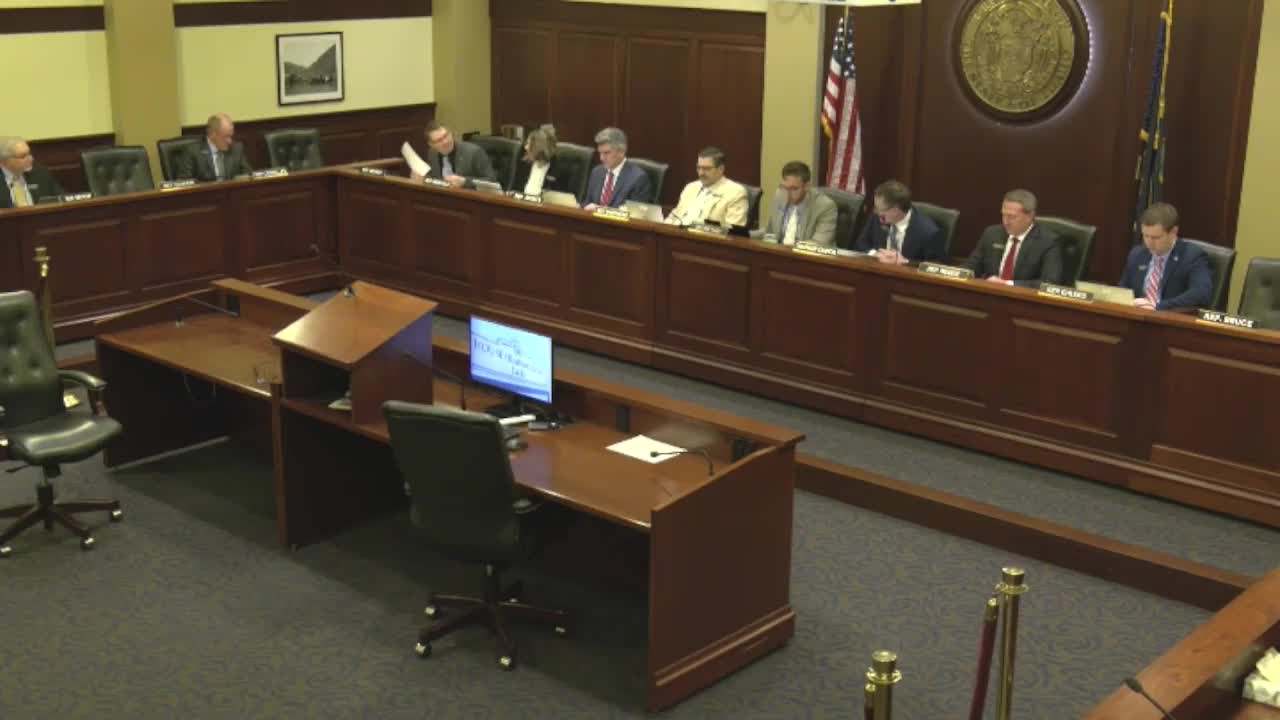
Representative Rick Cheatham introduced RS 32584 on March 13, asking the House Revenue and Taxation Committee to place an option in the public sphere to allow nonprofit–for‑profit partnerships to use an existing property-tax exemption for workforce housing.
Representative Rick Cheatham introduced RS 32584 to the House Revenue and Taxation Committee on March 13, asking the committee to place the idea in the public sphere for study by an interim committee.
Cheatham said the state adopted a property-tax exemption in 2002 for affordable and workforce housing developed by nonprofit entities ("code section 603-602GS," as cited in committee). He told the committee that statutory restrictions have left the incentive "virtually unused" and said the option before members would allow nonprofits to team with for‑profit developers and access federal housing incentives to make larger projects feasible.
"Our intent with this bill is to put an option out there that may be considered by this committee as a potential, 1 potential tools to help obtain this," Cheatham said. He described local examples in which nonprofit partners were able to develop projects when paired with organizations that had capital.
Austin Vanderhaeyn, representing Dominion, a national developer, manager and owner of income- and rent-restricted housing, described the proposal as a tweak to existing state law rather than a new exemption. Vanderhaeyn said Idaho faces a shortage of roughly 25,000 workforce housing units and defined workforce housing as targeting households at about 60% of area median income ("about $46,860 per year" in his testimony). He said Dominion typically targets units at 60% of AMI and that the company owns and manages the communities it develops to preserve long-term affordability: "We keep our communities at the affordable rate for the longevity of our time as owners and managers and developers of that property."
Vanderhaeyn provided development-scale impacts he said could result from larger projects: a 200-unit workforce community in Ada County could generate roughly $30,000,000 in federal low-income housing tax credit equity, create about 377 full-time-equivalent construction jobs with an average salary near $50,000, produce approximately $28,200,000 in construction material purchases in Idaho, generate over $2,500,000 in state and local tax revenue during construction, and save renters about $500 per month on average (roughly $1,200,000 in annual rental savings for 200 units). He stated similar programs are used in other states such as Texas, Arizona, Florida and Georgia and emphasized the proposal would not add a state appropriation but would instead change eligibility in existing law.
Representative Birch raised operational and long-term affordability concerns, asking whether projects could be made exclusive to particular employers, whether rents could rise after initial low-income periods, and whether developments would provide sufficient parking. Vanderhaeyn replied that Dominion works with cities and neighborhood associations during entitlements, said the company owns and manages its properties to preserve affordability, and affirmed the firm generally targets units at 60% of AMI.
Representative Shepherd questioned fiscal impacts. Vanderhaeyn said a 200-unit development would represent about $389,000 in property-tax exemption in a single year. Jason Kreisenbeck, a contract lobbyist with Lobby Idaho speaking for Dominion, told the committee the bill language as proposed would apply only to future projects and therefore the fiscal note concludes there is no immediate fiscal impact until projects take advantage of the exemption.
Representative Monks moved to introduce RS 32584 so the idea can be referenced and tracked; the committee approved the introduction by voice vote. Committee members were informed the intent for this hearing was an introduction to allow public discussion and that there would be no further hearing on the issue this session; the proposal is intended for study by the interim housing committee.
The committee did not vote on statutory changes; RS 32584 was entered for public discussion and referred to follow-up study and possible future drafting.