Get Full Government Meeting Transcripts, Videos, & Alerts Forever!
Get email alerts on the Local Option Tax topic
No spam. Unsubscribe anytime.
Committee introduces joint resolutions to allow local-option sales/use taxes; sponsor frames them as discussion starters
Summary
Representative Britt Raybould introduced two linked measures — a constitutional amendment (RS32531) and follow-up legislation (RS32532) — to create a flexible local-option sales and use tax up to 2% for specified purposes; the committee introduced both RSs for further conversation.
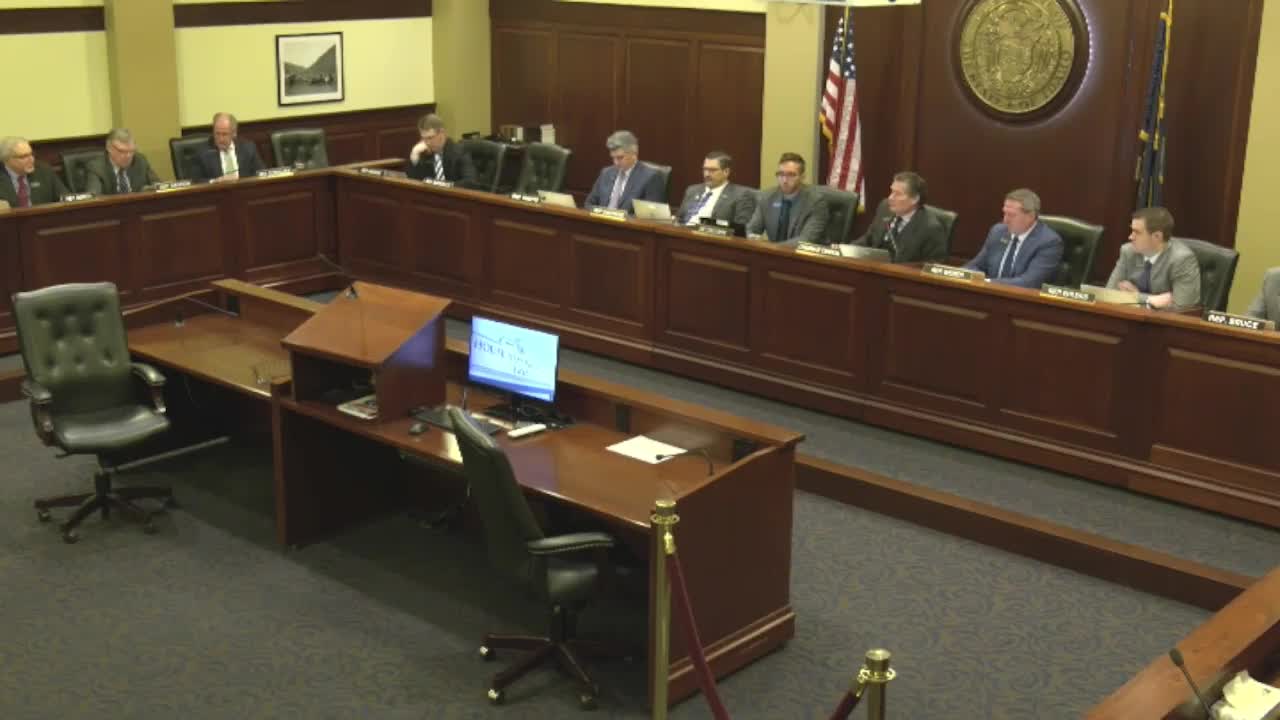
BOISE, Idaho — Two linked legislative requests seeking to give cities and counties a broader local-option sales and use tax were introduced Thursday in the House Revenue and Taxation Committee: RS32531, a proposed constitutional amendment to authorize locally defined use taxes, and RS32532, implementing legislation that would take effect only if the amendment passed.
Representative Britt Raybould, sponsor of both RSs, said the resolution would permit local jurisdictions to propose a local-option tax with a clearly stated purpose (for example, visitor-related services) and a detailed description of the products or services subject to the levy. Raybould said proponents envision a flexible tool to shift some revenue from property taxes to targeted sales/use taxes; he said existing forms of special-purpose local taxes — such as auditorium or resort-district taxes — would be phased out over time in favor of the broader option. The draft limits local-option taxes to a maximum rate of 2 percent and, as drafted, would require voter approval and a specified duration (the sponsor noted four years in committee discussion).
Committee members asked a range of policy questions during introduction. Representative Hill asked whether the design could allow localities to tax items such as alcohol, firearms or hotel stays; Raybould said the exact scope of taxable items would be set by the local proposal and ultimately approved by voters. Representatives Cheatham and Birch expressed concern about phasing out specialized districts such as auditorium districts, which provide predictable, long-term funding for regional facilities; Raybould said existing districts would continue through their current expiration dates but that new districts would not be authorized under the proposed regime.
No committee vote was taken on substantive changes; Vice Chair Weber moved to introduce RS32531 and the committee approved the introduction by voice vote. Representative Andrus moved and obtained approval to introduce RS32532. Sponsors said they do not intend to advance the policies this session but introduced the RSs to invite an interim conversation and stakeholder negotiations about a long-term option for local revenue diversification.
If advanced, the proposal would require separate voter approval for any local-option tax and specify the purpose and taxable items in the ballot question. The sponsor said the measure is offered to begin a broader conversation about alternatives to property-tax-reliant local budgets and is not slated for immediate implementation this session.