Get Full Government Meeting Transcripts, Videos, & Alerts Forever!
Get email alerts on the Data Center Exemption Sunset topic
No spam. Unsubscribe anytime.
Committee advances bill to limit data‑center sales tax exemption to seven years after March 1 applications; roll call passes 13‑1
Summary
House Bill 315 would cap sales tax exemptions for information‑technology equipment and related construction at seven years for exemptions applied on or after March 1. The Revenue and Taxation Committee voted 13‑1 (with one member absent) to send the bill to general orders after testimony from industry, local residents and sponsors.
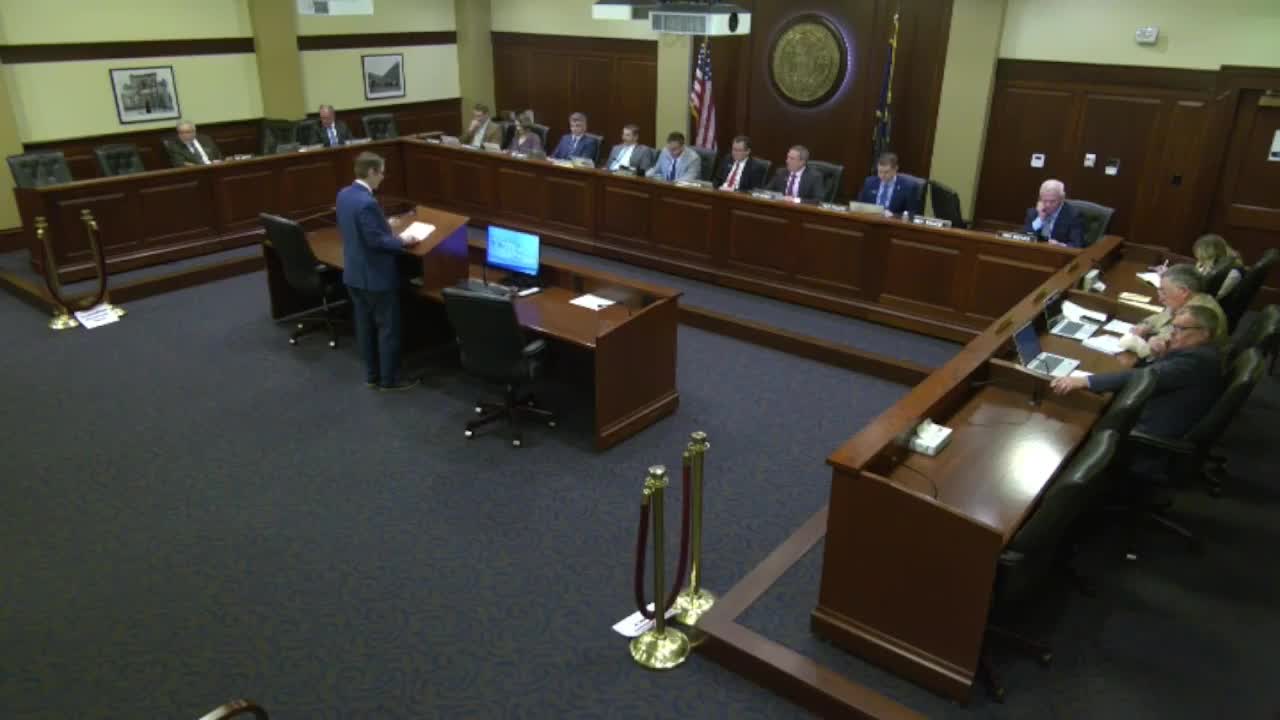
The Revenue and Taxation Committee voted to send House Bill 315 to general orders after extended public comment and sponsor discussion about whether the bill would apply retroactively.
Representative Chris Bruce, R‑District 23, said H315 limits the Idaho sales tax exemption for information technology equipment and qualifying building materials to seven years and remits the recovered sales tax funds to the Idaho Tax Relief Fund. "We're gonna give them some economic value to move here, but we're gonna set a clear endpoint," Bruce said.
Representative John Gannon, R‑District 17, a co‑sponsor, added that the measure responds to concerns that large data centers and associated solar developments may deliver short‑term construction jobs but fewer long‑term local positions, and can change local land use and service demands.
Multiple public commenters opposed removing or shortening the exemption. Alex LeBeau, president of the Idaho Association of Commerce and Industry, said the facilities are critical digital infrastructure and warned that rescinding incentives sends the wrong message to industry. "This is akin to what this policy is doing and the message you're sending to industry, out there is you're you've offered up an incentive and now you're pulling it away," LeBeau said.
Local residents and small business owners told the committee that data centers and associated solar projects can strain electricity and water supplies, displace local businesses and reduce long‑term employment. Justin Kravanek, president of the community nonprofit Bridal Community Advocates, urged the committee to support HB315, saying permanent exemptions "are being given away at the expense of our communities." Several speakers cited specific figures offered in testimony: a hypothetical $2 billion facility and a claimed $120 million loss in tax revenue; references to a single large data center's previous local infrastructure investments; and descriptions of projects that provide a small number of permanent jobs compared with the land and resource footprint.
Sponsors said they did not intend the bill to be retroactive. Representative Bruce stated that the bill applies to exemptions applied for on or after March 1, and Representative John Gannon said he had received an email from the Tax Commission indicating the measure would be prospective and would not affect the existing Meta facility. Committee members requested clearer statutory language to remove doubt; Representative Raybould moved and the committee agreed to send the bill to general orders so sponsors could refine the wording.
A roll‑call vote to send House Bill 315 to general orders recorded 13 ayes, 1 no (Representative Cheatham) and 1 absent (Representative Hill). The secretary read the roll call: Chairman Cannon (yes); Vice Chair Weber (yes); Shepherd (yes); Cheatham (no); Cornelis (yes); Ehlers (aye); Monks (aye); Raymond (aye); Andress (aye); Bruce (aye); Hill (absent); Raybould (aye); Schertz (aye); Gannon (aye); Birch (aye).