Get Full Government Meeting Transcripts, Videos, & Alerts Forever!
Get email alerts on the Utility Tax Reform topic
No spam. Unsubscribe anytime.
Committee approves bill to replace utility property tax with kilowatt/therm charge, sends H329 to House floor
Summary
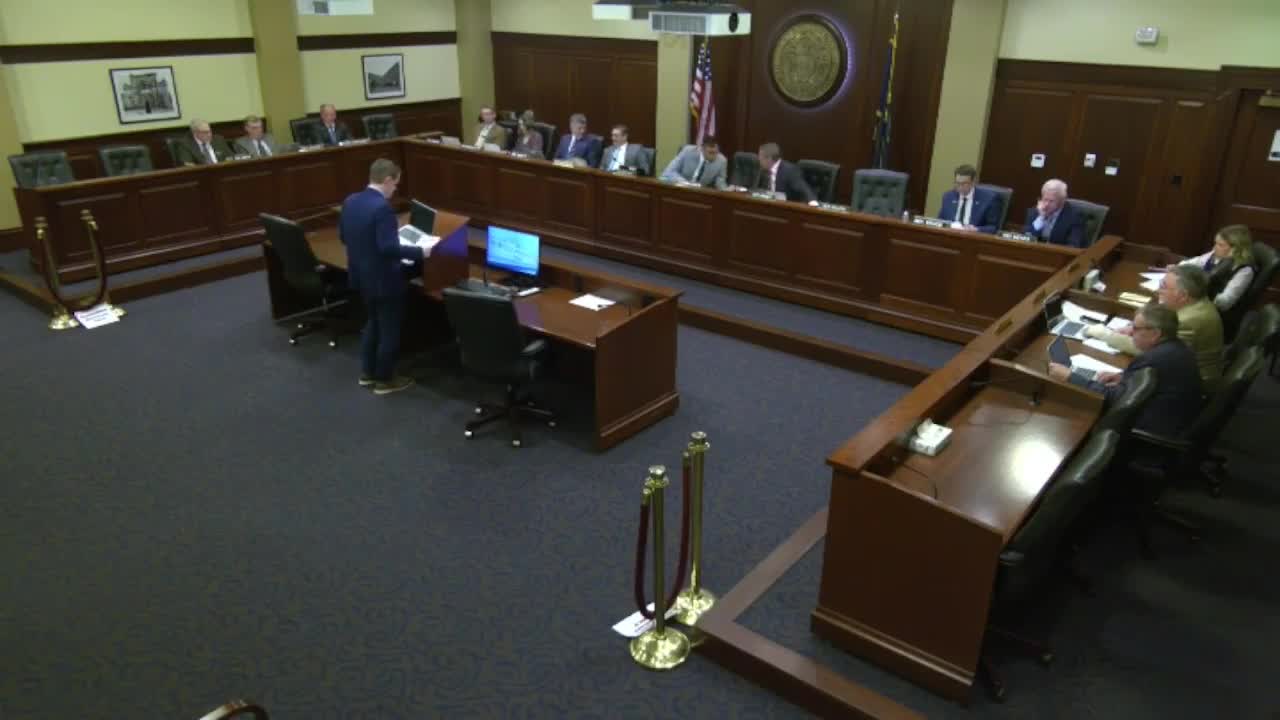
The Revenue and Taxation Committee voted to send House Bill 329 to the House floor with a due‑pass recommendation, approving a plan to replace centrally assessed property taxation of certain utility operating property with a consumption‑based kilowatt‑hour/therm tax.
The Revenue and Taxation Committee voted to send House Bill 329 to the House floor with a due‑pass recommendation after representatives and utility officials described the measure as a revenue‑neutral rewrite of how rate‑regulated utilities are taxed.
Representative Jeff Ehlers, R‑Meridian, the bill sponsor, said H329 moves certain operating property for rate‑regulated electric and gas utilities from a centrally assessed property tax to a tax measured by kilowatt‑hours and therms. "We're going to take 2025 as the last year that these entities will be paying this property tax," Ehlers said, describing language intended to keep local taxing districts "whole" by apportioning the new tax using 2025 proportions.
The bill directs the Idaho State Tax Commission to assess and collect the new utility tax centrally and to disperse receipts to counties and local taxing districts. The Tax Commission would also review allocations at least once every five years, Ehlers said, and public utilities commission (PUC) reporting data on kilowatt and therm usage would be used to calculate rates. Ehlers said the structure is intended to reflect prior court decisions and provide clarity to avoid future litigation over assessments.
Dan Lautzenhiser, director of tax for Avista Utilities, testified in support. "We are extremely appreciative of Representative Ehlers and the counties and everyone else that's worked with us on this to get this bill introduced," Lautzenhiser said, calling it a "reasonable, fair way of doing it."
Representative Monks moved to send H329 to the House floor with a due‑pass recommendation. The committee voted by voice; members answered "aye," and the motion carried.
Supporters said the bill is designed to be revenue neutral by converting historic property tax payments into a consumption‑based charge and by preserving the relative shares of taxing districts. The text includes definitions of covered utility property, provisions addressing district dissolutions, and language about irrigation rebates and how the new tax may be used by utilities in rate filings to the PUC.
Opponents did not block the bill at committee. Committee members asked how the change would address the legal issues that prompted prior litigation; Ehlers said the statute is intended to codify a settlement and to remove assessment‑based disputes by taxing consumption instead of the assessed value of operating property.
The committee record shows the motion to send H329 to the floor was made by Representative Monks and passed by voice vote. No roll‑call tally was recorded in the transcript.