Get Full Government Meeting Transcripts, Videos, & Alerts Forever!
Get email alerts on the Wildfire Response topic
No spam. Unsubscribe anytime.
Committee advances bill to allow loggers to assist in early wildfire suppression
Summary
The House Resources and Conservation Committee advanced House Bill 389 to the House floor after testimony that state-directed use of trained loggers could allow earlier suppression of small fires on federal lands and potentially reduce the scale of later catastrophic wildfires.
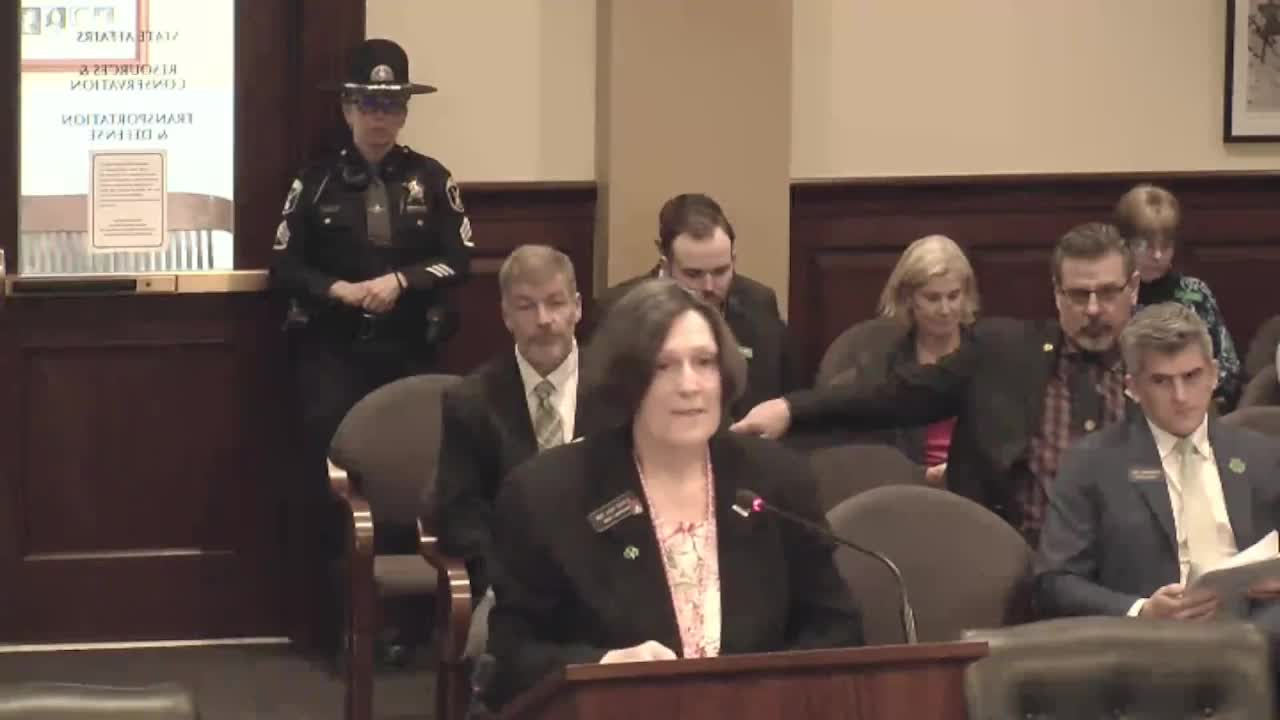
The House Resources and Conservation Committee on an audio-recorded meeting advanced House Bill 389, a proposal by Rep. Judy Boyle to authorize the state to use its police powers to direct state resources — including trained logging crews — to suppress small wildfires on federal lands before they grow large.
Rep. Judy Boyle, sponsor of House Bill 389, opened the discussion by describing the bill’s origin in an interim federalism committee meeting on wildfires and said the measure is intended to let state responders act earlier to stop small ignitions. "The governor could declare an emergency and order state resources to go put out a fire before it becomes catastrophic," Boyle said, noting the bill uses the state’s police powers to protect health and safety.
Proponents told committee members that earlier intervention could curb the growth of fires that later become large, damaging blazes. Mark Mahon, co-owner of Mahon Logging and president of the Associated Logging Contractors, testified that loggers are being trained and equipped to assist and that using loggers could add a tactical option for initial attack. "The loggers do not want to sit down on a fire and spend the rest of our summer there. We want to suppress these fires and go back to logging," Mahon said. He also described getting equipment out of the path of the lava fire and narrowly escaping dangerous conditions.
Geological engineer and landowner Dar Moon described the Wapiti Fire and said he and his family saw early smoke and limited initial federal action before the fire exploded. "We burned almost a million acres in Idaho last summer," Moon said, urging earlier suppression to protect communities, watersheds and wildlife.
Representatives of agriculture and ranching also supported the bill. Dexton Lake, speaking for the Idaho Farm Bureau, cited animal welfare concerns after livestock were burned in recent fires and urged passage. A speaker identifying himself as representing the Idaho Cattle Association said the measure would be "another tool in the toolbox" to stop small fires before they grow.
Committee members asked practical and legal questions. Representative Jeff Miller asked how initial response would work; Mahon said the logging community is pursuing federal fire training and qualifications so fire managers could dispatch trained crews. Representative Tanner and others questioned how the state would recoup suppression costs; Boyle said the bill directs the Attorney General to initiate civil actions to try to recover costs from the federal government (page 2, line 30–437 of the bill text, as presented to the committee).
Representative Church raised liability concerns for loss of life if volunteers are deployed; Boyle responded that if the governor declared an emergency, state agencies such as the Department of Lands (IDL) would direct operations and standard liability frameworks for state-directed resources would apply.
Representative Raybould moved that the committee send House Bill 389 to the floor with a do‑pass recommendation. The committee approved the motion by voice vote. The committee record shows the motion passed; exact roll-call tallies were not specified in the transcript.
Votes at a glance
- Motion: Send House Bill 389 to the floor with a do‑pass recommendation. Mover: Representative Raybould. Outcome: Approved (voice vote; exact tallies not specified).
Ending
With the do‑pass recommendation approved, the bill will move to the House floor for further consideration. Committee discussion focused on operational details (training and dispatch) and cost recovery; the bill assigns the Attorney General responsibility to pursue civil recovery of suppression costs from the federal government.