Get Full Government Meeting Transcripts, Videos, & Alerts Forever!
Get email alerts on the Stitch Ssd topic
No spam. Unsubscribe anytime.
Finance committee advances Stitch Special Service District; committee seeks explicit council approval for any bond financing
Summary
The committee approved ordinances creating the Stitch Special Service District and authorizing project implementation, including a 2-mill SSD levy estimated at roughly $3.5 million in 2025; members asked that any future bond issuance using SSD revenue be returned for formal council approval.
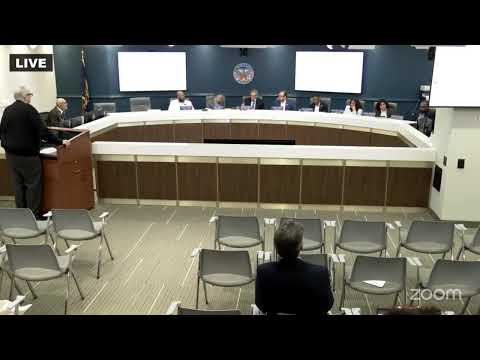
The Finance Executive Committee voted on April 7 to advance a package of ordinances establishing the Stitch Special Service District (SSD) for the Stitch park-and-connector project and authorizing implementation steps, while attaching conditions that any monetization or bond issuance tied to SSD receipts return to full council for approval.
Sponsors listed on the ordinances included Councilmembers Faroqi (spelled in the meeting transcript as Faroqi), Winston and Dozier. The substitute ordinances moved at committee authorize the city, the Atlanta Development Authority (AURA/Invest Atlanta), and partner organizations including the Atlanta Downtown Improvement District (ADID) to proceed with the Stitch project within the SSD boundaries and to prepare an intergovernmental agreement (IGA) and related documents.
Project and financing details presented at the meeting: Jack Seby, director of the Stitch for the Atlanta Downtown Improvement District, said federal and local sources together account for roughly $170,000,000 committed to Phase 1 design and early work; local commitments cited in the meeting included $10,000,000 from the Eastside TAD, $10,000,000 from ADID, and about $9,775,000 from Moving Atlanta Forward funds. Seby said the federal Reconnecting Communities pilot grant agreement with the Federal Highway Administration is signed and currently structured on a reimbursement basis; full construction funding from the federal grant remains contingent on completion of federal NEPA (environmental) clearances, which staff said are on track for Q2 2026. Seby said a construction start for Phase 1 is anticipated around August 2026, subject to those clearances.
The SSD would authorize an ad valorem SSD levy of two mills; staff estimated the levy would produce about $3,500,000 in 2025 (based on 2024 assessments) and that the two-mill levy would begin in the 2025 tax year. Council members asked for clarity on governance, operations and maintenance funding, and which entity would bear cost-overrun risk. Staff described a governance model that includes a non-profit 501(c)(3) organization (similar to BeltLine, Inc.) to operate and maintain the Stitch once built; the non-profit would be governed by property owners and city appointees and could raise additional funds.
Several council members, including Councilmember Wong, asked about the potential to use SSD receipts as part of a borrowing structure. Ken Neighbors (outside counsel) explained that while the current focus is on operations and maintenance and possibly design/construction, the IGA and enabling documents include parameters that would allow for future monetization; he said that any such financing would be subject to oversight by AURA and the City CFO. In response to committee concerns, staff agreed to include explicit language in the substitute that any financing or bond issuance would be returned to council for final approval. Councilmember Wong and others requested that clarification be made explicit in the legislative substitute.
Committee members also discussed risk allocation if the project experienced cost overruns; staff said the city and project partners would need to determine additional funding or scope adjustments if costs rise, and that the phased approach for Phase 1 is intended to reduce risk.
The committee approved the SSD-related ordinances on substitute and the motion carried with conditions that financing decisions be presented to council. Public hearing dates and additional outreach were noted: the committee was told there was a noontime public hearing the same day, another hearing at 6 p.m., and an additional hearing on April 21.