Get Full Government Meeting Transcripts, Videos, & Alerts Forever!
Get email alerts on the Housing In Lieu Fees topic
No spam. Unsubscribe anytime.
Council members press for guardrails as city plans new in-lieu fee trust funds for affordable workforce housing
Summary
City staff proposed creating an Affordable Workforce Housing in-lieu fee trust fund and a Midtown-specific in-lieu trust fund to pool density-bonus fees. Councilmembers asked for governance, allocation metrics and a revised fee schedule before funds are mobilized; both items were held for further work.
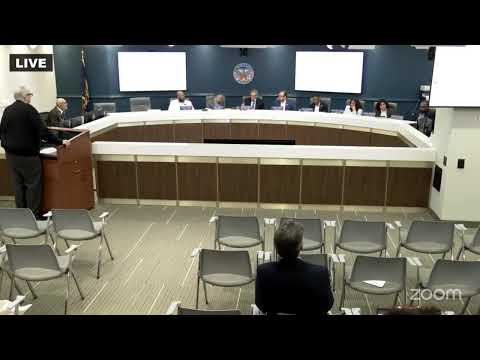
City planning and policy staff told the Finance Executive Committee on April 7 that the administration seeks to consolidate fragmented in-lieu fee accounts linked to affordable-housing density bonuses into larger, more deployable trust funds — a citywide Affordable Workforce Housing In-Lieu Fee Trust Fund and a Midtown-specific Midtown Affordable Housing In-Lieu Fee Trust Fund.
Will Tucker of the Office of Policy said the in-lieu fee schedule has not been updated since 2017 and that existing geographic ring-fencing in the code has kept collected fees in small subareas, producing little usable capital for larger affordable-housing projects. The proposed change would create centralized account strings so fees can accumulate at scale, with the Midtown fund ring-fenced to the SPI-16 Midtown special public interest district because staff expect more projects there to use the density bonus.
Councilmembers raised repeated concerns about governance and spending rules. Councilmember Bakhtiari asked whether fees paid in one district could be spent in another; Tucker said that is possible under options being discussed but emphasized the need to create service-area rules (for example, matching impact-fee service areas to keep South Side dollars on the South Side). He and other staff said detailed governance, distribution criteria and metrics have not yet been legislated and that those matters would return for council review.
Several councilmembers urged delaying action until staff returns with clarified guardrails. Councilmember Overstreet said the committee was “putting the cart before the horse” if the fund structure was created before governance and distribution criteria were set. Councilmember Wong asked whether any future monetization (such as issuing bonds backed by in-lieu revenue) would require additional council approval; legal counsel Amber A. Robinson said it is legally possible to approve specific transfers or financings case-by-case but that council retains options to require further approvals. Councilmember Wong requested explicit language that any financing would come back to council for final approval; staff agreed to add clarifying language in a substitute.
Committee members also asked for the updated fee schedule and for models showing how much revenue the new structure could generate under different fee assumptions. Tucker and other staff said they were willing to hold the citywide fund paper to work through those details; several councilmembers formally moved to hold both items, and the committee voted to hold them pending supplemental information.
Staff said the Midtown trust fund is intended to be ring-fenced geographically to capture revenue from projects using the SPI-16 Midtown density bonus and to be used within the Midtown planning area. The city will continue NPU outreach and community meetings while finalizing the fee schedule and governance approach.