Get Full Government Meeting Transcripts, Videos, & Alerts Forever!
Get email alerts on the Wastewater Consent Decree topic
No spam. Unsubscribe anytime.
Tyler reports steady progress on EPA consent decree; council approves cleaning, inspection and well-survey contracts
Summary
City consultants told the Tyler City Council the sewer consent decree is on track with declining sanitary-sewer overflows; council approved a $1.52 million cleaning and CCTV contract for Basin 13 and a $151,199 well-survey contract to avoid costly permanent well plugging.
Tyler Water Utilities staff and consultants told the City Council on Tuesday that work under the city’s U.S. EPA consent decree is reducing sanitary-sewer overflows and that several related contracts were approved by the council.
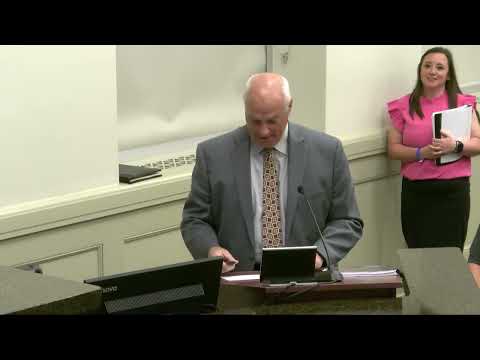
At a presentation, Jim Forbes of Pipeline Analysis summarized nine years of work under the consent decree covering the wastewater collection system and urged continued investment after the decree ends. “We are currently at 1.8 SSOs per hundred miles as of this week,” Forbes said, citing the program’s downward trend since 2017.
The update explained maintenance and prevention programs the city has instituted, including a high-frequency cleaning program, a fat/oil/grease inspection program for food-service establishments, manhole and main-line inspections, reinspection cycles, targeted rehabilitation and capacity projects. Forbes emphasized that the consent decree’s work will need ongoing maintenance after the formal period ends: “At the end of this consent decree it doesn’t mean you can ignore your system again,” he said.
Why it matters: Sanitary-sewer overflows (SSOs) are the main compliance metric used by EPA and the Texas Commission on Environmental Quality. The consent decree requires inspections, rehabilitation and reporting; staying below industry benchmarks supports the city’s path to compliance and eventual release from the decree after one full year of compliance.
Council action and contracts
The council approved the low-bid contract for consent-decree Group 9 cleaning and closed-circuit-television (CCTV) inspection for Basin 13 with Pro Pipe for $1,516,869.87. Tiffany Curry of Tyler Water Utilities said Basin 13 includes about 643,000 linear feet of pipe ranging from 6 to 42 inches and represents the reinspection required under the consent-decree schedule. The council motion to authorize the city manager to execute the contract passed following a standard vote.
Separately, the council authorized a capital improvements contract with Advanced Water Wells Technology for the well-survey Phase 2 project in the amount of $151,198.92. Project engineer Nikki Ingram said earlier camera surveys showed three wells (wells 2, 4 and 5) were in non-deteriorated condition and could be temporarily capped instead of permanently plugged, reducing cost. Phase 2 will temporarily cap wells 2, 4 and 5 and camera-survey eight remaining wells; a later phase will determine whether any wells must be permanently plugged or capped.
What council members asked
Council members asked for clarification on technical points and long-term implications. One councilmember asked Forbes to define an SSO; Forbes replied: “Sanitary sewer overflow is where there’s a blockage in the sewer, and it backs up the sewage and it comes up out of the manhole. If one drop leaves the system, that’s considered an SSO.” Another asked whether temporarily capped wells could return to service; Ingram said they could, but would require pump and piping reinstallation and “it could be costly.”
Details and next steps
Forbes and staff outlined primary SSO causes in 2024: sewer breaks (including force-main failures), contractor damage, creek-bank erosion affecting lines near creeks, and grease in the system. Staff reported grease-related SSOs fell from 21 in 2023 to six in 2024 after increased inspections and enforcement of grease-interceptor requirements. Reinspection and rehabilitation cycles are now in place on roughly a 7- to 10-year rotation to extend asset life and avoid failures. Group 6 rehabilitation was reported as on schedule; some capacity projects face potential delays from easements, permitting or material lead times.
The city’s work under the consent decree will continue to require staff programs, maintenance funding and contractor coordination after the decree’s formal completion. The consent decree requires the city to remain in compliance for one year following the 10-year schedule before seeking relief, a point Forbes reiterated during questions.