Get Full Government Meeting Transcripts, Videos, & Alerts Forever!
Get email alerts on the Cdbg Dr Funding topic
No spam. Unsubscribe anytime.
HUD CDBG‑DR funding will pay for pool, Newton Park and downtown lighting; town expects planning bids this summer
Summary
Town staff said a HUD Community Development Block Grant—Disaster Recovery award will fund work at the community pool, Newton Park and downtown lighting, with planning-and‑design bids expected after HUD review. Town staff warned HUD rules set tight timelines and design firms cannot later serve as construction contractors.
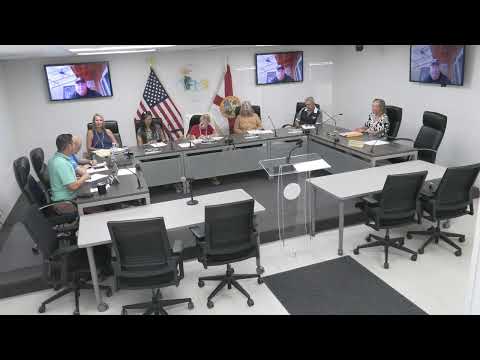
Frank Kropatschek, compliance and operations director for the Town of Fort Myers Beach, told the Bay Oaks Recreational Campus Advisory Board on March 26 that the town has cleared major administrative steps and is close to getting permission from the U.S. Department of Housing and Urban Development (HUD) to go out for bids on projects grouped under the town’s CDBG‑DR application.
Kropatschek said the package as discussed with HUD covers multiple projects and was split into three procurement segments: the Newton Park work, downtown San Carlos lighting and the community pool. “We’re just about ready to be, given permission to put out for bid,” he said. “The first part of that bid is gonna be for planning and design.”
The town described the funding in broad numbers in board remarks: roughly $13 million for the combined set of disaster‑recovery projects, with about $4.3 million discussed for the parks portion and “roughly almost $400,000” set aside for downtown safety lighting. Kropatschek said the largest allotment went to a North water tower project, followed by the pool and Newton Park. He also said prior FEMA payments were credited against the town’s requests, reducing the total HUD award: “even with the HUD project, we have to use whatever money we did get from FEMA and put that at the top end,” he said.
Kropatschek and other staff outlined a constrained schedule set by HUD. The planning‑and‑design contract will be procured first; town staff expect to select a vendor in June or July, and the selected design team would produce the detailed plans and renderings later. “We’re probably looking at June or July by the time we actually have a vendor selected,” he said, and cautioned that construction work and milestones are subject to HUD’s timeline requirements. He added that the design engineering firm that prepares contract documents cannot also be the construction contractor, a separation HUD requires to protect the procurement process.
Jeff Haughey, director of community services, and county project managers are involved in weekly coordination to keep the project on schedule, Kropatschek said. He told the board that the design phase will focus on producing buildable plans rather than community charrettes, although town staff will submit community input and earlier renderings into the process: “When it all comes down to it, it’s not gonna be like a charrette process… HUD will not allow that to happen.”
On the pool timeline, Kropatschek said the town hopes to have the pool back in service in 2026 but did not set a firm construction start date. “I don’t wanna say, actually, by the end of 2026, I would think,” he said.
Why it matters: the CDBG‑DR award channels federal disaster‑recovery money to local reconstruction and resilience work after storms. The projects discussed include both public‑safety and recreation infrastructure, and HUD’s procurement and schedule constraints will determine how quickly designs, bids and construction can proceed.
Board members asked how the public will be involved. Kropatschek and Haughey said prior public input and past park renderings will be provided to the design team and that staff will circulate questionnaires and collect comments once a design vendor is on board. The board also discussed that the pool’s existing footprint must remain (the town cannot change the pool’s location under the HUD project) but that the project can improve aesthetics and resilience.
Clarifying details from the meeting: staff said the three procurement segments are Newton Park, downtown San Carlos lighting and the community pool; the combined award discussed was about $13 million; the parks segment figure discussed was roughly $4.3 million; the downtown lighting allotment discussed was about $400,000. Staff said the planning‑and‑design procurement should be advertised after HUD’s final review and that a design vendor likely will be in place by June or July, with renderings and final design work to follow.
Board members and staff said HUD and county project managers will monitor timeline milestones and that failing to meet HUD schedule requirements can put funding at risk. Kropatschek said town staff have weekly meetings with county partners and expect a more intensive schedule once construction invoices begin moving through the system.
Frank Kropatschek and Jeff Haughey told the board they will return with procurement notices and public‑input opportunities when the design contract is advertised.