Get Full Government Meeting Transcripts, Videos, & Alerts Forever!
Get email alerts on the Subdivision Land Development topic
No spam. Unsubscribe anytime.
Crafton planning staff outlines subdivision steps, costs; lot-line revision presented as a simple upcoming application
Summary
Crafton planning staff gave an educational briefing on the borough’s subdivision and land‑development process, including typical professional fees and review timeframes, and described a pending lot‑line revision at Ewing and DeSoto that staff calls a straightforward administrative case.
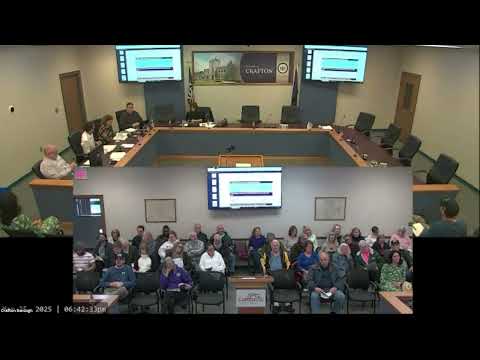
Mike Tedesco, Crafton’s community and economic development director, told the Planning Commission on March 25 that subdividing or adjusting property lines is an extensive, public and sometimes costly process. “The purpose of this agenda item is just to provide planning commission and the public with some awareness around our subdivision process for the borough,” he said.
The briefing matters because residents have raised questions about how changes to lot sizes and lot lines could affect property owners in built‑out neighborhoods such as Thomas Street. Tedesco said the borough’s Chapter 197 Subdivision and Land Development Code, Commonwealth law and the zoning code guide the process and that even a simple change can require surveys, engineering and geologic reports.
Tedesco summarized the early steps and typical costs: applicants often must hire licensed surveyors and engineers; a basic survey can run roughly $6,000; geologic reports “around $15,000 at least” for the example he gave; and a traffic impact analysis for a simple case may cost in the low‑to‑mid thousands. He said the total professional fees cited in an example packet — about $75,000 — reflect the sum of multiple required studies and hourly work by licensed professionals preparing the application. "Once the applicant does so, staff ... have 5 days to review the application and checklist the 73 requirements and make sure that the applicant fulfilled them," he said.
Tedesco also walked the commission through statutory and internal review windows: staff and hired professionals generally have about 20 days to provide recommendations; the planning commission has up to 60 days to consider a preliminary application; and borough council has a 90‑day window to act on it. He pointed out that approval of a preliminary plan typically leads to a final‑plan review that repeats several steps, and that council approval is required before a developer posts security and executes a developer’s agreement.
Commissioner Greg Wiesen pressed staff for more detail on cost breakdowns after noting his own review showed lower figures. "Your costs seem to be coming up much higher than what I'm finding," Wiesen said, and asked staff to provide a line‑by‑line breakdown of the professional fees that make up the $75,000 estimate. Tedesco agreed to provide more detail.
The presentation also included a practical example: a recently filed lot‑line revision for adjacent parcels at Ewing and DeSoto, where the applicant and the neighboring property owner (the applicant’s mother) have agreed to shift a lot line so a new house and a detached garage fit more easily. Staff described that packet as “almost complete” and said it will be routed to the borough solicitor, borough engineer, planning commission and Allegheny County for review once the administrative completeness check is finished. Because staff judged the request modest, the applicant may be allowed to combine preliminary and final review to reduce duplication of work.
The commission did not take action on the lot‑line case on March 25; staff presented it as information only and said a recommendation request will appear at a later meeting. Tedesco closed by reminding residents that subdivision filings are public records and that the process can take months and cost thousands of dollars.
The commission asked staff to provide a clearer line‑item breakdown of the example costs and to circulate the packet for the Ewing/DeSoto lot‑line revision once it is administratively complete.
Ending: Staff said it will circulate more detailed cost breakdowns and the forthcoming application packet for the Ewing/DeSoto lot‑line revision, and the commission indicated it will reserve substantive action for a later meeting when the application is formally before them.