Get Full Government Meeting Transcripts, Videos, & Alerts Forever!
Get email alerts on the Neurodiversity And Education topic
No spam. Unsubscribe anytime.
Presenter outlines neurodiversity, classroom and home strategies for neurodivergent students
Summary
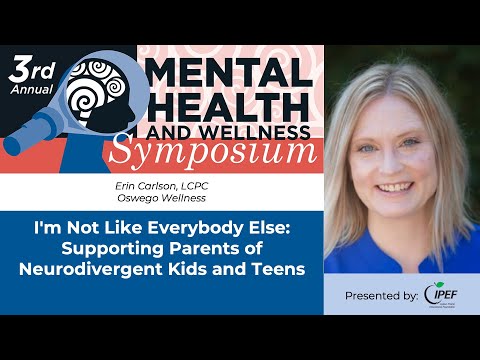
Erin Carlson, a community mental-health clinician with Oswego and Plainfield Wellness, described neurodiversity, how brain differences affect behavior and learning, and offered practical routines, sensory strategies, and advocacy tips for parents and educators during a public presentation.
Erin Carlson, a community mental-health clinician with Oswego and Plainfield Wellness, described neurodiversity and practical classroom and home strategies for supporting neurodivergent children and teenagers during a public presentation (date and venue not specified).
Carlson opened by defining neurodiversity as the idea that people “experience and interact with the world around them in many different ways,” and she emphasized that neurological differences should not automatically be viewed as deficits. She said much of her clinical caseload—“about 85 to 90 percent,” she estimated—consists of neurodivergent clients and used examples from her family to illustrate variability in strengths and challenges.
Why it matters: Carlson argued that recognizing neurodiversity changes how parents and schools approach behavior and learning. She said brain differences affect attention, sensory processing and emotion regulation, which in turn shape classroom performance, social interactions and the design of individualized education plans.
In the presentation Carlson reviewed basic neuroscience in plain terms. She described the brainstem and amygdala as systems that trigger survival responses (fight, flight, freeze), and the hippocampus and prefrontal cortex as structures involved in memory and planning. She noted that the prefrontal cortex is not fully developed until at least the mid-20s and that brain differences can extend developmental timelines: “their brain literally isn't fully developed,” Carlson said, explaining why teenagers and neurodivergent students often struggle with impulse control and planning.
Carlson discussed regulation versus calm, drawing on polyvagal-related ideas and a nervous-system framework. She said parents and teachers often tell children to “calm down” without teaching how, and she urged adults to act as external coregulators—modeling and initiating regulating activities rather than demanding them. “Calm is not the point,” Carlson said, and added that regulation means being able to make healthy choices, not simply appearing quiet.
She addressed common neurodivergent behaviors and strengths. Using autism and ADHD as examples, Carlson explained how stimming or movement can be regulatory and how executive-function tasks can be taught through interests (for example, discussing Minecraft to surface planning skills). She described demand avoidance, fairness concerns, and different motivational drives in ADHD, and highlighted strengths such as pattern recognition, creativity and problem solving.
Practical recommendations for families and schools included establishing clear, consistent routines and consequences; creating low-cost sensory-friendly spaces tailored to the child’s needs; offering choices to increase autonomy; and teaching self-advocacy so students can request accommodations (for example, extended time or alternate testing locations). Carlson encouraged parents to collaborate with school social workers, counselors and teachers and to learn about IEPs and 504 plans as appropriate.
She also stressed parent self-care, noting the sustained stress of caring for high-support-needs children and advising families to plan logistics (for example, traveling separately to events to allow for early exits) and find community supports. Carlson closed by listing several professional resources she favors, including Daniel Siegel, Bruce Perry and Lisa Dion, and offered contact information for follow-up parent support and referrals.
The presentation blended clinical explanation and practical tips; Carlson repeatedly framed advice around individual differences and the need to tailor supports. “Their brains are different, not less,” she said.
Less-critical details: Carlson said she primarily works in outpatient settings and that she typically runs a wait list for clients but provides parent support as well. Specific meeting date, host organization for the presentation and audience questions were not specified in the transcript.