Get Full Government Meeting Transcripts, Videos, & Alerts Forever!
Get email alerts on the Youth Mental Health Substance Use topic
No spam. Unsubscribe anytime.
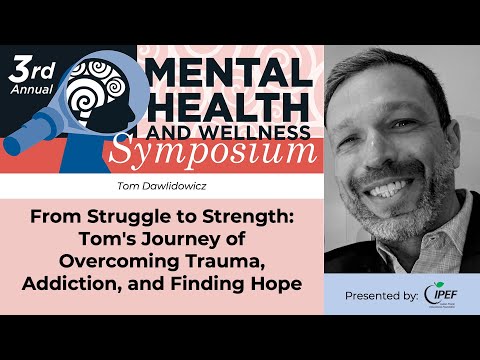
Guest speaker tells high school students his recovery journey and urges them to seek help
Summary
A guest speaker shared a personal history of immigration, substance use and recovery with high school students, encouraged them to ask for help early, and offered his phone number and local resources.
A guest speaker, identified in the transcript as "Guest speaker," told high school students during a presentation that he recovered from substance use and urged them to seek help rather than handling problems alone.
The speaker described emigrating from Gdańsk, Poland, as a child, later moving to Germany and then to the United States, and recounted coping strategies he used — fighting, alcohol and drug use — that culminated in dropping out of high school. He said he joined the U.S. Coast Guard at 21 and later, after a suicide attempt discovered by his brother, began counseling at age 27. "If I did it, you can too," the speaker said, adding, "You gotta open your mouth. You gotta talk. Please ask for help." He also told students, "I'll give each and every one of you my cell phone number. You can call me anytime of day or night and we'll talk about it."
Why this mattered, the speaker said, is that early help reduces the chance problems escalate. He told students that when he first spoke to a counselor at 27 it was a major relief, and credited structured activities — especially basketball and later military service — with giving him accountability while he worked on recovery. He described serving about four years in the U.S. Coast Guard and said that, despite the structure, he continued using substances until his crisis.
Throughout the talk he listed coping behaviors he used at different stages: withdrawing and trying to avoid attention as a child, fighting in school, obsessing over basketball as an adolescent, and then using alcohol and other drugs in late teens and early adulthood. He described specific incidents — solitary confinement in a school coat closet, running with older people at city parks, and stealing food when hungry — as formative experiences that shaped his decisions and mental health.
The speaker emphasized practical steps for students: use school staff and counselors, speak up early, and use available resources. He said students have many resources now and can find help online, but urged them first to "put down your phones and look at what room you're in and who's in the room with you," and to ask a teacher or advisor to point them to support. He repeatedly warned that letting problems fester can make them worse with age.
The presentation closed with the speaker reiterating the central message — that asking for help is essential — and offering to be a point of contact for students seeking support.