Get Full Government Meeting Transcripts, Videos, & Alerts Forever!
Get email alerts on the Creative Arts Mental Health topic
No spam. Unsubscribe anytime.
Presenter links creative arts to stress relief and resilience
Summary
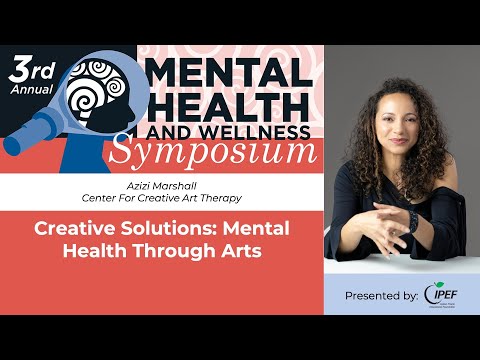
At a community presentation, a speaker trained in creative arts therapy outlined how creative activities can support emotional release, self-discovery, social connection and stress relief, demonstrated short exercises and offered help connecting attendees with clinicians.
A presenter trained in creative arts therapy told attendees at a community presentation that creative activity can help people manage stress and build resilience, saying, "Creativity is inventing, experimenting, growing, taking risks, breaking rules."
The speaker said the mental-health benefits include "emotional release," "self discovery and expression," dopamine-driven performance highs and stronger community connections, and demonstrated short exercises intended to reduce activation and open a creative state. The presentation framed creativity as a set of brain networks working together — the executive control network, the default network and the salience network — that can be strengthened through arts practice, movement and small habits.
Why this matters: the presenter emphasized that creativity is a widely accessible tool for coping with anxiety, burnout and social disconnection, especially for children and teens. She described hands-on techniques that teachers, parents and clinicians can use to help young people express feelings, rehearse difficult conversations and practice self-care.
The presenter outlined how the three brain networks relate to creative work: the executive control network supports attention and focus; the default network supports spontaneous thinking and empathy; and the salience network helps the brain retain useful cues. "So the more active that these networks are, the more creative you can be," she said.
She listed several mental-health outcomes she and colleagues observe in clinical and community settings: use of creative arts can produce emotional release that helps people "talk more about this now," support self-discovery among teenagers, boost self‑esteem when audiences recognize a created work, and produce a natural dopamine-driven high after performance. Community art activities and classes can also reduce isolation, she said.
The presenter identified common stress responses that block creativity — hypervigilance, poor boundaries, avoidance, numbing, addictive coping, chronic exhaustion, minimizing and cynicism — and suggested simple, low‑cost strategies to counter those barriers. Demonstrations included a short standing movement exercise (a spectrogram) to re‑engage the body and a guided breath practice called the "Flower Candle Breath" to calm nervous-system activation. She also led an exercise titled "hold on to let go," which asks participants to list items to release and items to keep as a brief reflective art activity.
Practical tips offered included keeping a visual journal, taking short walks in nature, changing routines to expose oneself to new experiences, starting or reengaging with hobbies (for example, music or pottery), scheduling short, interruption‑free creative time and using small rewards to build habit. For working adults she recommended "fun movement" instead of framing activity as exercise and suggested workplace self‑care such as peer support and professional development.
The presenter described using role play at home — acting out difficult conversations at the dinner table — as a way to rehearse real‑world interactions and reduce anxiety about mistakes or confrontation. She noted that earlier negative classroom experiences can leave people convinced they are "not creative," and that overcoming the inner critic and fear of failure is part of rebuilding creative confidence.
At the close of the presentation the speaker acknowledged that access to therapists can be limited and said the community group she represents connects people to clinicians with specialties such as obsessive-compulsive disorder, attention-deficit/hyperactivity disorder and anxiety. "If you are running into that stressful space of just trying to find a therapist, please reach out to us," she said.
The presentation focused on practical, low‑barrier interventions rather than new programs or formal policy, and included invitations to attendees to try short exercises and to contact the presenter for local clinician referrals.