Get Full Government Meeting Transcripts, Videos, & Alerts Forever!
Get email alerts on the Child Mental Health topic
No spam. Unsubscribe anytime.
Clinician Offers Parents and Teachers Tools to Recognize and Manage Anxiety in Children and Teens
Summary
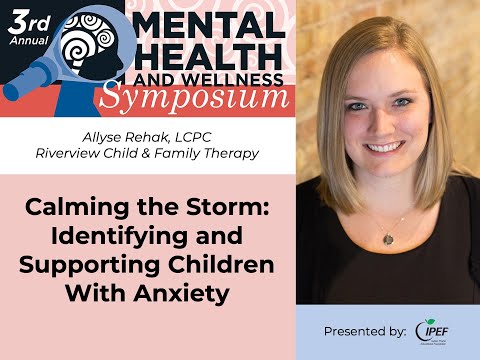
Elise Riak, an outpatient mental health clinician, told attendees at a community symposium that anxiety is the most common concern she sees in children and teens and that parents and school staff can learn simple techniques to help students manage it.
Elise Riak, an outpatient mental health clinician, told attendees at a community symposium that anxiety is the most common concern she sees in children and teens and that parents and school staff can learn simple techniques to help students manage it.
Riak said the goal is to “feel that uncomfortable emotion for the shortest amount of time with the least amount of pain and suffering,” and she stressed that "That it's okay not to feel okay sometimes." She described common physical, cognitive and behavioral signs—stomachaches, headaches, sleep and appetite changes, negative self-talk, withdrawal or outbursts—and urged caregivers to investigate changes in performance or behavior rather than dismiss them.
Riak used metaphors she said work with young people to explain how emotions build and erupt. "My metaphor for holding an emotions is like pushing a beach ball under the water," she said, and she compared an accumulating stress response to a volcano that can erupt after repeated small stressors.
She recommended a set of practical strategies for immediate regulation and longer-term resilience. For calming the body, she suggested slow, deep breathing (visualizations such as "smelling a flower, blowing out a birthday candle" or square breathing), and progressive muscle relaxation or "noodle body" exercises teachers can cue in class. For attention and thought management she recommended mindfulness exercises—walking meditation and guided "safe place" visualizations—and cognitive reframing to replace “sticky thoughts” with calming, factual thoughts.
Riak discussed routines and self-care that affect anxiety: regular sleep, adequate nutrition (she noted many teens skip breakfast and may rely on caffeinated or sugary options), and basic physical health. She said adolescents’ circadian rhythms shift later, mentioning melatonin timing as a factor in sleep patterns. She also highlighted technology’s role, citing Jonathan Haidt’s book The Anxious Generation and saying research shows social media can increase comparison and distress for many young people.
On treatment and supports, Riak said therapy can be short-term or longer-term depending on need. She encouraged families to communicate with school staff—teachers, social workers, school psychologists and counselors—so schools can provide support. For more intensive concerns such as self-injury or suicidal ideation she said specialized therapies are available and appropriate.
Riak closed by offering resources and staying afterward to answer questions. She said the presentation was intended as a practical overview caregivers and educators could use to notice signs, start conversations and try tools that may help students manage anxiety.