Get Full Government Meeting Transcripts, Videos, & Alerts Forever!
Get email alerts on the Mental Health topic
No spam. Unsubscribe anytime.
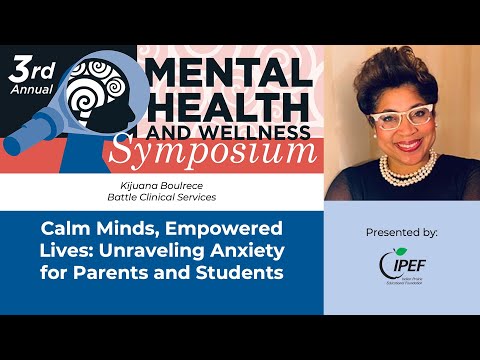
Workshop presenter urges parents to lead in managing adolescent anxiety
Summary
At a parent workshop, a presenter reviewed signs of anxiety, cited National Institute of Mental Health prevalence figures, and offered practical tools for parents—breathing, naming emotions, consistent parenting (authoritative style), limiting nighttime screen time, and cognitive behavioral techniques.
At a parent workshop, a presenter told attendees that parental wellbeing strongly affects adolescent recovery from anxiety and reviewed signs, causes and coping strategies for anxiety disorders.
The presenter said anxiety disorders are the most common mental health condition in the United States, citing National Institute of Mental Health figures that “over 40,000,000 adults” (about 19.1 percent) are affected and that lifetime prevalence reaches about 31 percent. The presenter warned that many anxiety symptoms develop before age 21 and described how anxious parents can transfer anxiety to children: “If the parent is whole, the child is whole.”
Why it matters: the presenter framed parenting as a central protective or risk factor for adolescents’ mental health. She said family interactions, parental attachment style and daily routines shape children’s emotional responses and long-term neural patterns, meaning small changes at home can affect sleep, behavior and physical health.
The presenter listed common anxiety signs parents should watch for: persistent worry, restlessness, sleep problems, somatic symptoms (stomach aches, heart palpitations), catastrophizing and difficulty relaxing. She noted clinicians typically require meeting several diagnostic criteria (she said “you typically need to meet six of these criteria”) before diagnosing an anxiety disorder and cautioned educators not to diagnose students themselves.
On causes and family dynamics, the presenter described genetic, temperament and environmental contributors and emphasized attachment patterns (secure, ambivalent, disorganized) as shaping adult relationships and children’s responses to stress. She characterized parenting styles and their associations with child outcomes: authoritative parenting (clear expectations plus support) as protective; permissive or uninvolved approaches as linked with poorer outcomes.
The presenter reviewed short-term and practical techniques for parents and caregivers. She recommended naming emotions to expand children’s emotional vocabulary, using co-regulation (a calm adult helping to down-regulate a child), controlled breathing (inhale through the nose, exhale through the mouth), limiting nighttime screen time, and short mindfulness or gratitude practices in the morning. She identified cognitive behavioral therapy (CBT) strategies—challenging automatic negative thoughts (what she called “ANTS”), looking for evidence, and trying “challenging thoughts”—and urged parents to plan how they want to respond to fears rather than react automatically: “Identify what the fear is. Do your own work.”
The presenter explained fight/flight/freeze/fawn nervous-system responses and linked prolonged anxiety to physical health risks such as elevated cortisol, digestive problems, hypertension and increased risk of heart disease. She summarized a neuroscience point for parents: “The brain doesn’t lie,” and described how repeated avoidance strengthens neuronal pathways, while repeated practice of new responses can rewire them ("neurons that fire together, wire together").
Practical classroom- and home-focused tips included encouraging routines, modeling calm behavior, using brief breathing exercises with children, and reducing pre-bed screen exposure. She recommended small, repeated practice—“you may not get it right the first time”—and suggested parents reflect on their emotional responses when children act out instead of punishing immediately.
The presentation was instructional and aimed at parents and caregivers rather than proposing policy or formal recommendations for a governing body. No motions or formal votes were recorded during the session.