Get Full Government Meeting Transcripts, Videos, & Alerts Forever!
Get email alerts on the Youth Mental Health topic
No spam. Unsubscribe anytime.
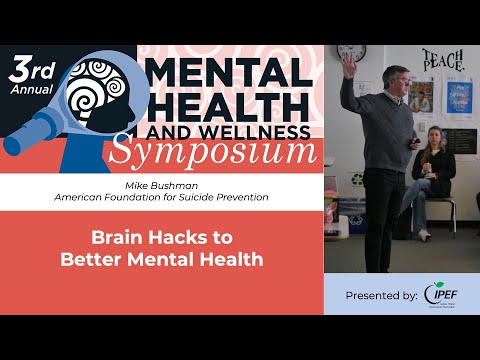
Presenter with American Foundation for Suicide Prevention outlines self‑care strategies for youth mental health
Summary
An unidentified presenter, a board member of the American Foundation for Suicide Prevention, told students that everyday behaviors — sleep, exercise, time outdoors, face‑to‑face social interaction and simple breathing exercises — can change brain chemistry and help manage depression and stress during a roughly 39‑minute presentation.
An unidentified presenter, a board member of the American Foundation for Suicide Prevention, told students that everyday behaviors — sleep, exercise, time outdoors, face‑to‑face social interaction and simple breathing exercises — can change brain chemistry and help manage depression and stress during a roughly 39‑minute presentation.
The presenter framed the remarks with personal experience and research references, saying those strategies can help with focus, academic performance and emotional regulation. The talk included a brief guided breathing exercise and examples from outdoor hikes to illustrate pacing, goal‑setting and using supports when overwhelmed.
The presenter said that youth are sleeping less than a decade ago and spending significantly less time with peers in person, which reduces oxytocin and other protective brain chemicals. The presenter noted vitamin D and sunlight’s link to serotonin and said about 30 percent of Americans do not get enough vitamin D. She recommended simple classroom‑friendly techniques — deep breathing, brief walks outside, journaling, creative activities and volunteering — as ways to reduce cortisol and improve mood.
During the session the presenter led a breathing drill, instructing students to breathe in through the nose to a count of four, hold four, breathe out through the mouth to a count of four and hold the out‑breath, and said repeating that helps clear cortisol and improve thinking. She described other low‑effort options — listening to music, short walks, pets and laughter — as ways to raise endorphins and oxytocin.
The presenter acknowledged that medication can be appropriate for some people and said it should be discussed with a physician: “Medication can certainly do that, but there are a lot of things that we can do,” she said. She also urged students to watch for negative self‑talk and to practice gratitude and perspective‑shifting to reduce rigid, harmful thought patterns.
The presentation addressed social media, saying internal industry research has shown greater time on platforms can worsen self‑image for many young users and, in some cases, increase suicidal thinking. The presenter recommended students and families consider limiting or pausing social media use if it is harming mood.
The presenter used personal examples from hikes in Colorado and Yosemite National Park, including an account of helping her daughter, Shannon, manage overwhelm on a steep climb by breaking the route into smaller goals. She cited a sleep coach, Matthew Walker, when discussing sleep routines and the role of morning daylight for serotonin and nighttime melatonin production.
No formal school action, vote or administrative decision was reported during the presentation. The session was educational and advisory in nature; the presenter repeatedly framed recommendations as strategies students can try or discuss with caregivers and health professionals.
For immediate help, the presenter directed listeners to the U.S. Suicide & Crisis Lifeline and recommended calling or texting 988. She said the line may be used by people who are not in crisis but are having a bad day and need support.
The presenter closed by encouraging students to use supports, to take small steps when overwhelmed, and to seek help from trusted adults or health professionals when needed.