Get Full Government Meeting Transcripts, Videos, & Alerts Forever!
Get email alerts on the Invasive Species Golden Mussel topic
No spam. Unsubscribe anytime.
Lake County approves $25,000 to shore up golden mussel prevention; officials warn state grants currently exclude golden mussel work
Summary
The board approved up to $25,000 in general funds to support ramp monitoring, canine detection and outreach for golden mussel prevention through FY24‑25; staff warned the state grant program currently disqualifies projects that mention golden mussels, creating a near‑term local funding need.
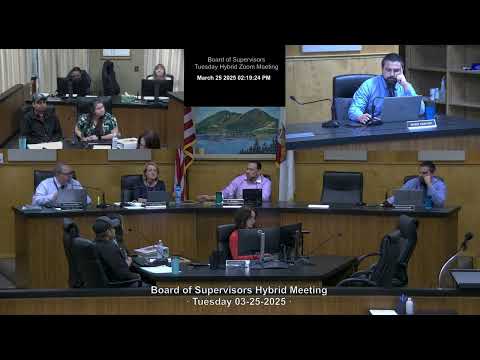
The Lake County Board of Supervisors voted 4-0 to authorize up to $25,000 in county funds to support Golden Mussel Prevention activities for fiscal year 2024–25, following a departmental update and requests from Water Resources staff.
Water Resources briefing and risk: Angela DePalma Dow, the county’s Invasive Species Program Coordinator, told the board that golden mussels (Limnoperma spp.) have been detected in the Sacramento–San Joaquin Delta and are spreading in the state’s water system. She said the Delta detections raise the risk that boats will bring golden mussels to Clear Lake and that county monitoring must expand. “We are gonna run out of hours in May,” she said of the county’s part‑time ramp monitors, who now work year‑round because of higher inspection and decontamination demand. DePalma Dow said canine detection teams have been used more this year and cost roughly $800–$1,000 per day.
Why it matters: Golden mussels can alter food webs and water quality. DePalma Dow said they can reduce green algae (the fish food) while allowing cyanobacteria to persist, which could harm fisheries and water quality if the species becomes established.
Program needs and proposed uses of funds: County staff asked for $25,000 in general funds for the remainder of FY24‑25 to cover emergency needs including additional canine detection days, temporary staff augmentation for ramp monitoring and outreach. Staff provided a broader estimate of roughly $270,000 as the total near‑term need for program continuity and to advance planning for a permanent decontamination station; the board approved the immediate $25,000 request.
State funding gap and ordinance update: DePalma Dow told the board that the state interagency grant program would disqualify applications that explicitly mention golden mussel prevention in the 2025 grant cycle. She quoted guidance from grant administrators: “the CUSY grant program cannot fund activities that discuss the golden muscle for the 2025 grant cycle. Applications with discuss the golden muscle may be disqualified during the inter agency review process.” County staff said they are pursuing other funding avenues (Prop 68/4 alternatives and Blue Ribbon Committee interest) while also planning local measures such as an updated county ordinance (Chapter 15.52) to add golden mussels to the county’s invasive‑mussel enforcement authority. Staff said that ordinance revision will go on public notice and could be before the board for approval as early as April 8.
Operational steps and permanent infrastructure: Staff described options including a permanent boat decontamination station (candidate site: John Kloss Park on Highway 20) that would use hot water or a state‑approved chemical dip for full decontamination, and expanded mobile decontamination teams. DePalma Dow said permanent infrastructure would use water efficiently and support both prevention and response if mussels are found.
Community and interagency coordination: Staff said the county has reduced the number of permitted fishing tournaments per day to ease inspection demand and is coordinating with California Department of Fish and Wildlife and Bodega Bay Marine Laboratory for monitoring and laboratory analysis. Staff emphasized outreach and sticker enforcement for boats entering Clear Lake.
Board action: A motion to approve the funding request to support FY24‑25 Golden Mussel Prevention Activities “in the amount not to exceed $25,000” passed by a 4‑0 vote. The board discussion included direction to pursue additional funding sources and to move forward with ordinance updates and planning for decontamination infrastructure.
Next steps: County staff will use the approved funds to extend canine detection and staffing as needed through the season, advance ordinance updates, continue monitoring, and pursue state and local funding options for longer‑term needs.