Get Full Government Meeting Transcripts, Videos, & Alerts Forever!
Get email alerts on the Land Use topic
No spam. Unsubscribe anytime.
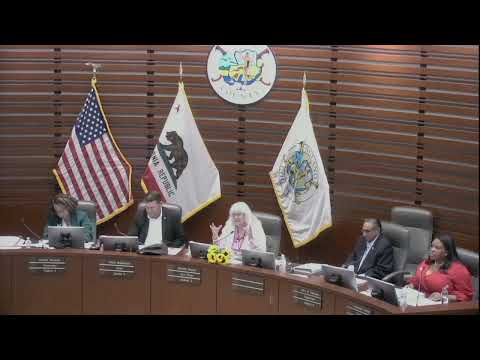
Solano supervisors back countywide roadmap, ask staff to seek consultant for 20-year general plan update
Summary
Board discussion centered on coordinating a 20-year general plan/roadmap with cities, LAFCO and regional stakeholders; supervisors asked staff to prepare an RFI/RFP for a consultant and to convene policy-makers for an initial workshop. No formal vote was recorded.
Solano County supervisors directed staff to develop a request for information and a request for proposals for a consultant to help lead a countywide general-plan roadmap and stakeholder convening, saying the work should include cities, water and utility providers, LAFCO and regional partners.
The request came amid a longer discussion about annexation, municipal service capacity and whether to update the county's general plan. Supervisors emphasized protecting local land-use authority, anticipating regional pressures for housing and infrastructure, and ensuring vulnerable communities and educational institutions have a seat at planning conversations.
The board majority framed the initiative as a 20-year "roadmap" rather than a full rewrite. Several members said the 2008 orderly growth policy contains useful elements that should be retained and adjusted where needed, and that the county should avoid simply "tossing the baby out with the bathwater." They asked that the planning process include an early presentation from LAFCO on how municipal service reviews (MSRs) and spheres of influence affect annexation proposals.
Members raised multiple policy concerns staff should address in any consultant scope of work: whether some cities can provide essential services within existing boundaries (police, fire, water); the risk that a municipal service review could shrink a city's sphere of influence if it cannot meet service demands; regional transportation proposals such as a proposed smart train and who would pay for it; wildfire risk and changing environmental conditions; and affordability pressures as buyers from the core Bay Area seek local housing.
Supervisors asked staff to design public outreach that reaches different parts of the county (northern, central and southern areas) and accommodates working residents by scheduling some evening meetings. Several supervisors suggested inviting Solano Community College, local K'12 districts, Touro University, Cal Poly Maritime Academy, the Farm Bureau, Suisun Valley Vintners and Growers Association, other local growers and tribal representatives to ensure broad participation. One supervisor also urged creation of a citizen advisory group to help gather community input.
The board discussed process options: publish an RFI to solicit ideas from firms about approaches and then an RFP to select a consultant; look at other counties' experiences (San Bernardino County's multi-year effort was cited as a reference point); and plan an early workshop primarily for policy-makers and land-use decision-makers to set scope and expectations. Staff and the county administrative office (CAO) were asked to return with recommended procurement documents and a proposed timeline.
No formal roll-call vote was recorded during the discussion; the record shows supervisors providing direction and requesting follow-up work. The board also noted time sensitivity tied to Measure T and other external timelines but did not set a final decision date.
The board closed the item after public comments and additional supervisor remarks. Supervisors announced upcoming events and adjourned to a separate groundbreaking event for a substance-use treatment facility.