Get Full Government Meeting Transcripts, Videos, & Alerts Forever!
Get email alerts on the Prescribing Psychologists topic
No spam. Unsubscribe anytime.
Tennessee health panel pauses bill to let trained psychologists prescribe, sends it to summer study
Summary
After hours of testimony both for and against, the House Health Subcommittee voted to send House Bill 996 — which would allow certain specially trained psychologists to prescribe psychotropic medications — to summer study so members can gather more data and stakeholder input.
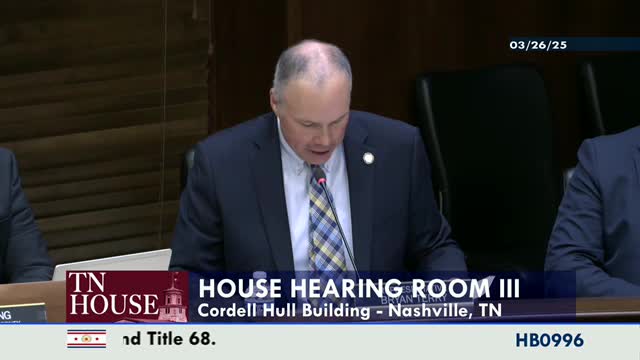
The Tennessee House Health Subcommittee on Wednesday voted to send House Bill 996 to summer study after more than an hour of testimony from clinicians, advocates and medical organizations.
Proponents said the measure would expand access to psychiatric care by allowing psychologists with a doctoral degree and a postdoctoral credential in psychopharmacology to prescribe a restricted set of medications after supervised practice. Opponents, including the Tennessee Psychiatric Association and the National Alliance on Mental Illness (NAMI) Tennessee, urged caution and warned of safety risks.
Dr. Jason Anthes, a board‑certified child and adolescent psychiatrist who said he has supervised prescribing psychologists in the Department of Defense, told the committee, "I've seen it work." Anthes said prescribing psychologists can both diagnose and "choose or not choose medications when appropriate," and pointed to data he described as showing lower adverse drug reactions and better outcomes.
Dr. Roger Clark, who identified himself as a psychologist and a prescriber in a Department of Defense child and family clinic, emphasized workforce shortages. "Right now, it's hard to get in to see almost any mental health," Clark said, noting a statewide shortage of psychiatrists and saying prescribing psychologists can help address access and deprescribing needs.
Opponents delivered forceful warnings. Dr. Michelle Cochran, a board‑certified psychiatrist who said she is president of the Tennessee Psychiatric Association and chief medical officer at a physician‑owned psychiatry practice, said the association and several medical societies "collectively oppose this bill" and called it "dangerous," arguing psychologists lack the same medical training as physicians, psychiatric nurse practitioners and physician assistants.
Katrina Gay of NAMI Tennessee told the committee the organization and its members oppose expanding prescribing authority: "We respectfully ask that you vote no on House Bill 996," she said, noting families' lived experience with mental illness and concerns about medical complexity.
Committee members expressed interest in more data and in hearing additional stakeholder input. Representative Williams and other members said they wanted deeper study of safety, outcomes and training standards. Representative Martin moved and the subcommittee seconded a referral to summer study; the clerk recorded 9 ayes, 0 nays. The subcommittee's vote sends HB 996 to a study process over the summer to gather more evidence and stakeholder recommendations before lawmakers take further action.
The motion to refer does not change the bill text; it directs further review. Supporters argued the additional training model mirrors programs in military and VA settings; opponents emphasized differences between those environments and Tennessee's civilian health system and questioned whether the state should alter prescriber qualifications without stronger evidence and guardrails.
The committee heard multiple witnesses from both support and opposition lists, including military clinicians who described 30 years of experience with prescribing psychologists and local psychiatrists and advocacy groups who urged rejection or slower study. Members said they expected to solicit additional written materials and invite stakeholders back for follow‑up during the summer study period.
The subcommittee did not adopt technical statutory language changes at the hearing; rather it voted to collect more information and consider draft changes later.