Get Full Government Meeting Transcripts, Videos, & Alerts Forever!
Get email alerts on the Biosolids Regulation topic
No spam. Unsubscribe anytime.
Grundy County asks legislature for local control of biosolids; TDEC warns of legal limits
Summary
Grundy County leaders told the Senate panel they want authority to regulate biosolids land application after repeated local complaints; Tennessee Department of Environment and Conservation witnesses warned a single‑county law may face constitutional and federal conflicts and said agency enforcement and a permit update are ongoing.
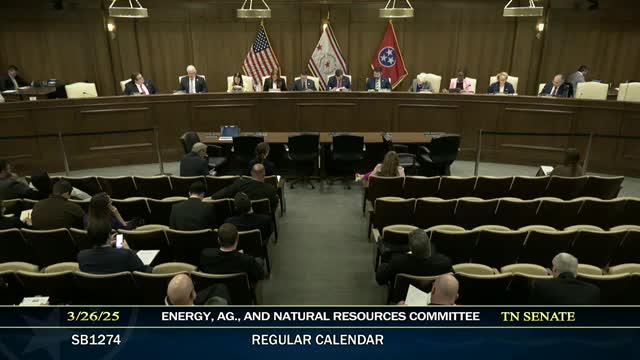
Senator Dusty Bolling presented Senate Bill 12‑63 after testimony from Grundy County officials seeking local authority over biosolids land application. Mayor Michael Brady of Grundy County described repeated local complaints about land application of wastewater solids and asked the legislature to allow local regulation to protect tourism, water and public health. “We are asking, is just for the authority to regulate. We're not wanting to take any authority away from anybody, but just to enforce the EPA regulations, and the regulations that TDEC goes by now,” Mayor Brady said.
Tennessee Department of Environment and Conservation (TDEC) staff told the committee they are updating the statewide general permit and increasing enforcement capacity, but raised constitutional and statutory objections to a single‑county regulatory carve‑out. Stephanie Dermen, deputy general counsel for TDEC, cited Article II, section 8 of the Tennessee Constitution and prior attorney‑general guidance, saying a law that treats one county differently from the rest of the state faces legal risk. She also pointed to existing statewide rule chapters and statutes that give TDEC authority to regulate biosolids and noted federal oversight from the Environmental Protection Agency.
TDEC’s April Grippo (Division of Water Resources director) said the agency plans permit changes this summer and urged residents to file complaints with TDEC and EPA when violations occur.
Senator Bolling moved an amendment (to make the bill permissive for all counties), but the committee voted the amendment down on a roll call. The final committee vote to place SB 12‑63 on the calendar carried 7 ayes, 1 pass and 1 no.
The debate centered on two competing aims: local officials’ requests for immediate, local remedies to repeated, visible complaints and TDEC’s legal and operational view that statewide permitting and EPA primacy—and constitutional limits on single‑county laws—constrain what the legislature can do without broader changes. Supporters argued Grundy County bears repeated impacts from out‑of‑county biosolids application and needs local enforcement authority. TDEC and the department’s counsel said the agency is revising the statewide general permit and that landfills, composting and other disposal options exist if land application becomes restricted.
Committee members asked about PFAS testing; TDEC said it does not currently test biosolids statewide for PFAS. Several members urged greater enforcement and regional solutions. The committee approved SB 12‑63 for the calendar, leaving open whether further work will expand the bill’s reach or produce a permissive, multi‑county framework.