Get Full Government Meeting Transcripts, Videos, & Alerts Forever!
Get email alerts on the Animal Chiropractic topic
No spam. Unsubscribe anytime.
Senate committee advances bill to certify chiropractors for animal care after hours of testimony
Summary
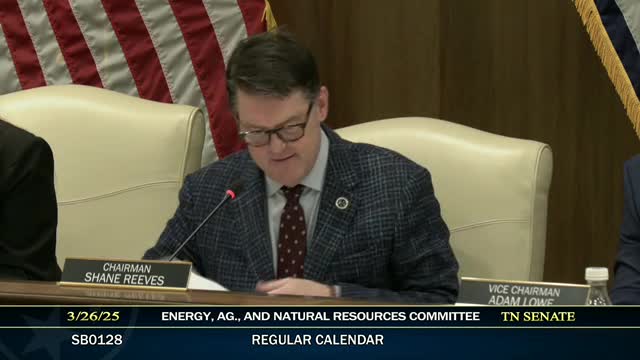
The Senate Energy, Agricultural and Natural Resources Committee voted to place Senate Bill 128 on the calendar after extended testimony from veterinarians and chiropractic advocates over training, diagnosis and scope of practice for clinicians treating animals.
Chairman Karen Bailey on behalf of the administration moved Senate Bill 128, a measure that would authorize the boards that license chiropractors and veterinarians to certify providers to perform animal chiropractic care if they hold a nationally recognized additional credential. The committee adopted an amendment that added certification, continuing education and website‑listing requirements and voted to send the bill to the calendar.
The bill matters because it creates a formal pathway for nonveterinarian chiropractic physicians to receive state endorsement to provide manipulative therapy to animals and sets continuing education and certification standards to do so. Supporters said the measure clarifies an existing practice and provides consumer protections; opponents warned it risks scope‑of‑practice conflicts and patient safety if diagnostic responsibilities are unclear.
Chairman Bailey, the bill sponsor, told the committee the amendment requires chiropractic physicians and veterinarians performing animal chiropractic to have certification from the American Veterinary Chiropractic Association (AVCA), and tasks the Board of Chiropractic Examiners and the Board of Veterinary Medical Examiners with adopting rules to set standards and maintain public lists of certified practitioners. “This training and certification in animal chiropractic care includes both clinical and written work and is nationally recognized by the American Veterinary Chiropractic Association,” Bailey said in explaining the amendment.
Veterinarians who testified opposed the bill. Dr. Frankie Loughler, identified as legislative chair for the Tennessee Veterinary Medical Association (TVMA), said veterinarians are not against manipulative therapies but objected to nonveterinarians performing diagnostic work. “I don’t think that that qualifies them to diagnose. I’m not saying they cannot manipulate an animal. I’m not saying they can’t do some good. We’re all about maybe collaborating with these people, but we don’t feel like they should be diagnosing the patient,” Loughler said. Dr. Emily McDonald Dryden, also representing the TVMA, described clinical examples where imaging or sedation were required before a safe course of treatment could be chosen.
Chiropractic representatives said certification and the proposed rulemaking would create guardrails. Dr. Richard Cole, vice president of the Tennessee Chiropractic Association, said the AVCA program and its testing provide a recognized standard and that the bill mirrors rules in many other states. Tiffany Stevens, executive director of the Tennessee Chiropractic Association, said the change “creates clear lines for the malpractice information and if those go beyond their scope,” and that the AVCA training includes differential diagnosis elements.
After hearing proponents and opponents, the committee adopted the amendment and voted. The recorded vote was 6 ayes, 2 passes and 1 no; the motion carried and the bill was placed on the calendar for further consideration.
The measure leaves multiple implementation details to the two licensing boards, including how certified chiropractors will collaborate with veterinarians on records, referrals and diagnostics. The committees’ next steps would be rule drafting by the respective boards and any implementing language the legislature later adopts.
Sponsors, witnesses and committee members said they would continue discussions over the summer about cross‑professional communication and reporting of outcomes.