Get Full Government Meeting Transcripts, Videos, & Alerts Forever!
Get email alerts on the Road Usage Charge topic
No spam. Unsubscribe anytime.
Joint committee hears overview of Oregon’s voluntary road usage charge and options for scaling revenue
Summary
An informational panel reviewed Oregon’s OReGO program, lessons from a decade of demonstration and pilots, and considerations for scaling a per-mile road usage charge to replace shrinking motor fuel tax revenue.
An informational meeting March 25 reviewed Oregon’s road usage charge program (OReGO), history of research and pilot work, and practical issues for scaling a per‑mile charge as a revenue mechanism for the State Highway Fund.
James Whitty (introduced as James Whitty), who administered the Road User Fee Task Force and helped develop OReGO, traced the program’s origins to House Bill 3946 (2001) and described the open, private‑sector account manager model ODOT adopted. Whitty said the program was designed to be accurate, cost‑efficient and protective of driver privacy, citing the 2013 statute that created the voluntary program as Senate Bill 810. "The law denies the Oregon government access to location data," Whitty said, noting that the statute limits mileage and personal information use to calculating and paying the charge.
Whitty, joined by outside experts, reviewed program mechanics and cost considerations. He said early commercial account manager fees were about 40% of revenue for a small program but that per‑vehicle collection costs should fall dramatically as participation grows. "Imagine the cost to collect the fuel tax from only a hundred thousand vehicle owners — it'd be outrageous. Small programs just don't have efficient cost of collection," he said.
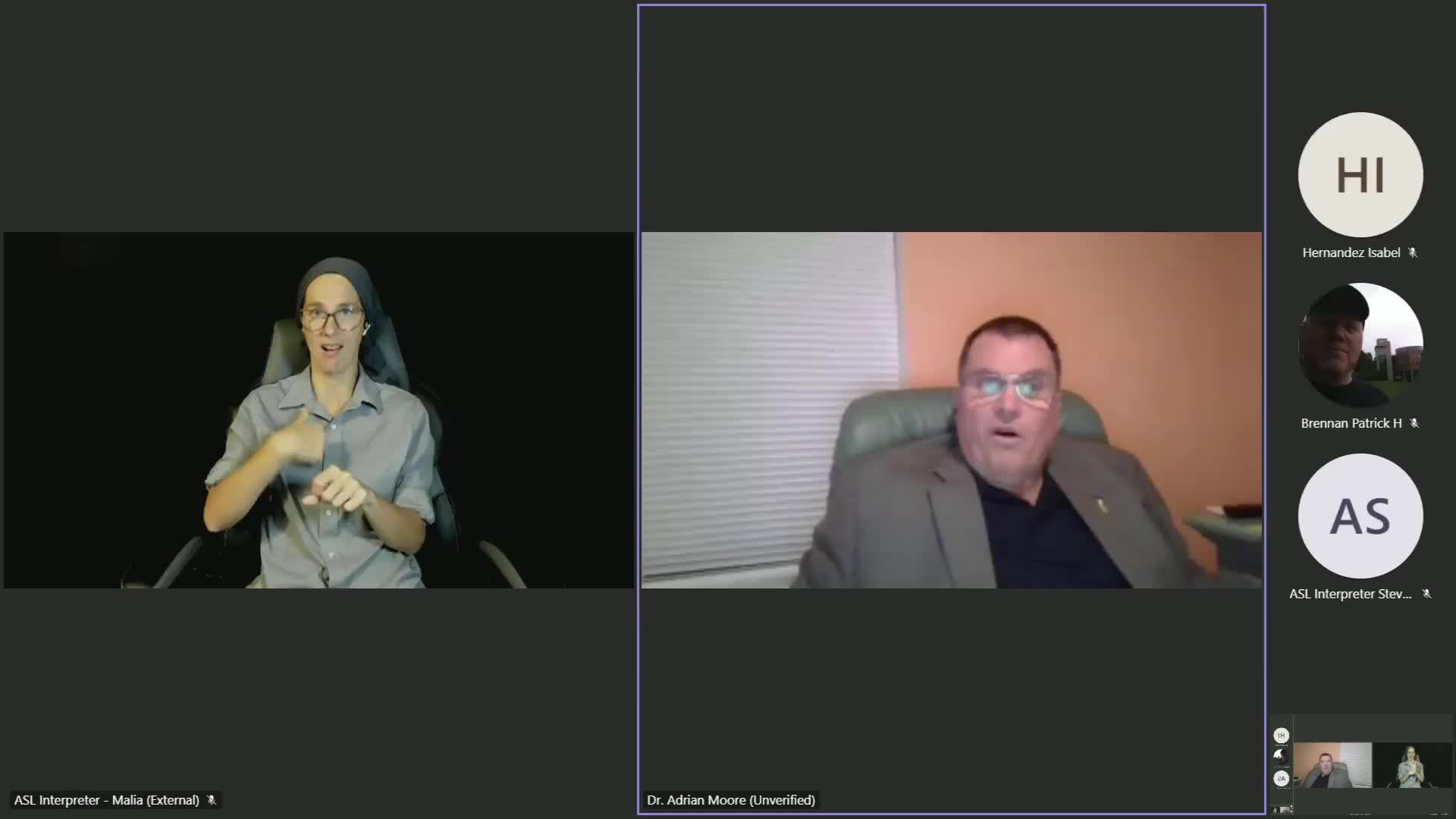
Adrian Moore of the Reason Foundation and the Mileage Based User Fee Alliance described national research and a federal commission that concluded a road usage charge is the most viable long‑term funding approach as vehicle fleets electrify and fuel‑tax revenue declines. Moore said the charge improves fairness and transparency compared with a per‑gallon gas tax.
Industry account managers described operational experience. Tim Martinez (GeoToll) and Ankur Agarwal (GeoToll CEO) said participation has been small (several hundred to roughly a thousand drivers in OReGO at the time of testimony) and recommended policy choices to lower collection cost and raise participation — for example, making all miles chargeable and pursuing higher enrollment among EVs. Agarwal said telematics and in‑vehicle odometer reporting can provide mileage without transmitting GPS location to state servers and that higher scale could push collection costs toward single‑digit percentages of revenue.
Legislative Revenue Office analyst Mazin Malik presented context on Oregon transportation finance, showing fuel tax and weight‑mile tax revenues, and illustrating hypothetical revenue combinations (fuel tax increases, registration fee increases, weight‑mile changes) that would be required to fill identified funding gaps. Malik showed ODOT forecasts where fuel consumption begins to decline as fleet electrification progresses and warned the committee that policy choices about which instruments to change will alter how costs are distributed between light and heavy vehicle owners.
Panelists and legislators discussed several recurring themes: the need to limit government access to location data, the importance of designing a market of private account managers to carry collection burdens, cost of collection at small scale versus scale economies, and the potential to phase in mandatory or broader programs for EVs and other high‑efficiency vehicles. The session was informational; no legislative action was taken.