Get Full Government Meeting Transcripts, Videos, & Alerts Forever!
Get email alerts on the Housing Stabilization topic
No spam. Unsubscribe anytime.
Oregon reports shelter and rehousing gains, cites 28,000 eviction filings in 2024 as prevention programs scale
Summary
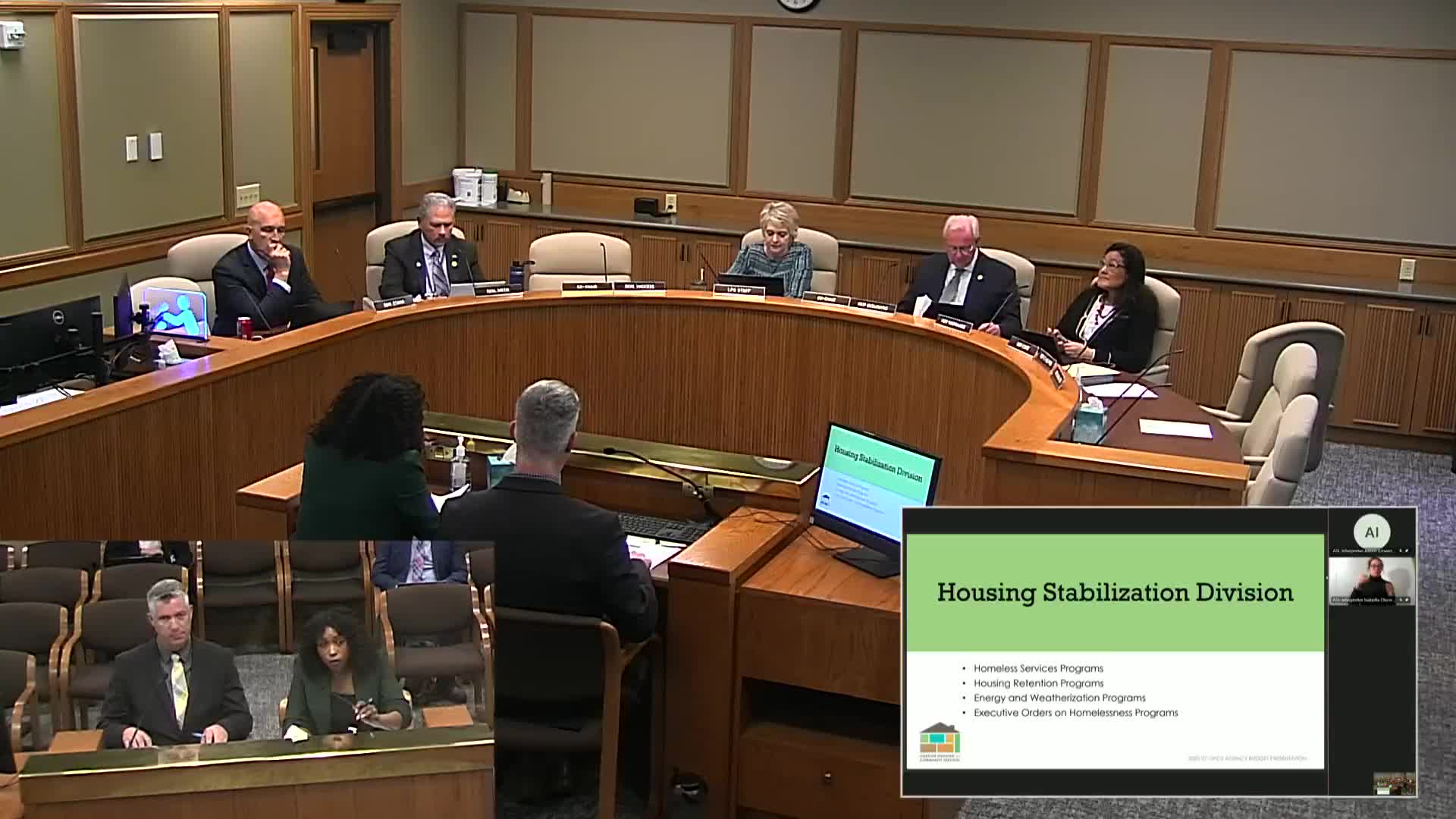
Oregon Housing and Community Services told a legislative subcommittee March 25 that state and local efforts under a January 2023 governor’s executive order on homelessness exceeded early targets for shelter beds and rehousing and that the state is scaling prevention programs in response to rising eviction filings.
Oregon Housing and Community Services told a legislative subcommittee March 25 that state and local efforts under a January 2023 governor’s executive order on homelessness exceeded early targets for shelter beds and rehousing and that the state is scaling prevention programs in response to rising eviction filings.
The agency said local regions working under the executive order set time‑bound goals — within one year to prevent 8,750 households from becoming homeless, add at least 600 low‑barrier shelter beds and rehouse at least 1,200 unsheltered households — and that local partners exceeded those targets over the course of the rollout.
Why it matters: OHCS officials told legislators the state remains second in the nation for unsheltered homelessness and that continuing investments are intended to stabilize housing, expand shelter options that are accessible to people with a wide range of needs, and prevent eviction before people lose housing.
Andrea Bell, executive director of Oregon Housing and Community Services, framed the problem and the state response, saying Oregon faces a severe shortage of rental homes, particularly for households with extremely low incomes, and that the pandemic exacerbated trends that have increased homelessness in recent years. She said the executive order established three tactical goals and that localities developed tailored strategies to meet them.
OHCS reported outcomes and capacity increases tied to legislative investments and locally driven plans. The agency said the state created more than 1,000 low‑barrier shelter beds during the executive order period and expects to reach over 1,400 by the end of the biennium. The agency also said it rehoused more than 1,400 households during the executive‑order year and expects to have rehoused more than 3,000 households by the end of the current biennium. OHCS said eviction prevention programs are on track to serve over 24,000 households by the end of the biennium.
Evictions and prevention: in response to a question about eviction filings, OHCS staff said the agency does not itself track court outcomes but aggregates filing trends from partners. Biant told the committee, “In 2024, I believe there were 28,000 evictions that were filed,” and clarified that many filings are resolved before eviction is completed. OHCS described two state‑administered prevention interventions: funds routed to community action agencies to intervene early, and court‑linked eviction diversion services that engage households after a filing to try to preserve housing.
Shelter models and costs: the agency described a variety of shelter models — congregate shelters, pod‑style shelters (smaller individual spaces clustered together), family‑specific shelters, shelters that allow pets and low‑barrier designs to increase access — and said each locality submits a plan describing the model, habitability standards, accessibility and how the shelter connects to housing casework. Legislators asked for more detail on per‑bed costs; OHCS offered to follow up with a breakdown of shelter models and associated monthly/per‑bed costs.
Effectiveness metrics: OHCS reported two program measures to show effectiveness: the speed of rehousing from engagement to placement (about 56 days on average for programs discussed) and the ability to keep households housed after placement. The agency said programs are effective at connecting people to housing even in tight rental markets with vacancy rates as low as 1% in some areas.
Data disaggregation and repeat assistance: Representative Watanabe asked whether OHCS maintains race and ethnicity disaggregated data for households served; OHCS said disaggregated data exist for its programs and offered to provide a full sweep of race and ethnicity figures. On repeat assistance, OHCS said households sometimes return for additional prevention help and offered to report back on unique household counts versus total assistance events.
What wasn’t decided: the hearing was informational; no formal votes or policy changes were taken. OHCS said many shelter and prevention programs were funded with one‑time legislative investments and that the state is assessing which services require ongoing support to remain sustainable.
Next steps and requests: OHCS will provide the committee follow‑up materials on per‑bed shelter cost breakdowns and disaggregated demographic data across programs. The agency also flagged the need for continued funding conversations to sustain programs currently supported by one‑time federal or legislative dollars.
Attribution: content above is drawn from statements by Andrea Bell (executive director) and Kayla Biant (deputy director) and from committee exchanges on March 25.