Get Full Government Meeting Transcripts, Videos, & Alerts Forever!
Get email alerts on the Revenue Earned Income Tax Credit topic
No spam. Unsubscribe anytime.
Legislative Revenue Office briefs committee on cost estimates for three EITC proposals
Summary
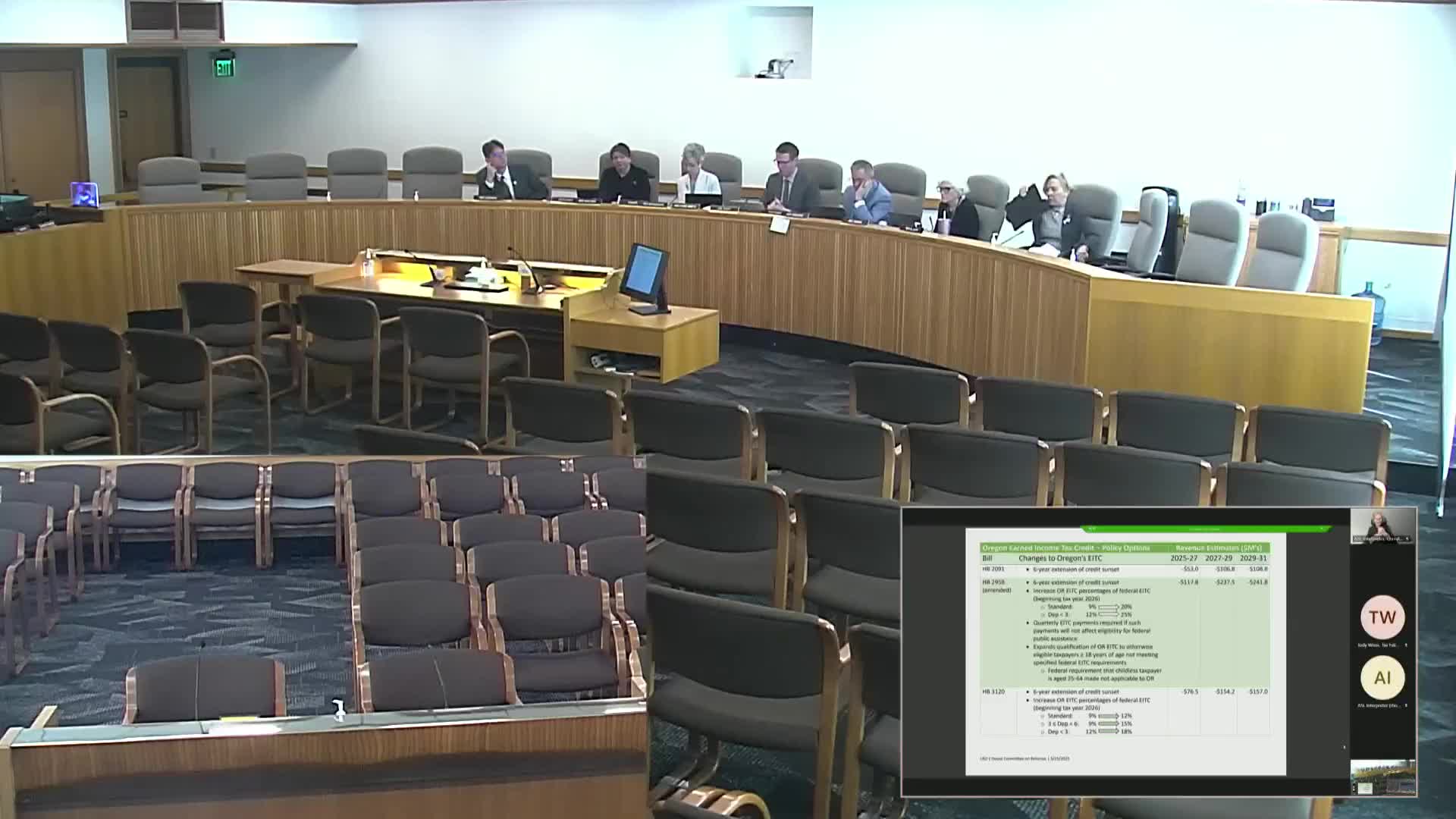
Legislative Revenue Office staff presented the House Committee on Revenue with cost estimates March 25 for three proposals affecting Oregon’s earned income tax credit, including a straight extension and two options that would increase the credit’s value and adjust eligibility.
The House Committee on Revenue held an informational session March 25 in which Legislative Revenue Office staff presented cost estimates for three earned income tax credit proposals under consideration this session.
Kyle, a Legislative Revenue Office analyst, summarized three separate measures: House Bill 2,091 (a six‑year extension of the existing Oregon earned income tax credit), House Bill 29,58 (an extension plus increases to Oregon’s credit percentage and an expansion of eligibility for certain childless taxpayers), and House Bill 3,120 (extension and a different set of percentage increases and eligibility adjustments). Kyle provided mid‑range cost estimates for each proposal for the 2025–27 biennium and the next biennium.
Key figures presented by LRO staff were: a simple six‑year extension (HB 2,091) estimated at about $53 million in the 2025–27 period (reflecting one additional tax year under extension); HB 29,58 — which would raise Oregon’s percentage of the federal credit and relax an age limitation for some childless taxpayers — was estimated at about $118.6 million on a net basis for the same window; and HB 3,120 — an alternate set of percentage increases with staged boosts for dependents by age — was estimated at about $76.5 million net for 2025–27. Kyle noted the estimates reflect federal credit indexing to inflation and that federal changes (for example, temporary federal expansions in prior years) can affect state cost estimates.
Committee members asked whether federal law or pending federal proposals might change the underlying federal earned income tax credit and how that would affect Oregon estimates. LRO staff said the federal credit does adjust for inflation and LRO had not identified a pending federal change that would alter these projections materially in the immediate term.
Ending: The exchange was informational; the committee did not take action on the bills during the meeting and closed the informational session.