Get Full Government Meeting Transcripts, Videos, & Alerts Forever!
Get email alerts on the Transportation Protection Agreements topic
No spam. Unsubscribe anytime.
Committee hears bill to clarify "transportation protection agreements" for moving deceased
Summary
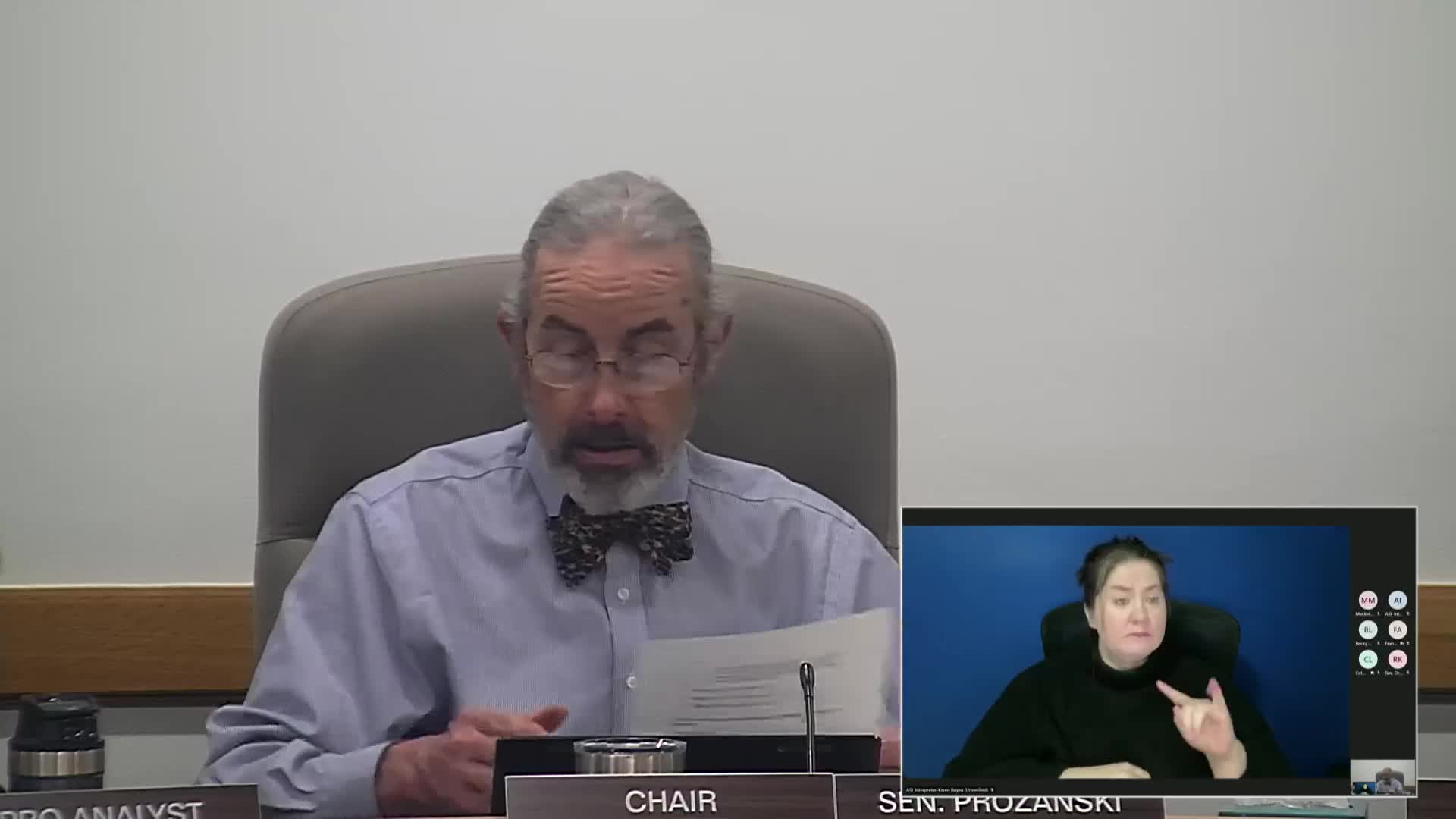
The Senate Judiciary Committee heard testimony March 25 on Senate Bill 10 91, which would define so‑called transportation protection agreements for moving human remains and specify that those agreements are not governed by laws for funeral merchandise, funeral services or prearrangement sales.
The Senate Judiciary Committee on March 25 heard testimony on Senate Bill 10 91, which would define "transportation protection agreements" to include contracts that arrange and pay for transportation of human remains and would exempt those agreements from laws governing funeral merchandise, funeral services and prearrangement sales.
The bill’s sponsor staff provided the bill overview and described the measure as clarifying existing law for third‑party travel protection products. "The bill clarifies existing law as it relates to transportation protection agreements for deceased persons," Scott Barry said. Barry testified on behalf of Service Corp. International and told the committee similar policies have been in industry practice for decades.
Why it matters: Supporters told the committee the clarification would remove uncertainty about whether funds for travel protection must be held in trust under state law, potentially lowering consumer cost and easing administrative burden for funeral providers that sell third‑party transportation protection plans.
Scott Barry said regulators in other states prompted legislative fixes and that four states, including Minnesota and Tennessee, have enacted similar clarification. Angela McKenzie Tucker, who identified herself as "director of operations for S. A. Oregon, former president of the Oregon Mortuary Cemetery Board, and current president‑elect of the Oregon Funeral Directors Association," told the committee these agreements "are a huge value to families" because they can spare grieving households the logistical burden of arranging international or long‑distance repatriation. "These types of services provide a great comfort to many families when they have a choice to plan ahead and have protection in place," she said.
Kathy Lehman Cahoe, a licensed Minnesota funeral director with Dignity Memorial, testified remotely that Minnesota recently enacted similar language and that she has purchased travel protection agreements for family members. "They were grateful and felt blessed that it took care of everything to bring their loved one home," she said.
Supporters told the committee they had discussed the measure with the executive director of the Mortuary and Cemetery Board and were not aware of opposition. The bill text sets the effective date as the 91st day after adjournment sine die if it passes.
No committee action was taken at the March 25 hearing; a work session is scheduled for April 2.
Notes: Witnesses described the product as a one‑time fee that can cover transportation in cases when a person dies far from home (testimony referenced arrangements when the death occurs more than 75 miles away). Supporters said the bill would treat transportation protection agreements differently from prearranged funeral contracts by not requiring trust accounting for funds collected for travel protection.